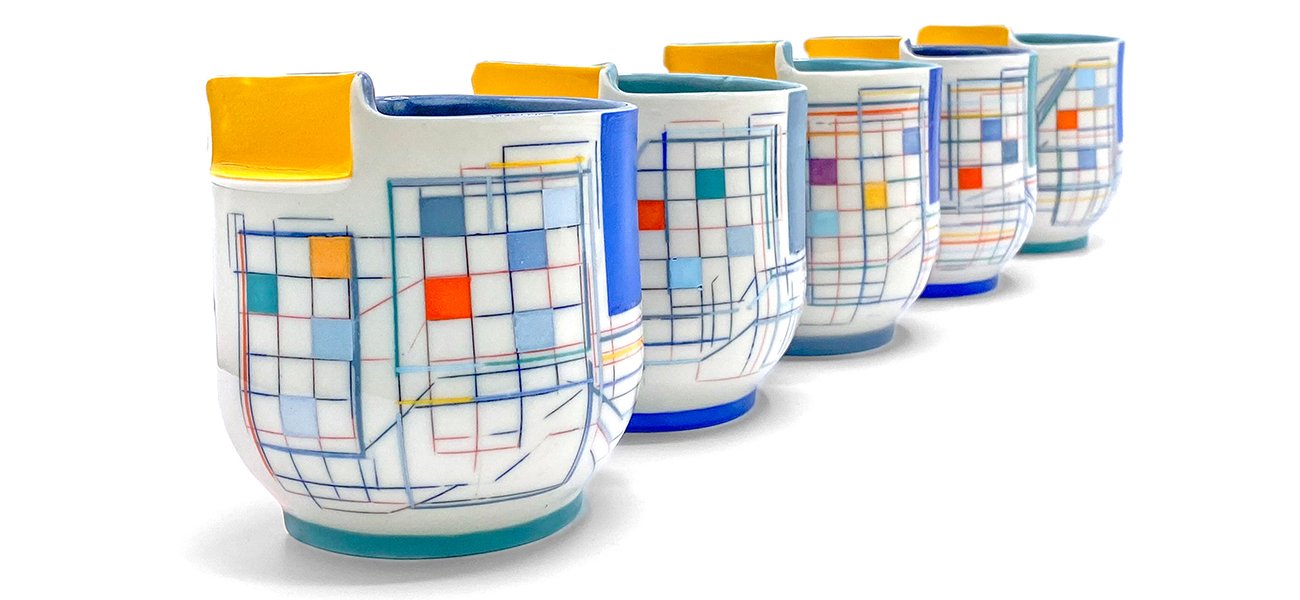
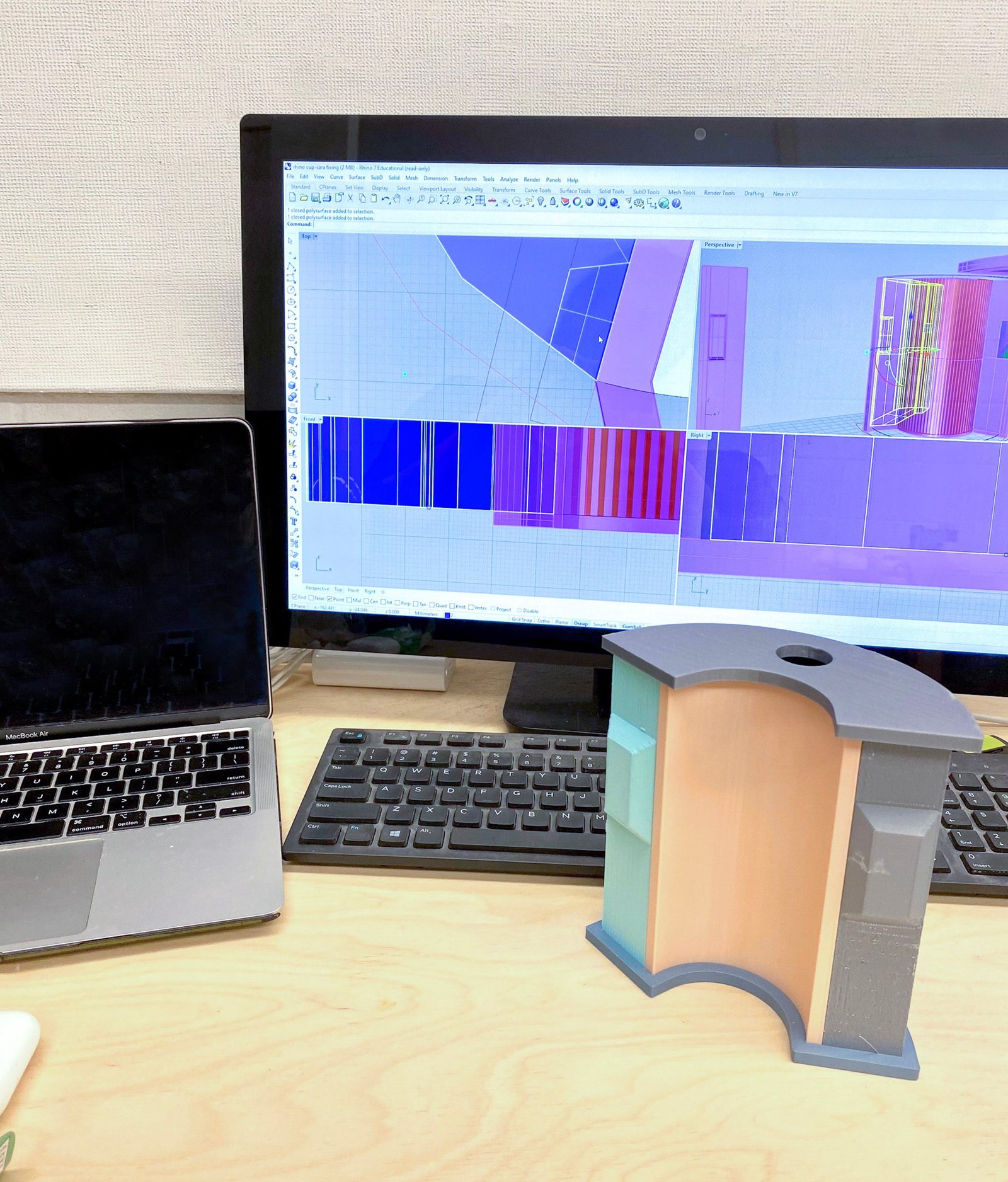
 For years, I resisted bringing a computer into my studio, convinced that digital tools might replace the intimacy of my hands on clay. My work has always been rooted in systems of planning, construction, repetition, and variation, but I feared that technology would disrupt the tactile, thoughtful process I valued. Over time, I discovered that digital design could do something unexpected: it could extend my hand rather than replace it. By combining 3D-printed prototypes with a modular mold process, I learned to design not just objects, but frameworks capable of generating vessels that reflect architectural logic, spatial awareness, and material sensitivity.
This approach did not arrive fully formed. It evolved through years of experimentation, resistance, failure, and gradual refinement. Skepticism gradually gave way to curiosity, and curiosity to a process in which C.A.D. software, 3D printing, and slip casting function as extensions of my hand, enabling precision, structural complexity, and sustained inquiry. Today, these technologies support aesthetic intention in my work without compromising material engagement, allowing digital and physical processes to operate in tandem.