Shopping cart 0 items
Donate
Member Login

Search form

Share
Login
Home
  • About
    • Mission
    • History
    • Masthead
    • Board of Directors
    • Contact
    • Privacy Notice
    • FAQ
    • Internships
  • Articles
    • Current Articles
    • Collections
      • Interviews
      • Narrative
      • History
      • Technology
      • Criticism
      • Other
    • Print Archive
    • Write for SP
  • Announcements
    • General
    • Classified
    • Events
    • Newsletter
  • Become a Member
  • Grants for Apprenticeships
  • Donate
    • Underwriting
    • Donate
    • Partners
  • Store
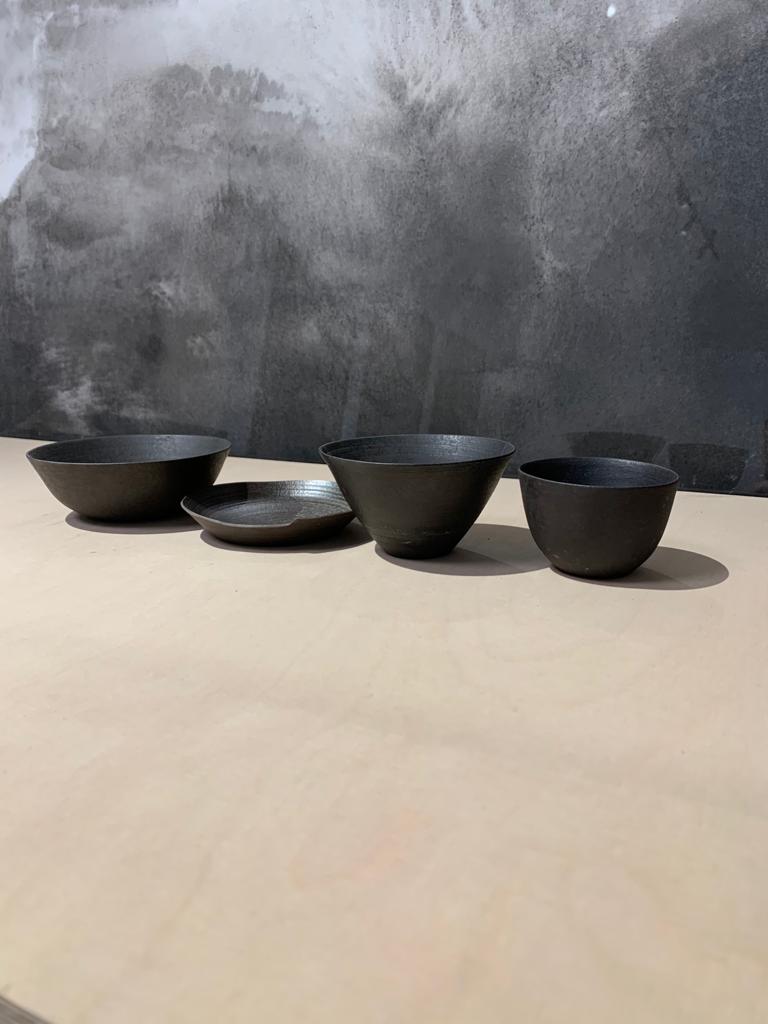
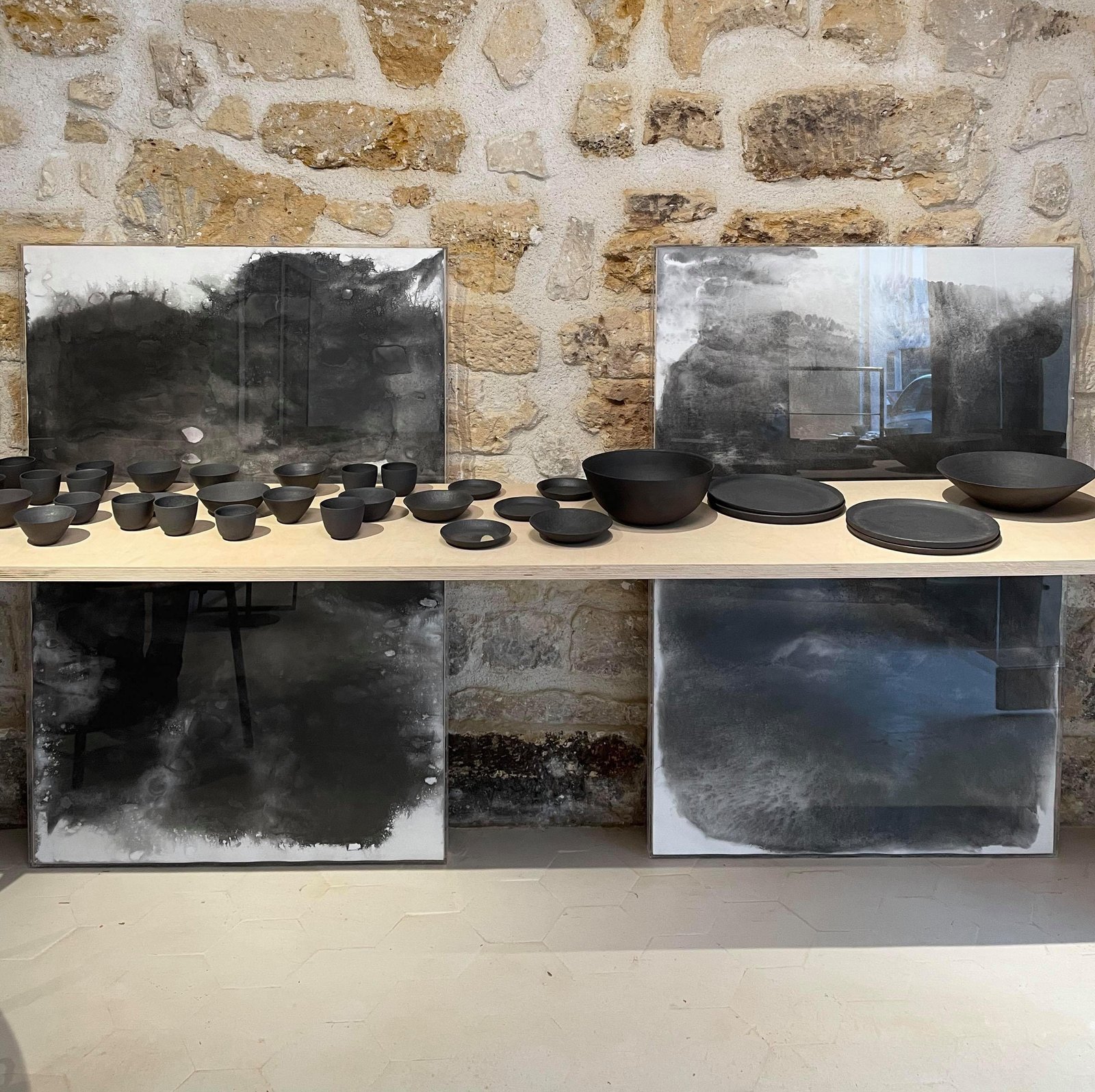
Cups and dish in front of a "Dream" painting. Photo credit: Atelier Parter

A delicate metaphor. Seeking of truth.

Nessim Cohen

42 Meslay Street, Paris, France. I enter a small and discreet workshop with a well-tended showcase facing the street. This is where Atelier Parter is located. The ceramist here only insists on this point: it is a workshop, not a store. Opening the door, visitors are confronted by a potter’s wheels and a desk, the area of creation, an enclave at the back of the shop. Right from the making space, a table of pots on display. It is only by turning the eye that one can see the finished objects. They can be acquired, of course, but are mostly present to give a tone.The atmospheric nuances change with each collection, but the foundation remains firm.

From interior design to a ceramic’s detail

The interior design is minimal, the space – easily transformed. The objects do not dominate the space,yet everything operates in support of their display. Carefully arranged, a context is created. There is the sense of an informal exhibition. The showcase is a microcosm of Atelier Parter’s latest production. Some bowls and plaques are available for purchase. Dried flowers and glazed shards are intermittently present as decoration. Achromatic fields of black hang on the wall, representing different layers of a dream. To make them, Atelier Parter superimposes seven layers of blotting paper and then paints one dream on the first layer. The next layers appear in-between consciousness and subconsciousness through the paper’s capillarity. 

The voluntary and involuntary are mixed. Where does intentionality begin?
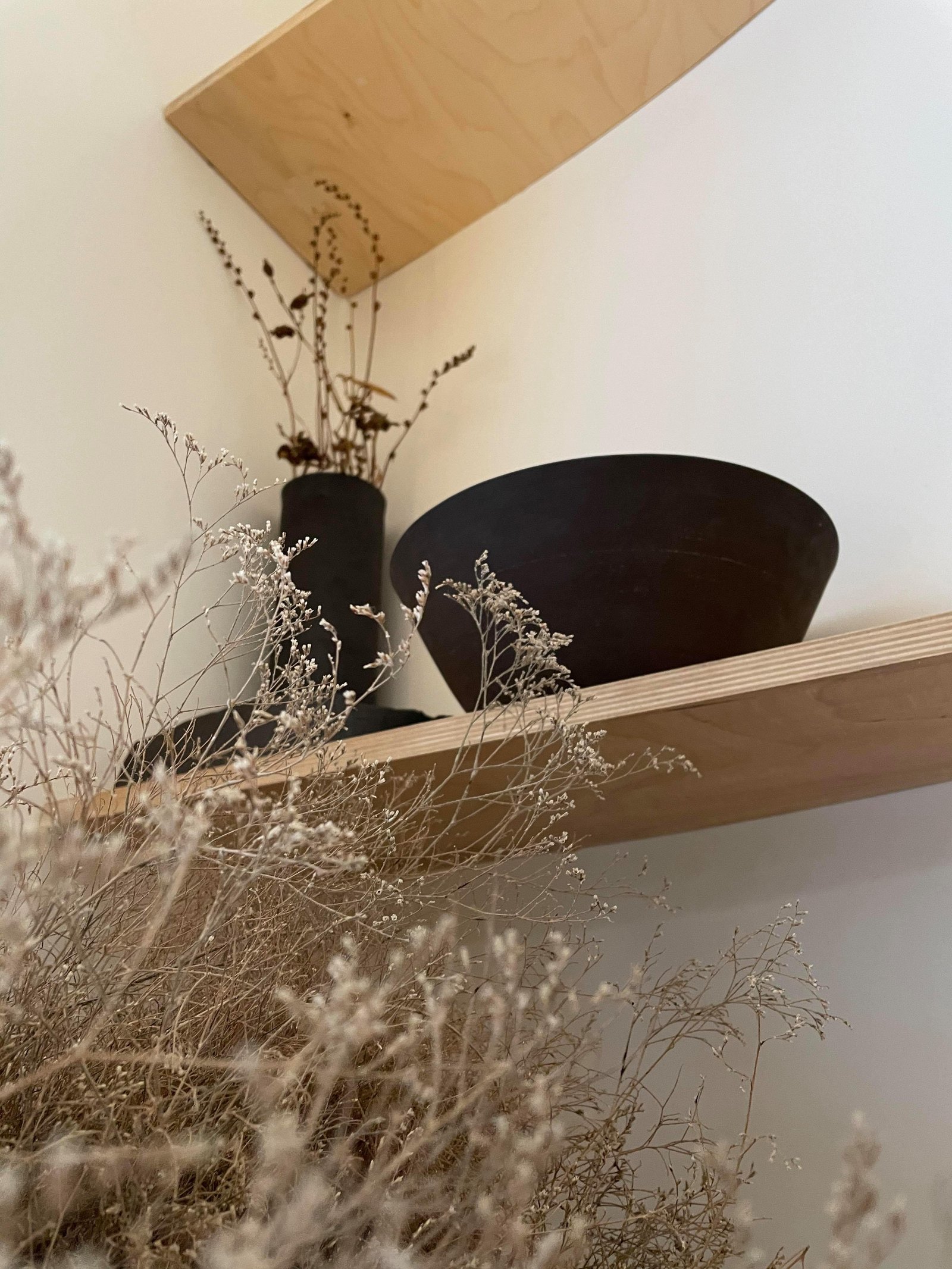
Atelier Parter likes to work on the atmosphere of a space as much as objects, but the distinction is irrelevant. 

Philosopher William James noted that it is impossible to decide what defines a forest as one strolls in it. The forest is both the tree and the leaf, the hidden ridge after a seemingly final valley, the river and the grass. And so the forest is not just one tree, but also the multitude, the group.1  

What is the whole? Where does the detail begin? The work of Atelier Parter follows the same path; the atmosphere, the emotion, is in the detail of a spatula mark at the base of a tiny cup as much as it is in the lighting of the room or the faint perfume of camphor that comes back from time to time. Discreet subtlety is recognisable at every level and the viewer’s mind can lose its bearings.


The ceramic work : likeness can be deceitful
...
Read more

More from this issue

July 2022 – Seeing, Knowing, Becoming

A Way of Being
By Jill Foote-Hutton
Robbie Lobell and Maryon Attwood are looking to forge new directions for Cook on Clay. Like the rest of the world, they are asking themselves a lot about transition these days. What does retirement look like for a craftsperson in 2022? How does one navigate from the pounding rhythm of production into a slower beat and still afford life?
Read More
How Removing Distance Can Bring Us Closer to Answering an Age-Old Question
By Peter Pincus
Definitions of theft, plagiarism, and appropriation became vital to this evolving dialogue — and again, the value of commingling showed itself. Each student, of course, had a distinct opinion on the question of morality that came from how intellectual property boundaries were drawn in their respective discipline. But collectively, the cohort agreed that learning from imitation was vital to understanding this discipline.
Read More
Puzzling and Beautiful Crazing Patterns
By Howard Sawhill
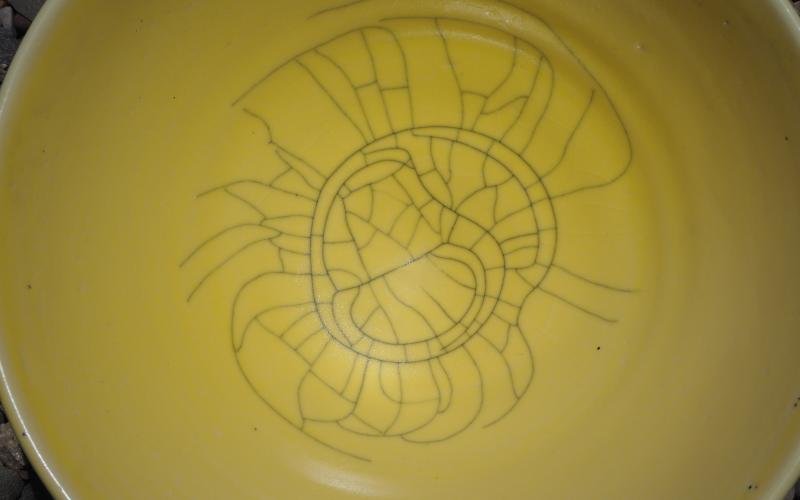
My journey to uncover factors that influence crazing patterns attempts to provide a plausible explanation for a “puzzling” pattern in a Chinese Guan ware vase. Along the way, I ran across an interesting method to create new, unusual crazing patterns.
Read More
Where Everything is Interconnected
By Tony Pandola
The name Roxanne Swentzell may conjure sculptural images in your mind, but she is more than that. “We’re all sensing our world in unique ways; that’s scary for people who want to think we’re not diverse and unique. But even though we’re all part of this whole thing together, there are real differences in experiences. Allowing ourselves to acknowledge that will help us start to have self-respect, to give quality attention to our own unique selves, or others, in ways the label world doesn’t."
Read More
Back to Issue

Author Bio

Nessim Cohen

Nessim Cohen has an M.A. in philosophy from the Sorbonne and an M.A. in political theory from Sciences Po, both located in Paris, France, where he works as a writer and an artist. His production involves ceramics, abstract calligraphy and performances. He first studied ceramics in Japan where he also was a guest tea master for two years. He has been writing about ceramics, tea ceremony and related arts for various publications as well as giving lectures and workshops on how to make tea bowls and the history of Asian ceramics in New York, Paris, and Maastricht, Netherlands. Nessim Cohen can be reached at nessimcohenstudio@gmail.com
Photo credit: © Fiona Forte
 

Website

CONTACT  |  NEWSLETTER SIGNUP  |  COPYRIGHT © 2026 STUDIO POTTER  |  SITE DESIGN

Design by Adaptive Theme

Member Log in

  • Create new account
  • Reset your password
Forgot your password?
Continue as Guest
Become a Member
Library IP Login