What A Cup Can Hold
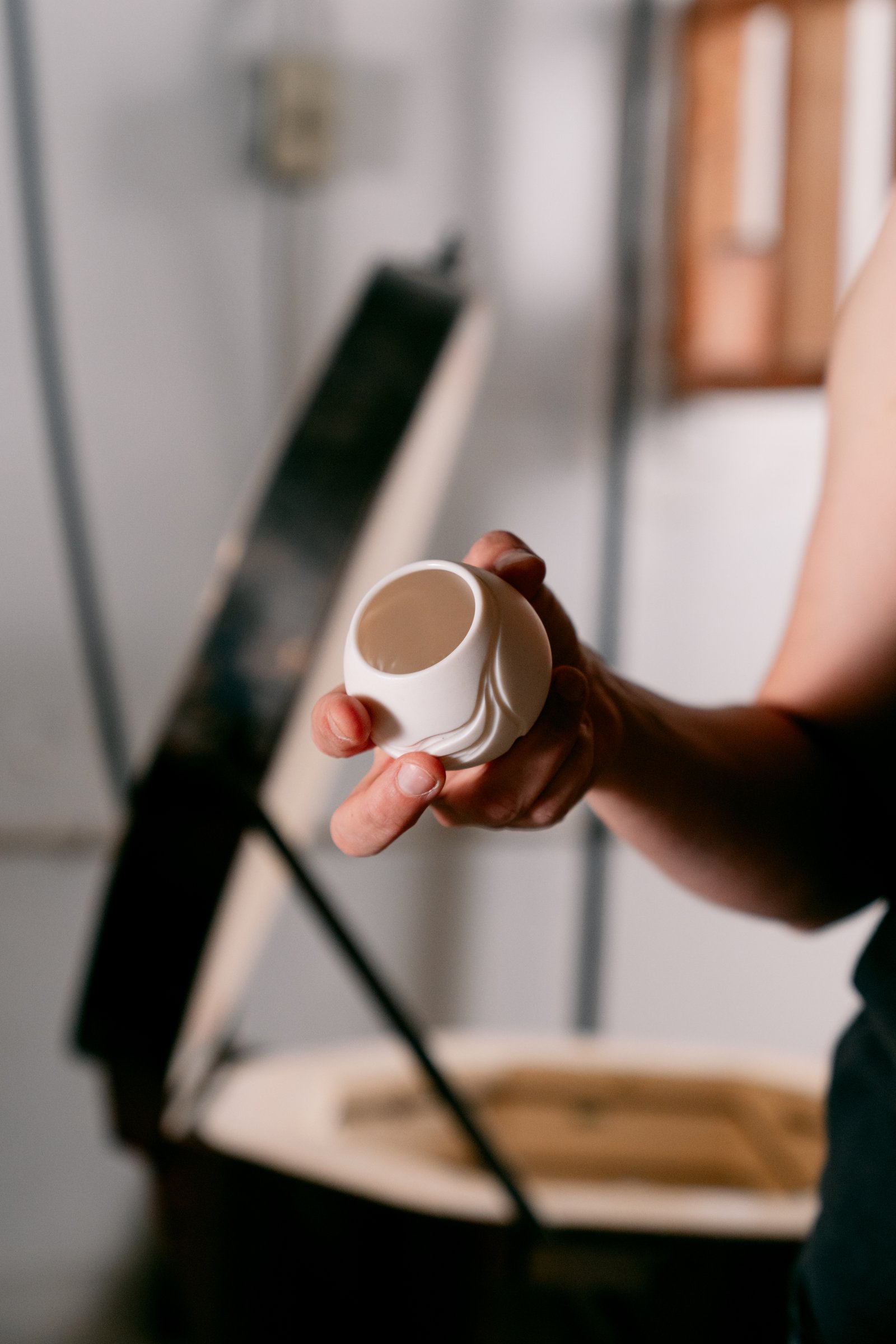 A cup does not require explanation.
People already know it through use, touch, routine, and memory.
Production pottery has always been about putting work into people's daily lives. Pots become part of morning routines, shared meals, kitchen shelves, and family histories. They move quietly through our lives as they are incorporated into daily rituals and collective gatherings.
Production pottery is the foundation of my ceramic practice. I've been making pottery since 2010. Every pot is an opportunity to explore a curve, refine a form, and better understand the material. Thousands of mugs, bowls, vases, and cups taught me craftsmanship through repetition.
As a production potter, this repetition had always been practical. You make another mug because that is the work. You refine the form because that is the work. You make hundreds because that is how you build a living.
Over time, repetition has also become a tool for me to express concepts and distribute ideas into the world through functional objects imbued with ideas of labor and my own personal experience. The ability to produce at scale became a way to build conceptual meaning through accumulation, allowing functional objects to carry ideas both individually and as part of a larger whole.
Ceramic artists have been moving between functional and conceptual practices for decades. The development of these ideas in my practice has been informed by my encounters with others’ work, and the discovery that my functional work can also offer conceptual ideas in a way that is approachable and resonant.
One of the first moments I felt a shift in my awareness that a cup could hold much more than its function was at NCECA in Sacramento in 2022 – walking through the exhibition hall, immersed in a room saturated with pottery from across the country. A visual polyphony of contemporary ceramics, highly finished work, intricate surfaces in every direction.
And then, from across the room, one piece stopped me.
It wasn't the loudest work in the exhibition. It was quiet. A raw dark clay cup with three small parallel yellow lines. The artist was Kristina Batiste of Juniper Clay. Inside the cup was a small piece of paper.
It read: "This is not a cup. This is a protest sign."
I still remember standing there holding it. At that moment, something shifted for me.
I turned the card over, and it read “this functional black lives matter sign is a reminder of the streets we’ve marched and the many roads ahead.”
Kristina wasn't asking the cup to stop being a cup. She had imbued the piece with meaning by asking it to hold an idea beyond its function.
I continued following her practice and thinking about the way she used functional forms to hold conceptual meaning. The pottery remained pottery while carrying ideas that extended far beyond the object.
That idea stayed with me and resurfaced two years later, when I saw Isaac Scott's work at NCECA in Richmond, Virginia in 2024.
Across the gallery was an installation composed of repeated ceramic forms. Individually, they referenced vessels, but together they resolved into the image of the Palestinian flag. From a distance, you experienced the whole. Up close, each individual object still carried its own weight, its own presence, its own part of the story.
Standing in front of Isaac's installation, I saw repetition become meaning beyond the labor of making.
Each individual piece could leave the installation. Someone could take one home, live with it, and still carry part of the larger idea. The work could disperse into many hands without losing its connection to the whole.
These two moments offered perspectives and inspiration that became a catalyst for my conceptual practice.
The next year, I was invited to exhibit work with Eutectic Gallery for NCECA 2025 in Salt Lake City.
I could have sent functional pottery. Instead, I kept returning to the same thought. The work that most inspired me held more than just function.
If I had the opportunity to say something, I should say something, and send work that pushed beyond my functional practice. This became my series, Resilient.
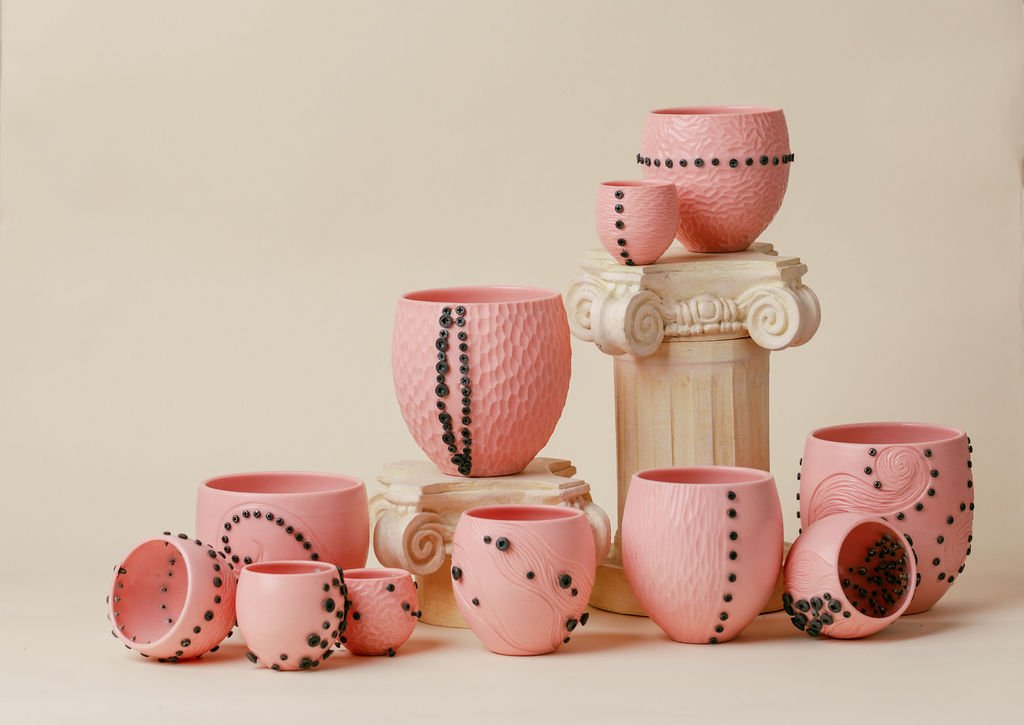
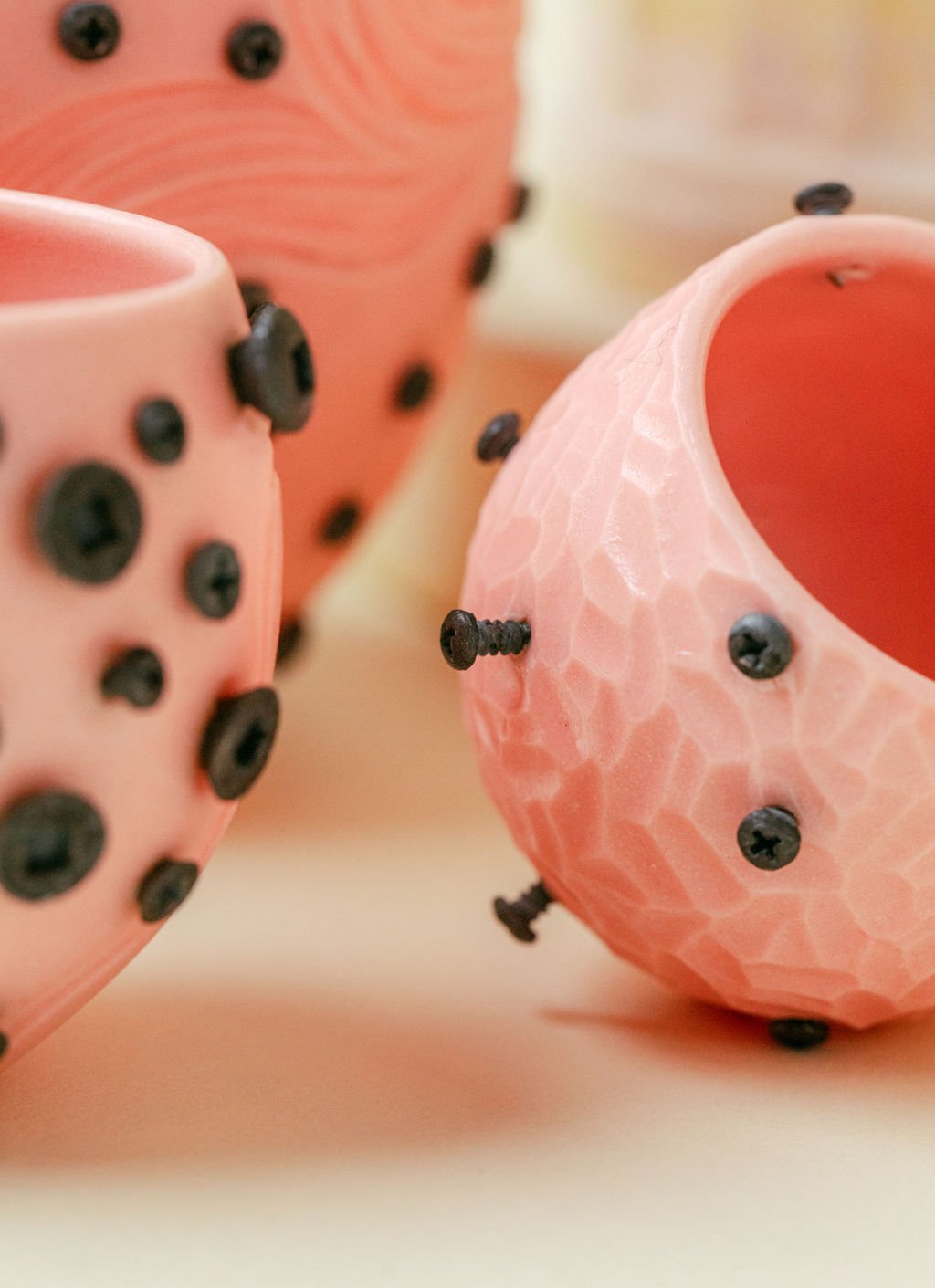
In this series, I transformed vessel forms into sculptural works embedded with screws, to make visible the strength and endurance of women navigating systemic inequities.
Resilient was inspired by a conflict about the negotiation of ownership. In a conversation about value and ownership, my contribution was reduced to a simple question:
 "How many screws did you put in the walls?"
I knew the question was absurd.
But I also understood exactly what it meant. It was a challenge to the value of my input. My contributions of planning, prepping space, as well as managing other shared responsibilities during the building process didn’t matter, and from their perspective, didn’t give me the right to ownership.
So much labor is invisible. Care work, emotional labor, planning, organizing, cleaning; these are not small contributions. They are often the foundation. But value is frequently assigned to the most visible act, the thing that can be counted, owned, monetized, or pointed to.
Trump had just been elected to his second term, and I was watching degrading conversations about women's bodies, labor, value, power, and ownership unfold publicly while also processing my own experiences of being devalued.
Resilient became a series of twenty-three pink porcelain vessels embedded with more than seven hundred and fifty stainless steel screws. The pieces were delicate, highly carved, and intentionally feminine in color and form. They referenced cups, but they were altered and pierced.
The screws were a direct reference to my personal experiences, as well as the idea of “being screwed” in many definitions of the phrase that women experience in the culture we live in. The work was literal and metaphorical at the same time.
The object is a cup. People know what a cup is. They know it as something intimate, something held, something used, something that lives close to the body. When that familiar form is pierced, the viewer is asked to reconsider an object they thought they understood.
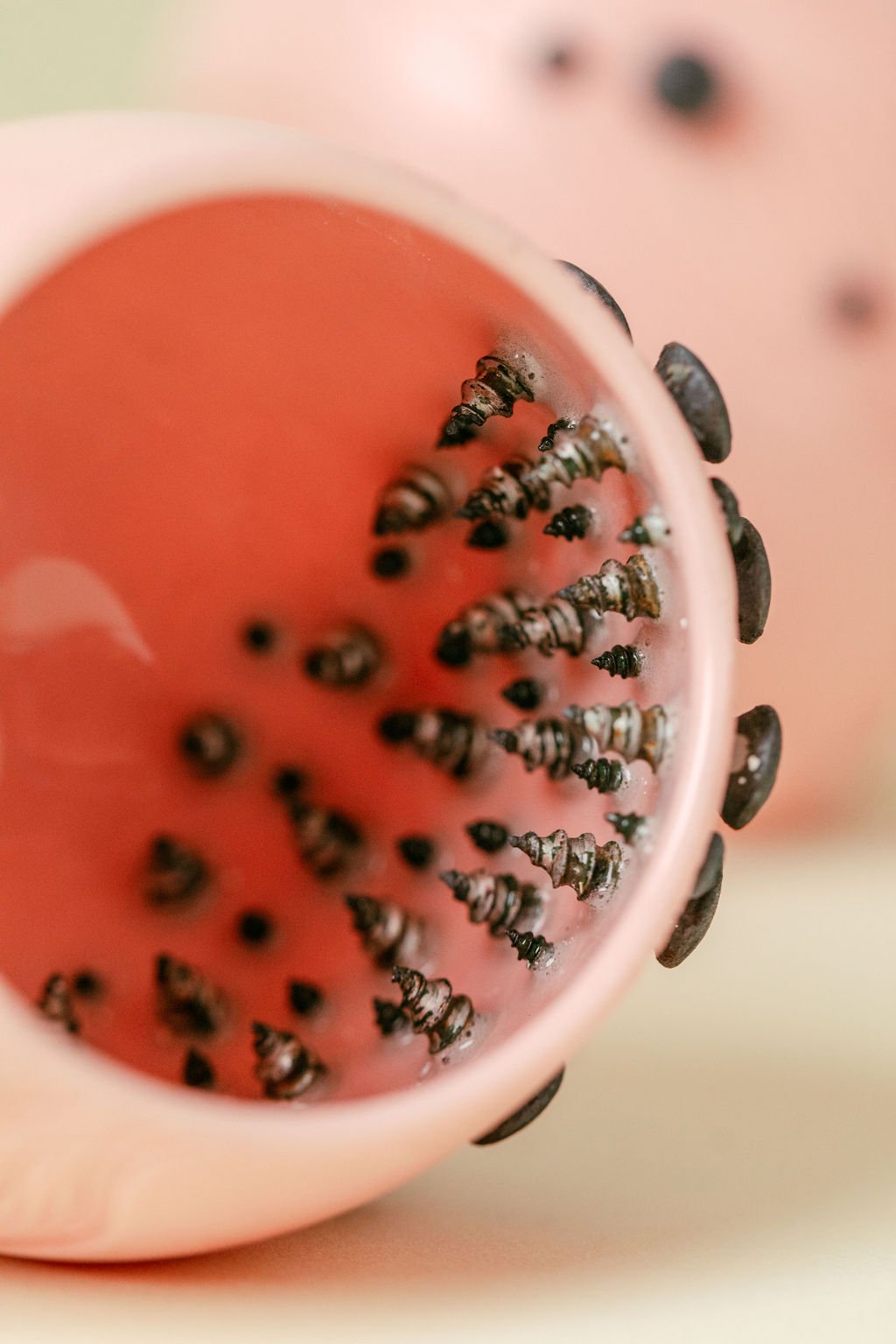 I had imagined the screws might tear the pieces apart. I knew enough technically to believe it might work. I had seen other artists fire metal with clay, and I had done research and asked questions. But I didn't know exactly what would happen with thin porcelain, pink stain, heavy carving, and hundreds of steel screws embedded through the forms.
I was putting the material through pressure and waiting to see what it became. What happened in the kiln would become part of the work. The process had meaning, and whatever the result was would also have meaning.
When the kiln cooled, the pieces had survived, but they were not unwounded. Some held cracks. Some carried the evidence of stress. But the porcelain and steel existed together. The screws did not destroy the forms. The forms did not reject the screws.
They held the tension.
When I later showed Resilient at Ceramic Showcase in Portland, Oregon, I spent several days beside the work, watching people encounter it. People asked questions about technique, but what stayed with me were the moments when someone simply stood with the work.
They felt seen.
And I felt seen, too.
The validation and solidarity reminded me that saying something had been worth it. I realized the objects weren't asking people to agree with me. They were creating space for recognition of painful experiences embedded in our own lives.
Human experience is unique, but generally not novel. When you say something honestly from your own life, you often create space for other people to recognize the resilience in theirs.
After Resilient, I wanted to continue integrating concepts into my functional work. I found myself thinking about working-class people and the ways our lives are structured by labor. The idea for my next body of work, A Year and a Day, began with labor and my desire to use the process of production to visually articulate the experience of working people's lives.
As a working-class artist, labor isn't an abstract idea. It structures my days. When I am making pots, raising my daughter, teaching, packing orders, firing kilns, answering emails, or maintaining a studio, I am laboring.
I wanted to make work about that experience.
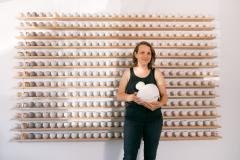
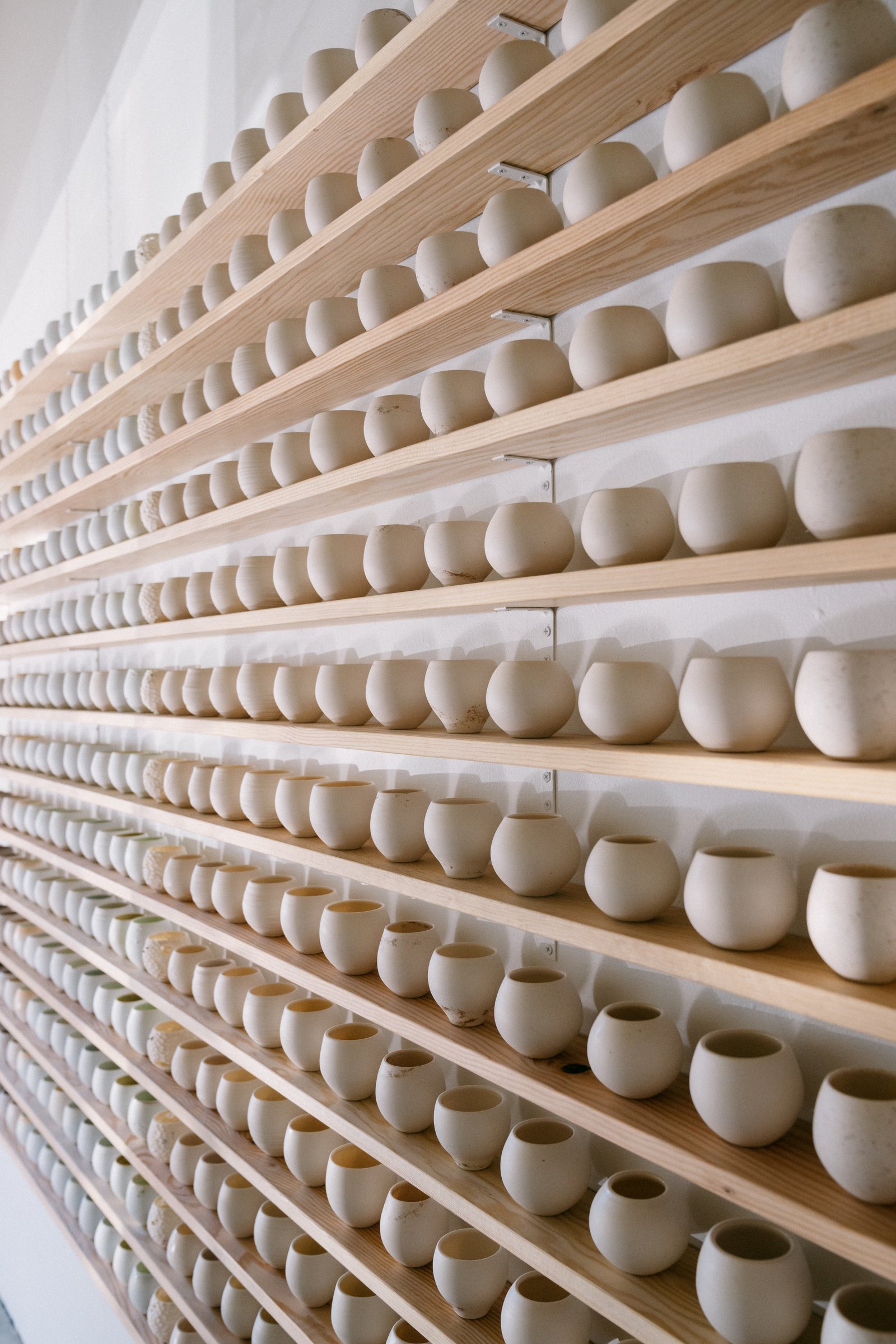
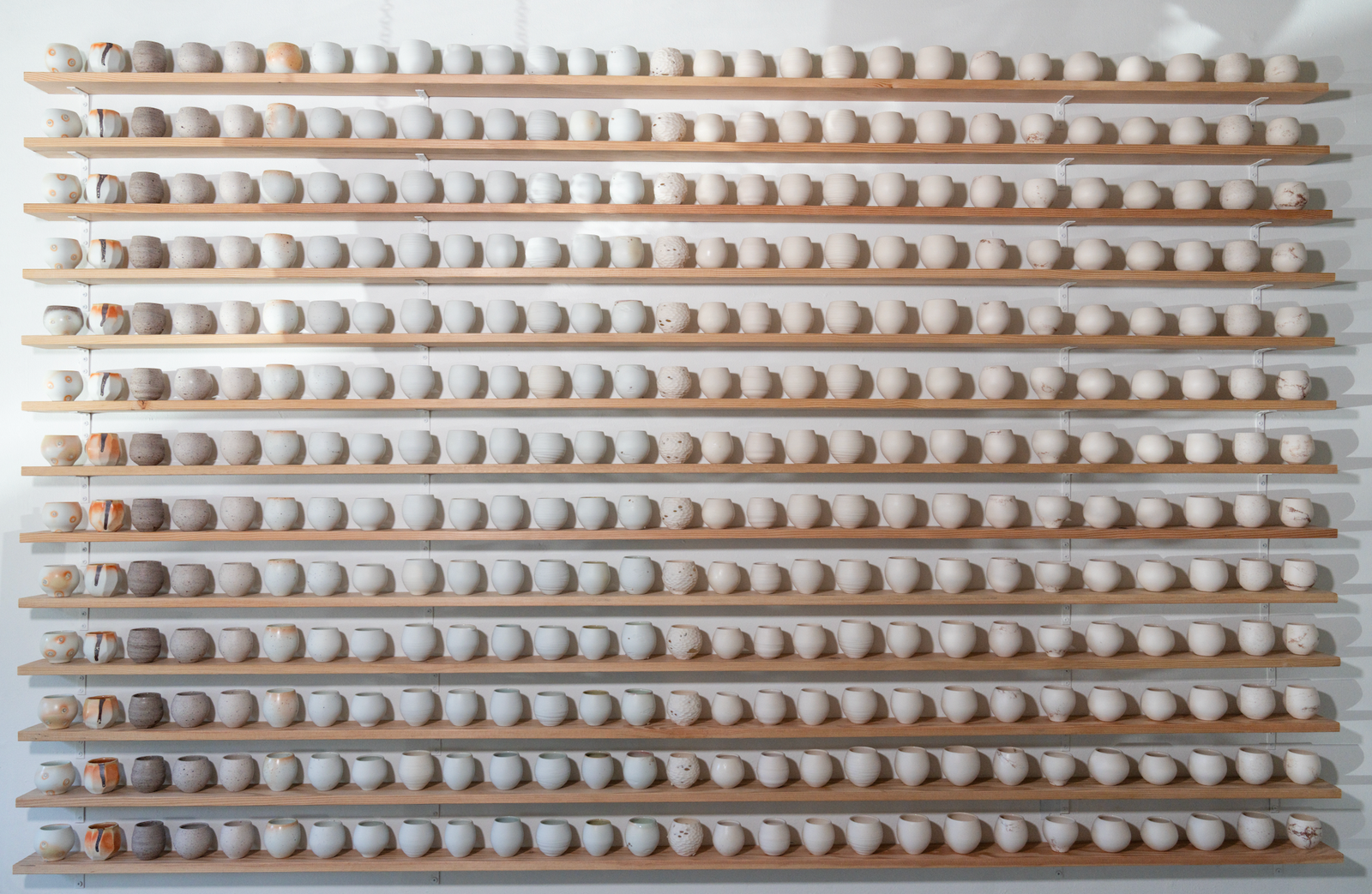
A Year and a Day is an installation of 365 small porcelain cups, displayed in twenty-eight columns and thirteen rows, with one anomalous cup, “A Day”, completing the 365th piece.
 When developing this concept, I asked myself: How do you visually represent labor?
I realized you just have to do a lot of work.
365 vessels felt like a familiar structure. We measure our lives in years. That became the framework for acknowledging the accumulation of daily work, not one extraordinary act, but hundreds of ordinary ones.
I came across the phrase “a year and a day” when reading about the menstrual cycle. The phrase describes a calendar considering lunation, cycles of the moon, which divide a year into thirteen months of twenty-eight days with one additional day. The menstrual cycle became the lens through which I talked about labor and the lived experience of working people.
The larger context of the work is about the daily grind and the production of a laboring person. The lens of menstruation brings the conversation to a reality that often goes unseen. The structure of a nine-to-five asks us to arrive each morning with the same energy, capacity, and productivity. But that is not how a menstruating body experiences time. People who menstruate experience their reset of function, production, and engagement through a cycle that many of us have very little education or understanding of. I want to bring visibility to that experience.
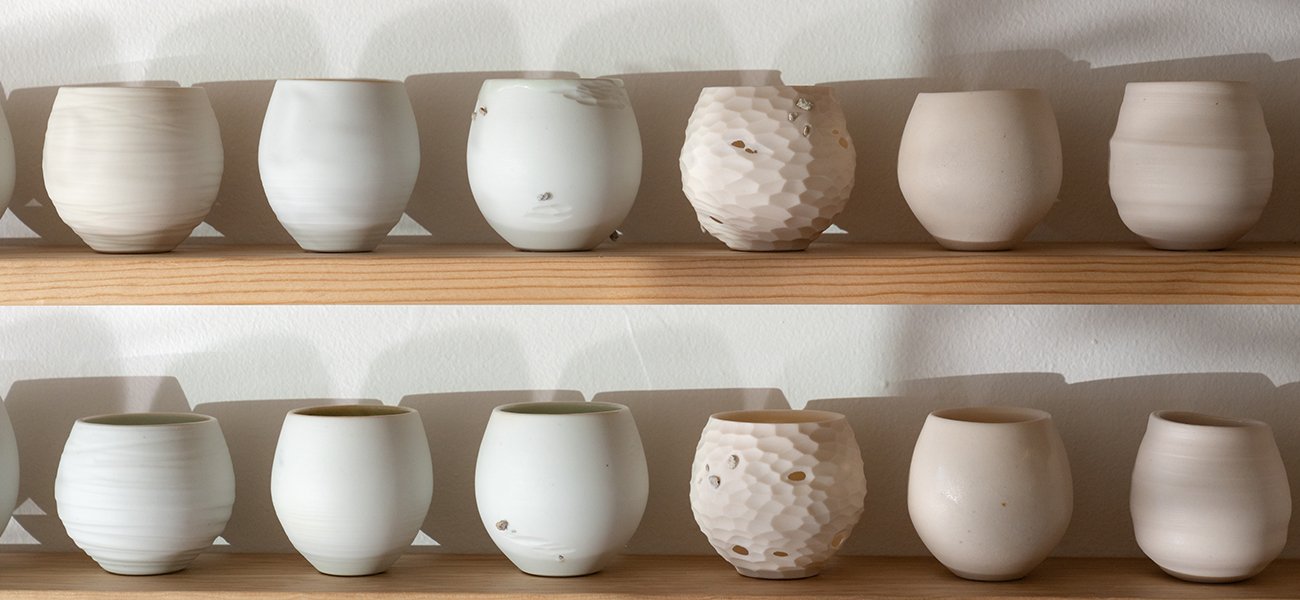
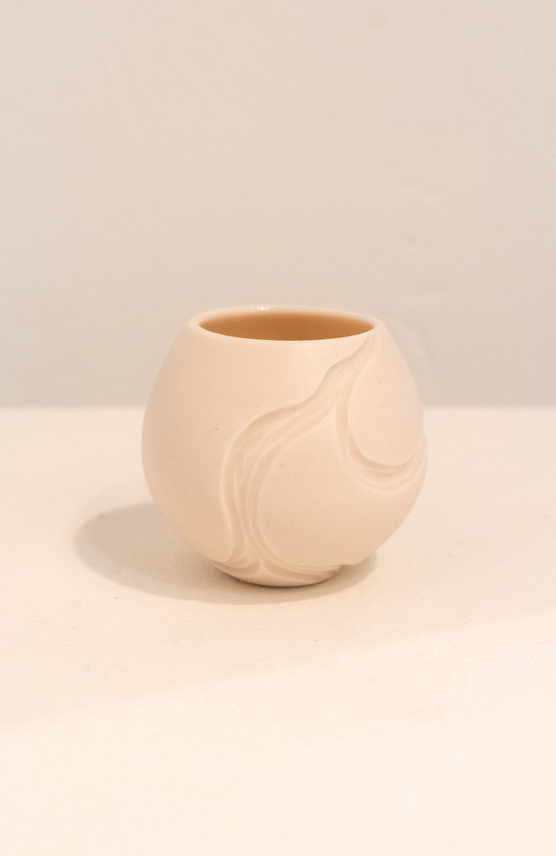 Each cup is the same size and form. They are the same objects that fit together, but there are nuanced shifts between them. Each day, each vessel acknowledges the work done that day while also making visible the physical and emotional realities that move through it. Even though we continue to work and produce every day, something physical and emotional is happening that is not the same every day. There are not always accommodations, socially or personally, for the ways our bodies and emotions move. We simply have to show up and continue producing.
There is so much that is being thought about and experienced privately in public. Menstruation is a socially uncomfortable subject to talk about or share. If you are in a room full of people, many of them may be actively bleeding, carrying an experience that often goes entirely unconsidered in our lives and our work. The installation makes visible an experience that is often carried privately while work continues publicly.
Menstruation literally brings life into the world. Without it, people don't exist. Humans don't exist. People focus so much on the acute moment of the birth of a child and point to that as the "labor." Creating life is not a singular act alone. The labor of creating life is always happening.
It's looked on with shame. It's hidden. Periods are looked upon as a weakness, yet they are fundamental to human life. I wanted to express that experience as something beautiful. Something worth spending time with. Something worth acknowledging. Worth seeing. Worth allowing people to see themselves in. Like the subtle variations between the cups, the rhythms of the body are not something to overcome or hide. They are part of how we experience our lives. A Year and a Day brings visibility to a form of labor that is so often unconsidered in our lives and our work, even though it is fundamental to all of us.
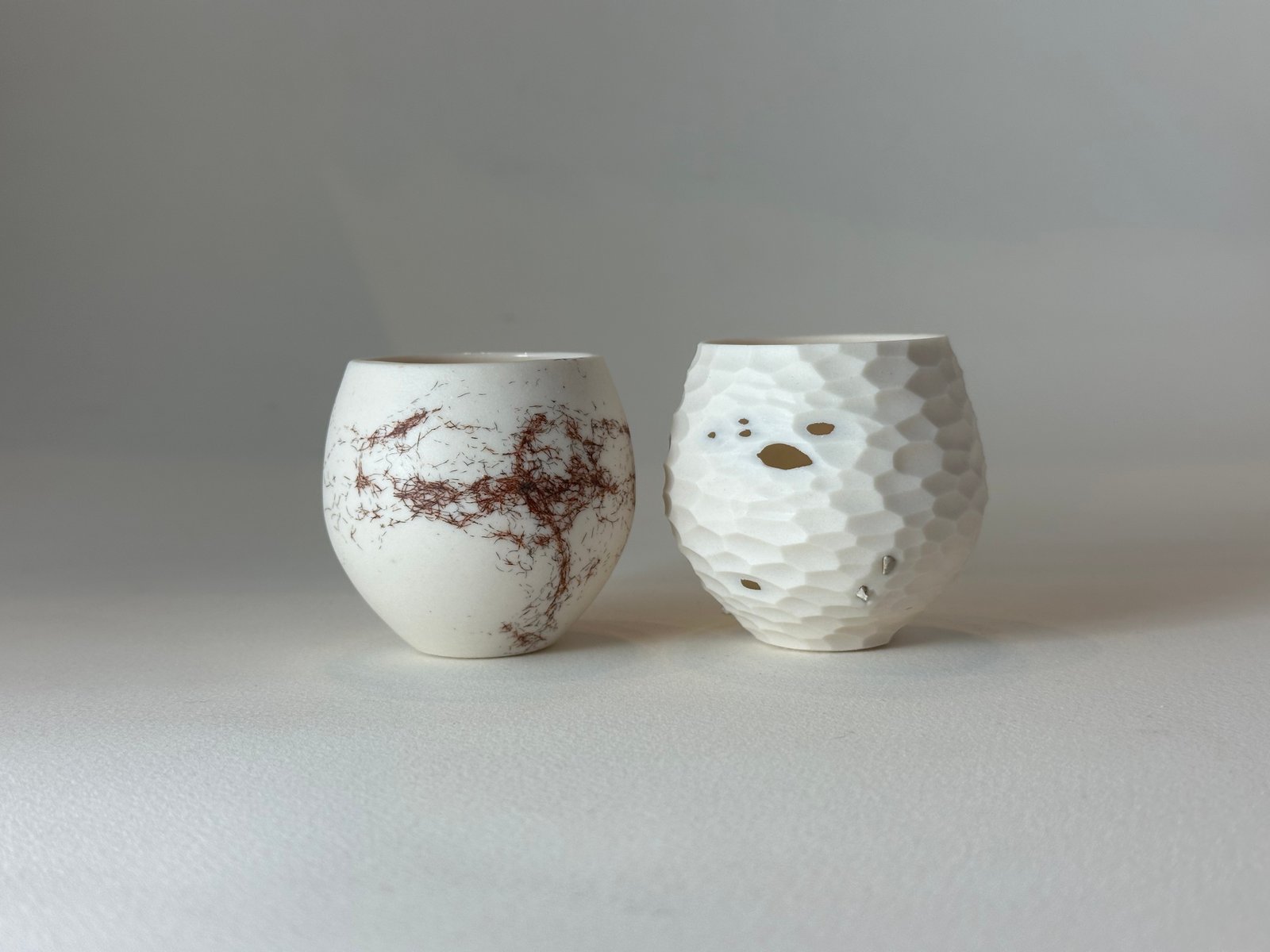
The installation is organized into thirteen rows, each containing twenty-eight vessels. All made in porcelain, subtle shifts in material, surface, iron inclusions, firing, and form through each of those twenty-eight vessels represent the menstrual cycle. Beginning with menstruation, leading into the follicular phase, then ovulation, and the luteal phase. And it repeats thirteen times – a year and a day.
Across the installation, shifts in clay body, firing atmosphere, iron and grog inclusions, carved surfaces, embedded steel wool, and the varying thickness of the porcelain become visual references to the changing experience of the body throughout the menstrual cycle. Gas reduction firings create the cooler tones of the follicular phase, while oxidation firings produce warmer surfaces that, together with embedded steel wool and thicker porcelain walls, reflect the physical and emotional complexity of the luteal phase. Wild clay and iron inclusions acknowledge menstruation, while carved openings and grog mark ovulation.
A Day is the final singular cup, carved intricately and unique from all the other vessels in the series, displayed on its own pedestal to the side of the larger installation. This piece acknowledges creativity and the brief but invaluable moments of rest amidst the laboring of working people. It honors those who have offered community and support in ways that surpass my expectations, and allow me to create with the confidence and security I would not have without them.
The accumulation of work represents labor. The individual vessels acknowledge the human experience of that daily labor. Each piece on its own has a presence, holds space and meaning, but collectively they hold something more impactful. This, to me, is a symbol of the strength of the working class.
If the work is about labor, then how do we talk about value?
I spend so much time thinking about my labor economically. Production potters joke about measuring purchases in "how many mugs is that?"
Working people understand time in that way. We calculate what an hour is worth, what a day earns, and how much labor is required to meet our basic needs. Time becomes inseparable from survival.
To address this question of value, I embedded, within A Year and a Day, a subset of vessels titled One Hour.
Rather than assigning a fixed price to these vessels, I ask each collector to determine the purchase price based on one hour of their own labor.
The exchange shifts the conversation. One Hour asks the viewer to consider their own relationship to labor, value, and exchange. It shifts the conversation away from a fixed market price and toward something more human: the recognition that every person exchanges pieces of their life through work, even if our society chooses to value those hours very differently.
During the exhibition, I was talking with a visitor who was drawn to the vessels in One Hour.
"I am one of those people who makes twenty dollars an hour," she said. "And I know these are worth more than that."
I replied, "Between the two of us, this is the most human exchange. One hour for one hour."
When our worth is measured primarily through wages and compensation, it becomes easy to lose sight of our shared humanity.
A Year and a Day is the central installation of my recent exhibition of the same title, A Year and a Day, which was on view at Stark Street Studios in Portland, Oregon, this June. Supporting works include sculptures that expand the conversation across different scales of time.
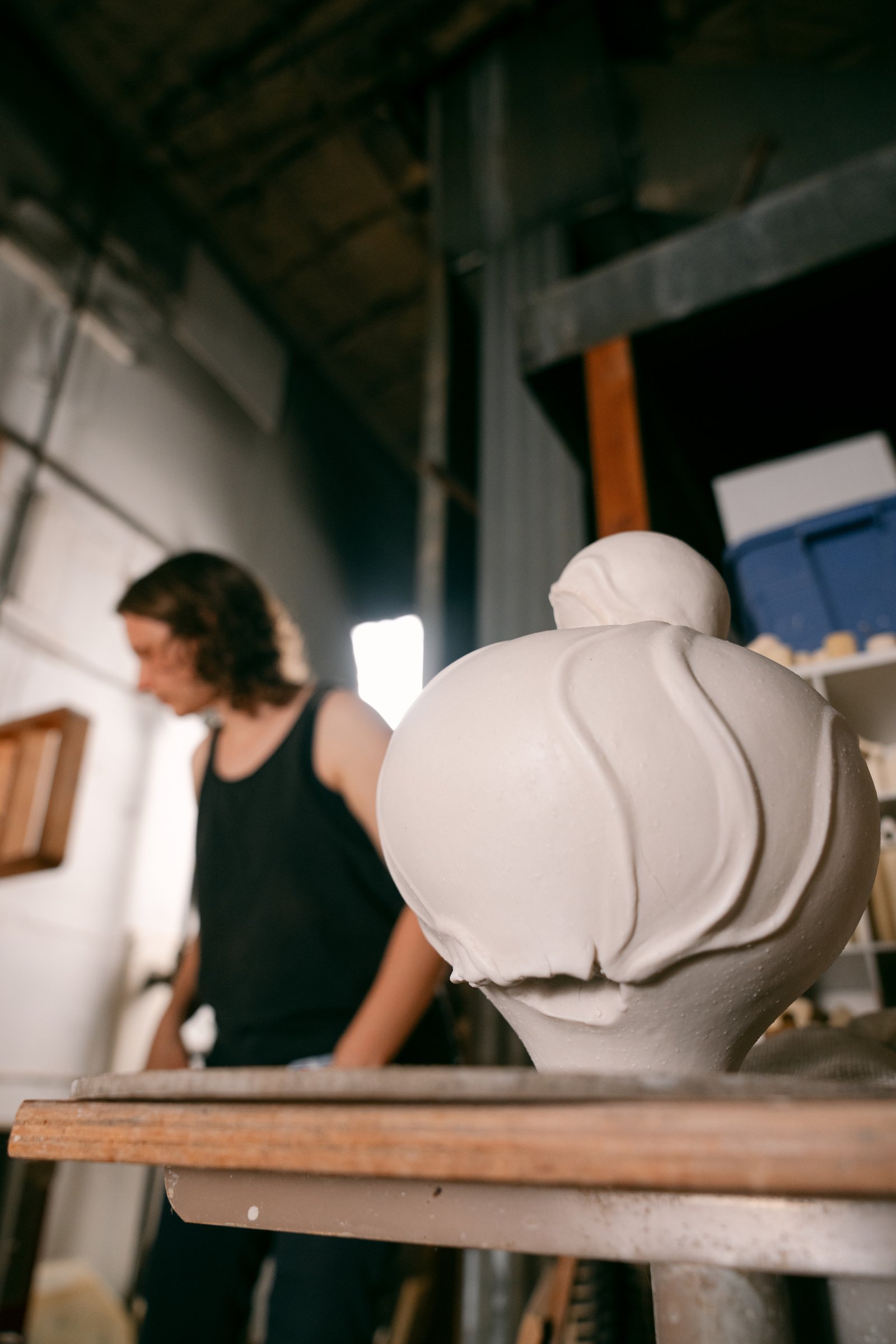
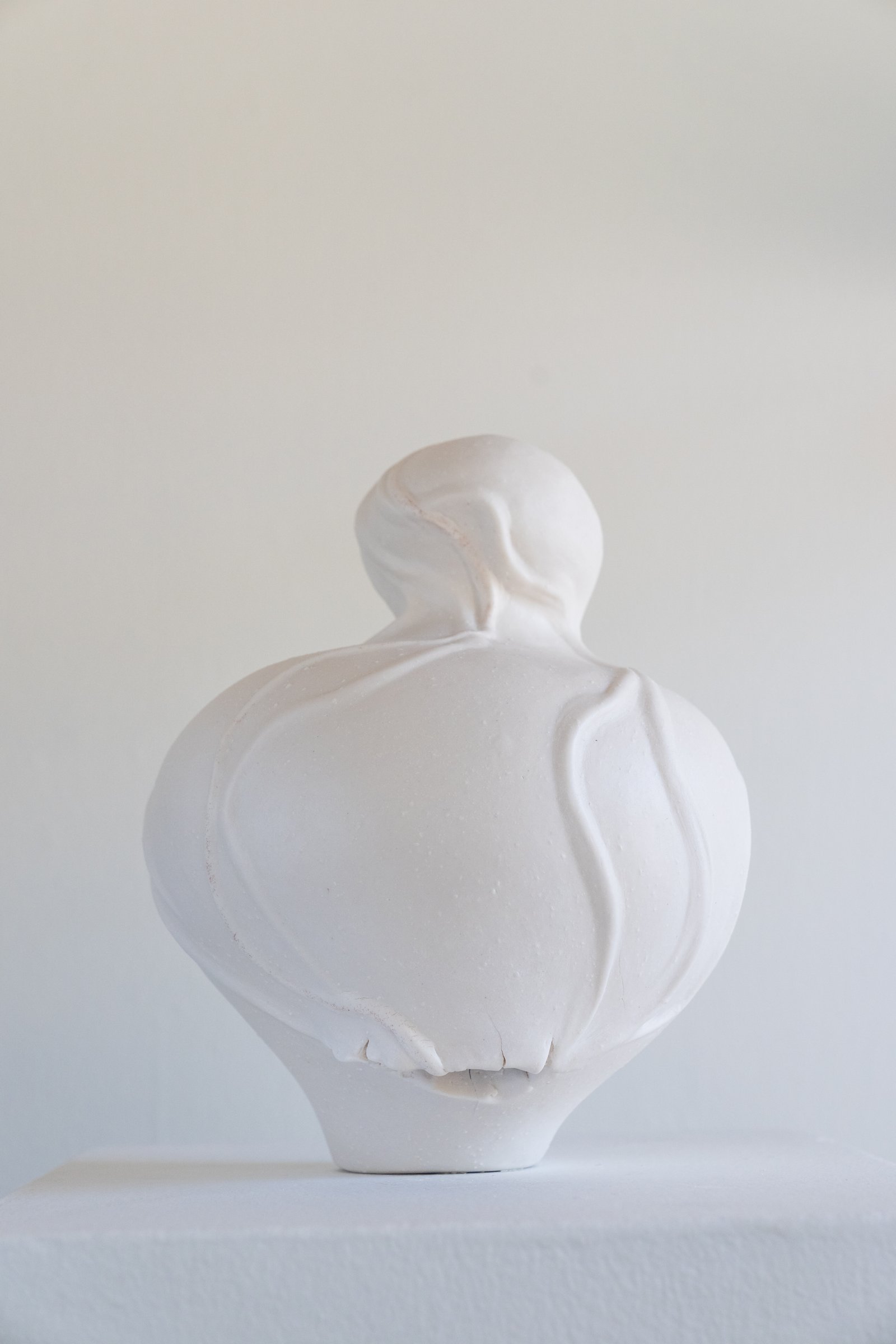
In the piece, Self-Portrait Venus, I'm considering the work at its most intimate scale: one body, one birth, one experience. Referencing the Venus of Willendorf, pregnancy, and my own Cesarean birth, the piece acknowledges birth as both an act of creation and a profound physical transformation. During its making, I incorporated my menstrual blood into one of the sculpted veins. Artist Maia Schwartz said, "Menstruation is the only blood that is not born from violence, yet it's the one that disgusts you the most." This is an acknowledgement of the beauty and sacredness of the lifeblood that flows from a menstruating body.
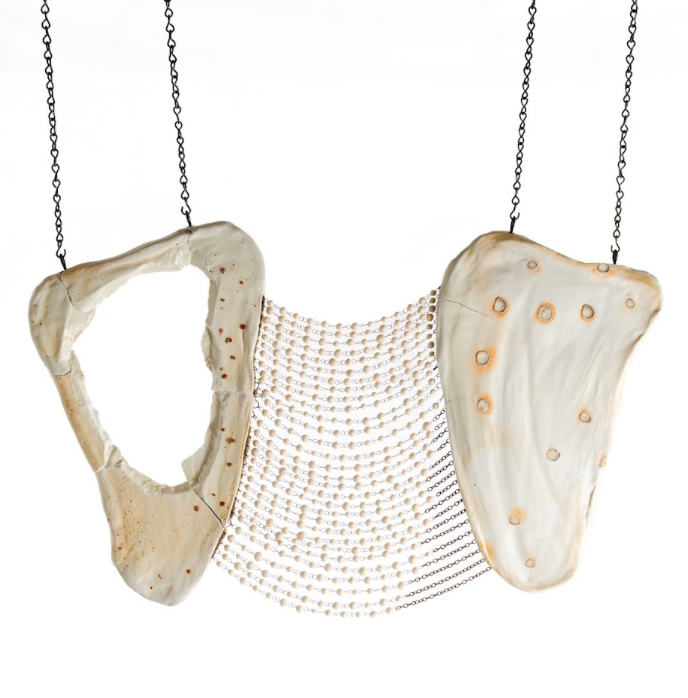
In the piece, On Their Shoulders, I consider the accumulation of a lifetime. 390 individually sculpted beads in thirty rows woven between two sculpted ceramic shoulder blades, reference the approximate number of menstrual cycles a person may experience over the course of a lifetime. Like A Year and a Day, the work depends on repetition and accumulation. Each bead acknowledges a single cycle. Together, they hold the weight of a lifetime of embodied experience.
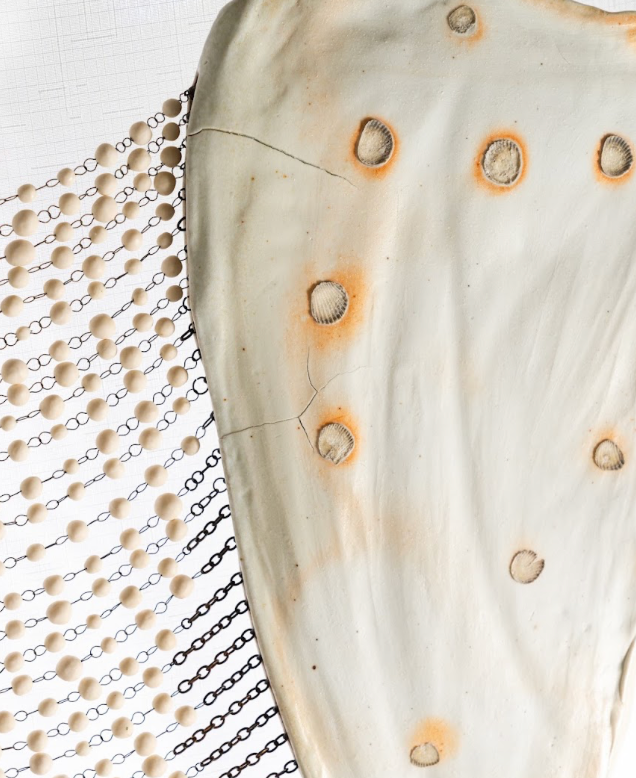
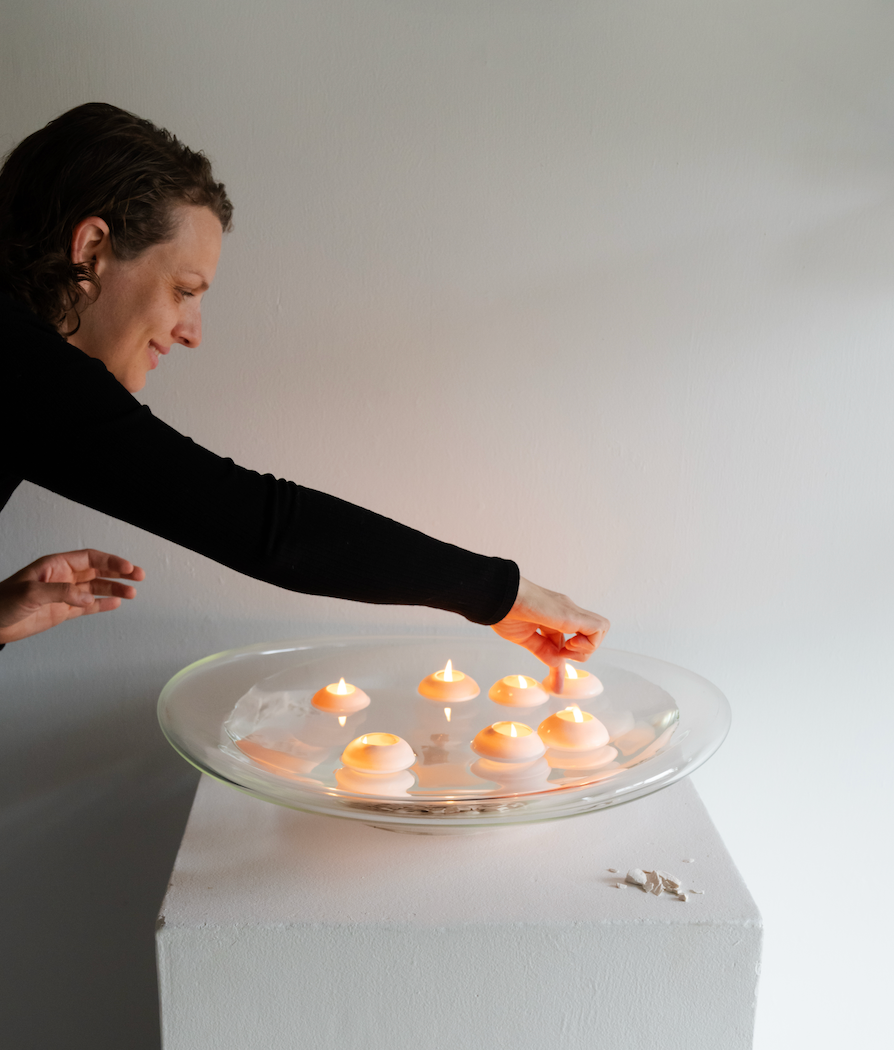
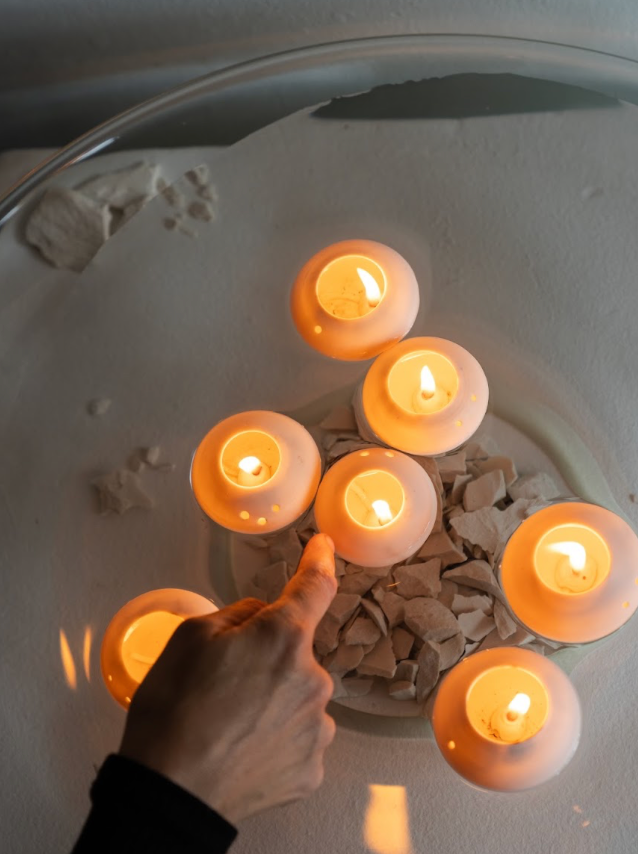
Enduring Light reaches toward ancestry and continuity. Broken fragments from the shoulder blade forms in On Their Shoulders become part of a new work, carrying the memory of what came before. Delicate porcelain luminaries float above water, acknowledging ancestry and the ways that care, knowledge, and experience are carried forward across generations. As with the other works throughout the exhibition, porcelain as a material holds both delicateness and strength, becoming a mirror for endurance itself.
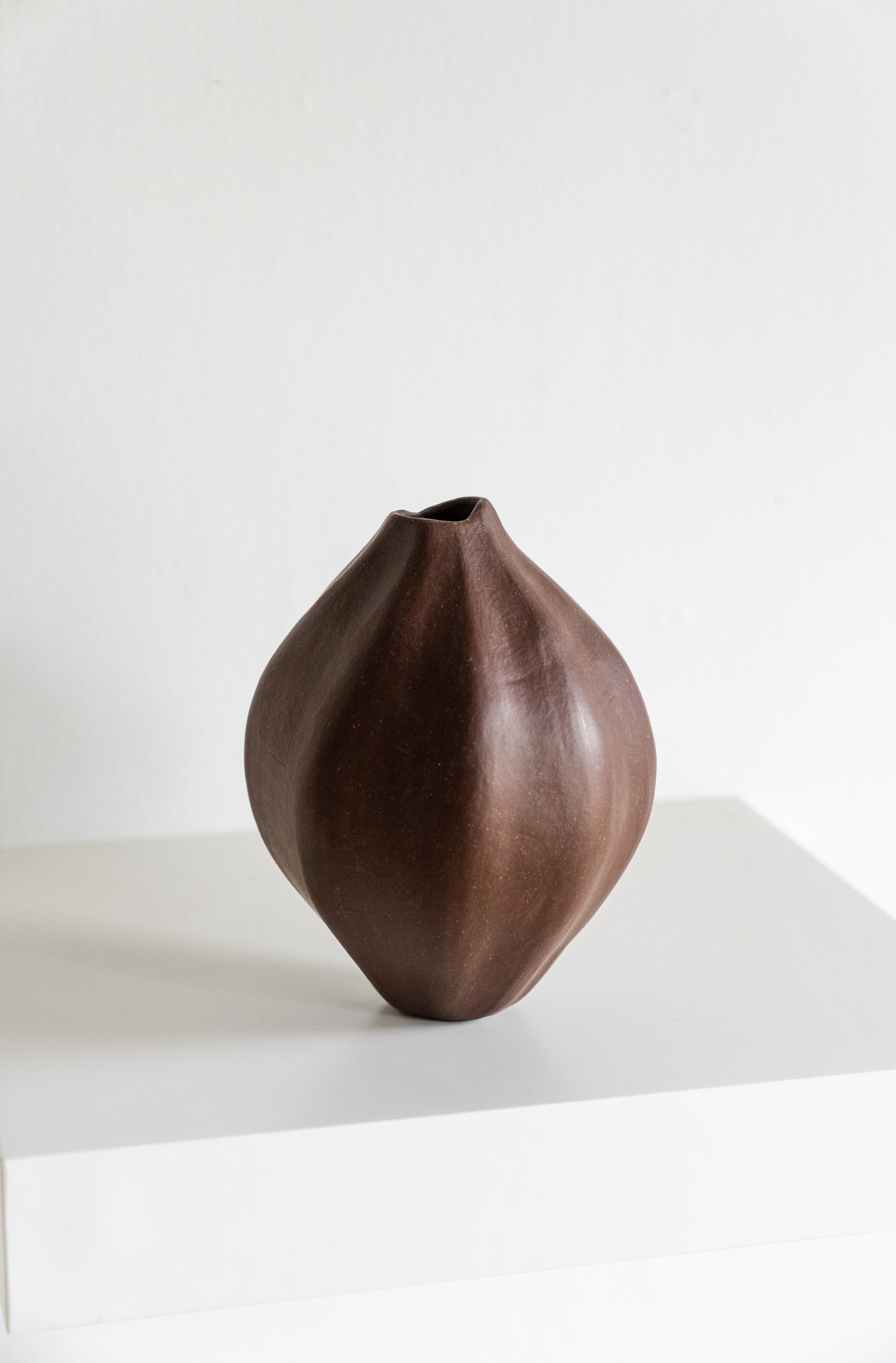 The Seed was included alongside five invited ceramic artists in Vessels, a companion exhibition of works by mothers whose practices continue to inspire me. I made it in a dark clay body, burnished it slowly, and spent a great deal of time with the surface. It held a quiet strength for me. Including The Seed in that context acknowledged that our work does not develop in isolation. It grows through community, and the examples of artists make it possible to imagine our own path forward.
Together, these works move through different scales of time. Self-Portrait Venus holds a single body and a single birth. A Year and a Day traces one year of labor. On Their Shoulders expands toward a lifetime of cycles. Enduring Light reaches toward ancestry and continuity. The Seed acknowledges origin. Together, they build a larger picture of labor, care, endurance, and the lived experience of working people.
The exhibition was displayed at Stark Street Studio and Gallery, a working pottery studio in Portland, Oregon, that has been in operation for more than forty years.
For me, A Year and a Day belongs in a working pottery studio. It is about production, repetition, craftsmanship, and the daily realities of making a living with your hands. Every vessel in A Year and a Day was made there, while in the company of other working artists who have built lives through clay.
Presenting the work in a working pottery studio made it accessible to the community it speaks to: fellow potters, working artists, neighbors, collectors, families, and members of the community who understood those rhythms in their own lives.
The installation was never intended to remain intact. After the month of the exhibition, the 365 pieces were dispersed. Seeing Isaac Scott's installation years earlier helped me understand that individual objects can carry a larger idea long after they leave the gallery. Production pottery has always done that. A single cup becomes part of someone's daily life while remaining connected to the hands that made it and the larger body of work from which it came.
The installation may have dispersed, but each piece remains connected to the whole. The accessibility of a single functional vessel makes the conservation of labor, value, and shared experience available beyond the gallery. Individual acts of labor become most visible as a part of something collective.
In the art world, conceptual work makes sense to people, but using functional objects as the vessel for concept helps me to connect with all of the people whom the work is about, who the work is for, to people who are important to me, and the people who raised me.
Asking how production pottery can carry conceptual ideas while remaining rooted in the language of functional objects has given me a visual language to connect with people who are quieted, to be an advocate, and to acknowledge hidden truths and shared experiences in order to build a sense of collective power.
A cup doesn't require explanation.
That's why it can hold so much.