
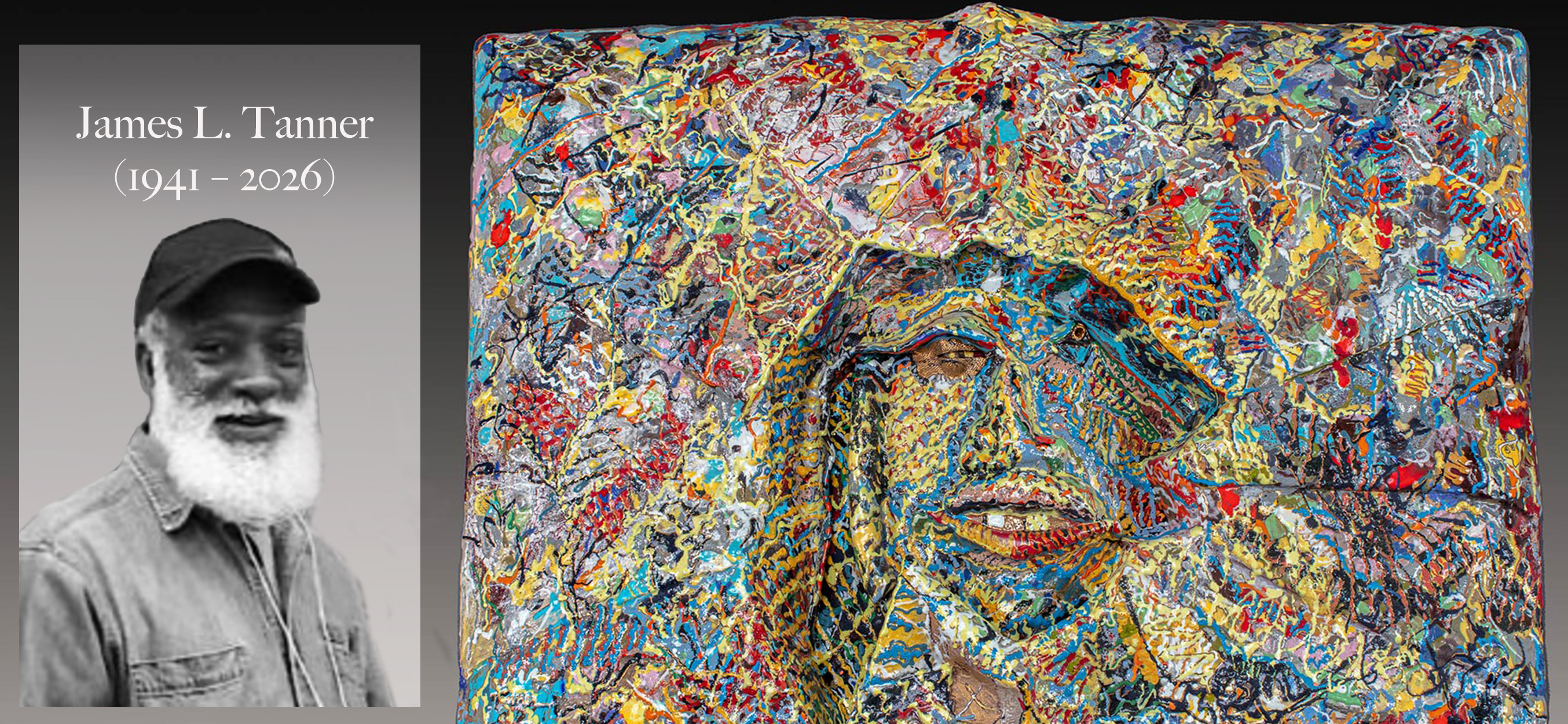
In Memoriam – James L. Tanner
 James L. Tanner (1941-2026) died in January at his home in Janesville, Minnesota. James, who goes by Jim, taught ceramics at Minnesota State University, Mankato, for thirty-five years. He was eighty-four.
His close friend and colleague, Roy Strassberg, said, “He was a printmaker, a painter, a ceramist, a glassblower, and a sculptor; he was really that kind of unique, almost a Renaissance man artist. He was smart and articulate and brave. Especially brave.”
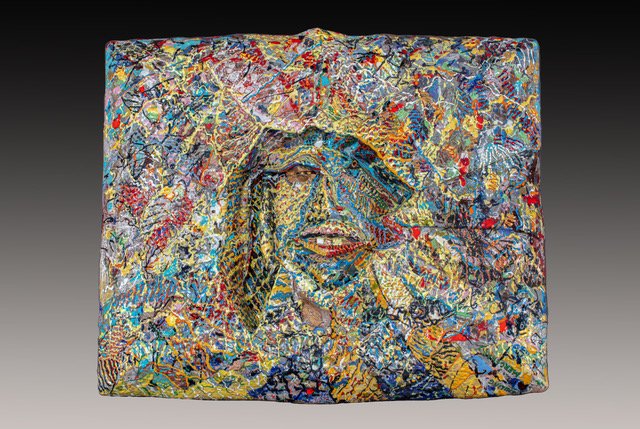
Jim studied with Harvey Littleton in the well-known glass program at the University of Wisconsin-Madison, but he is best known for ceramic sculpture. His most famous sculptures resemble African masks, but part of their inspiration came from the faces of relatives, his aunt, grandmother, and others close to him during his childhood in Florida.
To know Jim and his wife, Janice, is to know about the gardens and plants around their rural home. The gardens connected directly with the artwork Janice created in their studio home, but they were more meditative for Jim. He came from a family of gardeners, and, for him, the gardens were a place to meditate and reflect: “It’s a beautiful thing to live, to breathe, to embrace so much of nature.”
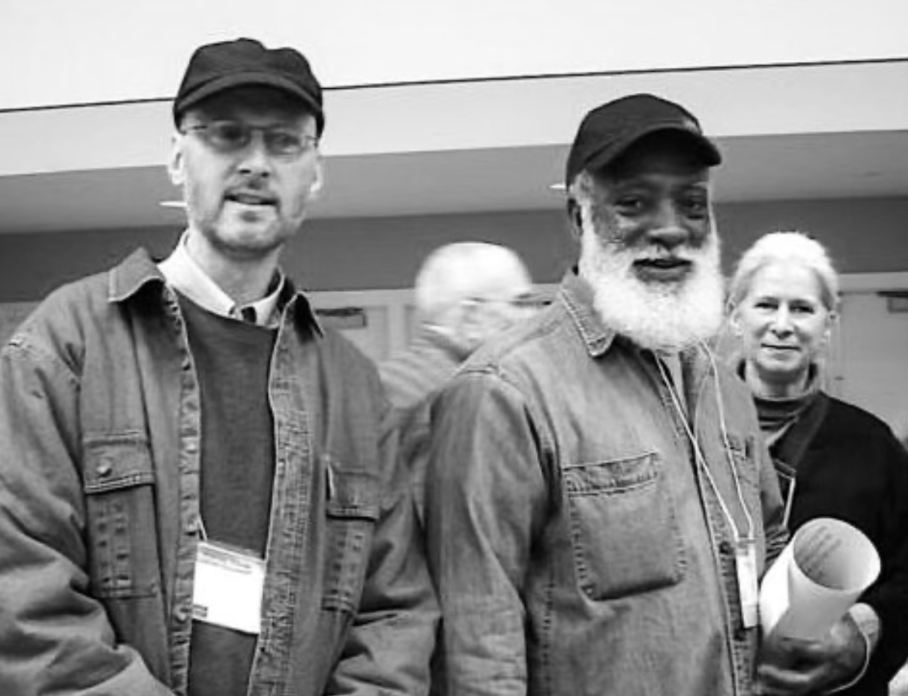
My strongest memory of Jim is from National Council on Education for the Ceramic Arts (NCECA) in Minneapolis, decades ago. I stopped by the conference after a meeting to connect with old friends. I spotted Jim and headed towards him. But I stopped, took a seat, and watched. He was talking, surrounded by friends, with his hands and arms emphasizing his story.
Even in the stale surroundings of a conference hotel, he looked like a griot. His friends, captivated, stood motionless. I stayed in my seat because I could drop by and say hello whenever I pleased, but this group had travelled to NCECA from faraway places. For all of their travel and effort, they deserved this moment with Jim. He was that special.
I can’t write about Jim without emphasizing his close friendship with Roy and Barbara Strassberg. The three of them shared a love of working with clay, but there was so much more. Roy and Jim were a team; they taught ceramics together for years. My friend Mike Lagerquist wrote, “Strassberg and Tanner became good friends in part because, as a Jew and a Black man, respectively, in mostly white, Christian Minnesota, they supported each other.” Roy went on to say, “We were known as the ‘Minnesota twins,’ or ‘twin sons of different mothers,’ and that collaboration, that relationship, really was to the benefit of not just us, but also our students.”
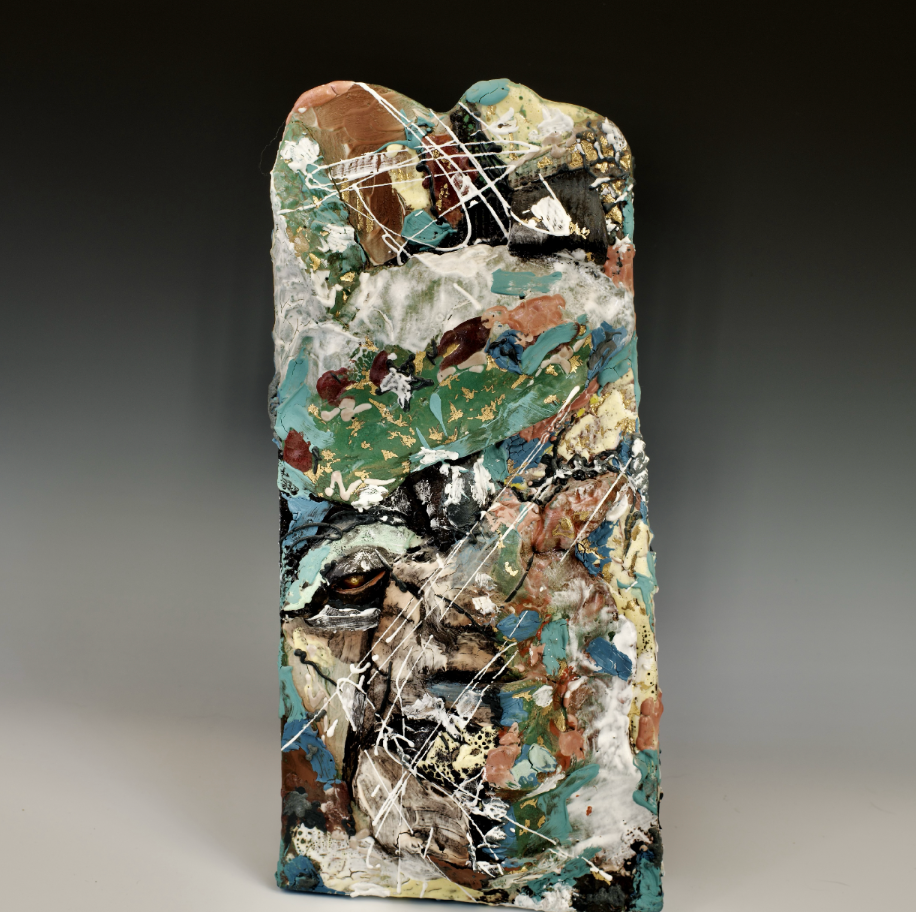 Mike tracked down one of their students, Kelly Jean Ohl, who studied with them both as an undergraduate and masters student. She said, “These two have left an indelible mark on my life. So much of my daily studio practice is rooted in their examples of showing up, working hard, and finding something new each and every day to keep the work alive and evolving.”
Jim Tanner’s gardens will endure, but many of the seeds he planted will flourish in the lives of students like Ohl. He was a remarkable artist, teacher, and gardener.
Special thanks to Regina Flanagan and Michael Lagerquist.
For a detailed blog and intimate look into Jim and Janice Tanner's garden and art head to Reginas travel log. And to read more on Jim's legacy with MSU read "A Life Remembered: Jim Tanner created a tradition of art excellence at MSU," by Michael Lagerquist.