Embracing the Squish – An Interview with Bede Clarke
Editorial note: This is the third interview in the "Embracing the Squish" series by Hamish Jackson for Studio Potter. In this series, Hamish speaks with ceramic artists whose pots seem to defy the finality of the firing process – works that hold onto the softness, the movement, and the vulnerability of wet clay. These are pots that remember the hand, the squeeze, the gesture.
Hamish's conversations explore how these artists use clay’s most tactile qualities to express feeling, form, and meaning. From pinched mugs to slumped jars, these pots carry a sense of immediacy, even playfulness – a kind of looseness that invites both curiosity and comfort.
There is much to learn from potters who embrace the squish. Their work reminds us that the process is not just about control and refinement but also about letting clay be clay. – Randi O'Brien, editor
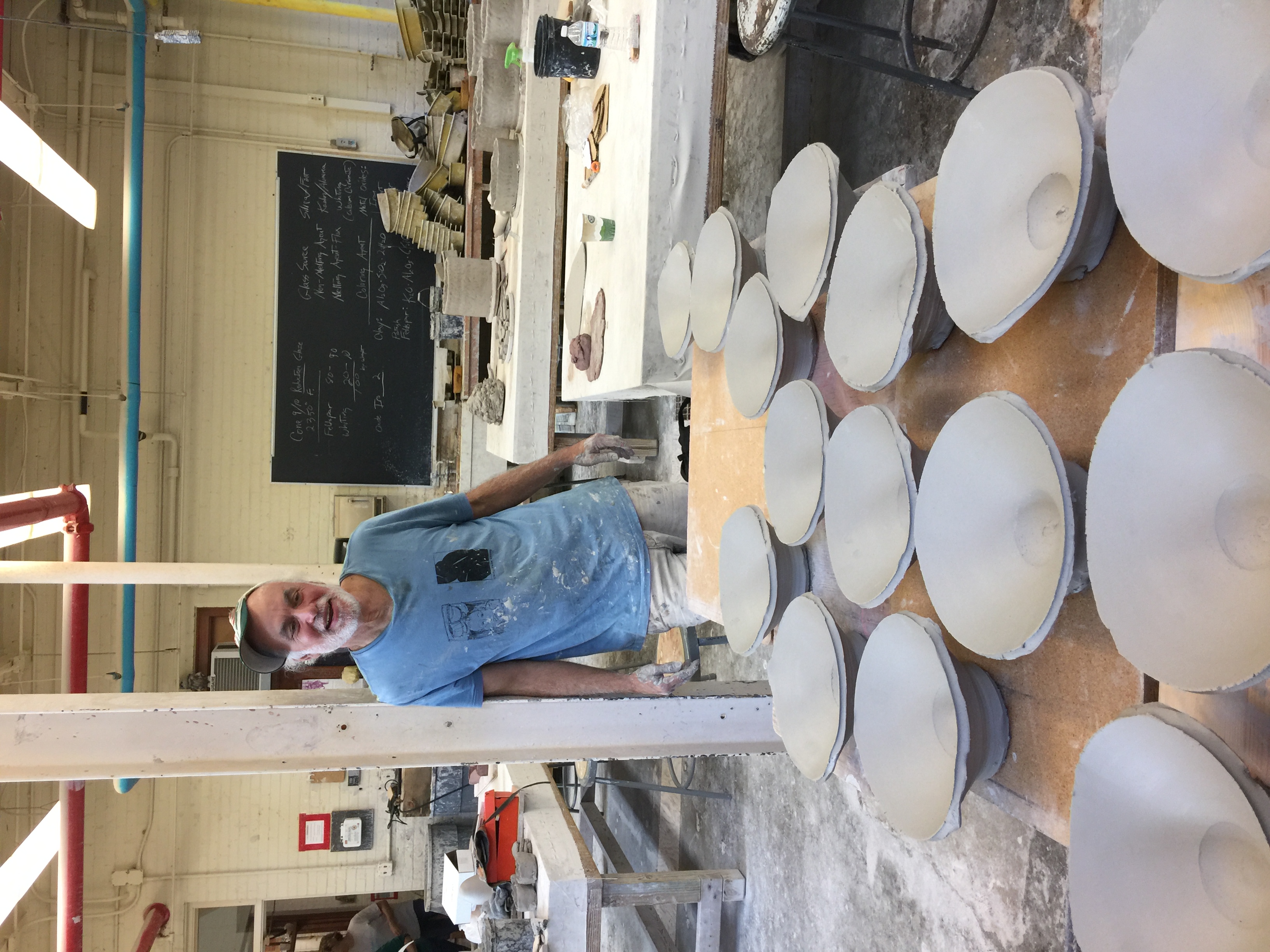 An interview with Bede Clarke, "Embracing the Squish" series, recorded April 29, 2025.
Hamish Jackson
Do you remember when you first touched clay?
Bede Clarke
I was fifteen and in high school, and I was skipping a class. Back then, going to class was optional. I was headed to the pool hall, which was more interesting, and walked into the pottery class. I saw a guy making a pot on the wheel, and my heart skipped a beat. I was immediately attracted to it. I got permission to go take the pottery class, and I was hooked.
Hamish
Did you have a good high school pottery teacher?
Bede
Yes, he'd been in Japan during the occupation, after World War II, and he actually owned Shoji Hamada pots. I asked him where I could get more instruction, and he told me there was a very good potter, Karl Christiansen, teaching at the Davenport Art Museum. And so that very semester, I started taking classes at the museum pottery shop with Karl. Karl was really instrumental. He was one of the deans of Iowa pottery, kind of like Mackenzie in Minnesota. Our premier potters were Clary Ilian and Karl Christiansen. And so I studied with Karl, and later apprenticed with him for a little while. It was a great foundational training in pots.
Hamish
What was your apprenticeship like? Was that after high school?
Bede
Yeah, it was after high school. It was short-lived because I was pretty restless. I lived in Karl’s barn and did duties around his house and studio in exchange for a place to work, clay, and firing.
I worked for them four hours a day, five days a week. Karl and his wife, Mary, both gave me duties. Wedging and making clay for Karl, or doing things on the property like putting up a fence or cleaning up around the house. When I was with him at the museum pottery shop, I ended up becoming the shop foreman there when I was sixteen or seventeen. That was like an apprenticeship, too. I was firing the kilns and making the glazes. It was a really important time for me.
I wish I could return that to somebody, but I seem incapable of working around people. I really would like to, because it was such a good experience for me. Karl was relaxed about it. I have a hard time organizing my own time, let alone organizing an assistant's or an apprentice's time. You did an apprenticeship too.
Hamish
Yes, and that’s where some of the impetus for the Embracing the Squish series came from. I am very grateful for all I learnt during my apprenticeship, but am in the process of trying to loosen up a bit. I’m interviewing potters who I admire and whose finished pots retain the softness and the malleability of wet clay: its squishiness! I remember seeing you demonstrate at the North Carolina pottery conference in 2020, and you were making a jar with an animal on top. You were poking and prodding the clay. I had never seen anyone work with clay like that. It looked like you were having so much fun.
Bede
I think what you're hitting on with this is really interesting: our relationship to pots and what we want out of them. What do we love about pots, and what do we really want to express with them?
It changes over a career. During your apprenticeship, you might have been working on the geometry or proportions of the pot or mastering lids, mastering feet, handles, spouts, all those kinds of things. And now it sounds like you are moving into being curious about something that's maybe expressionistic. I think that’s quite natural to try and move your aesthetic or the tone of your pots towards a new sound.
Hamish
Did that happen to you? Did you make derivative pots in the beginning?
Bede
Oh yeah, I made Karl's pots. I mean, Karl's pots were so good, you know, his teapots, his casseroles, his cups, his plates. All the young potters asked why he didn't leave us something to figure out. It was almost like there was no other way. Of course, we were just kidding, but we all acknowledged that he'd really solved a lot of the problems of a good pot.
I think it did shift for me. At first, I was only interested in pottery, not the broader art world. I became interested in painting and drawing over time, and reading books. I read Yanagi and Hamada, who looked mostly at Asian pots, but also Cycladic pots and African pots. In undergraduate school, I started taking other art classes: painting, drawing, printmaking, and art history. It seeped in and broadened my world away from just functional pottery.
For me, teaching and making have interwoven quite a bit. I started teaching at community arts centers when I was eighteen or nineteen, and discovered that I really like teaching. You know, we spend so much time in the studio alone that it was kind of nice to get out and interact with people. And so when I finished my undergraduate degree, I got a certificate and taught elementary art and high school art.
After five years, I did go back to graduate school, to the University of Iowa. That was an interesting decision. I was older. I had a four-year-old child at the time. I remember being kind of scared about going to graduate school and thinking it may be a waste of my time and money. It's kind of a scary proposition, especially with a child. Finally, what got me was I thought, I'm scared of this, but I'm even more terrified of being seventy and realizing that I didn't try to grow as much as I could, as a potter or an artist. And it did keep broadening my world, and pottery became bigger than it had been when I was just working in Carl's vein.
Hamish
Was grad school a particularly important period of change for you?
 Bede
Bede
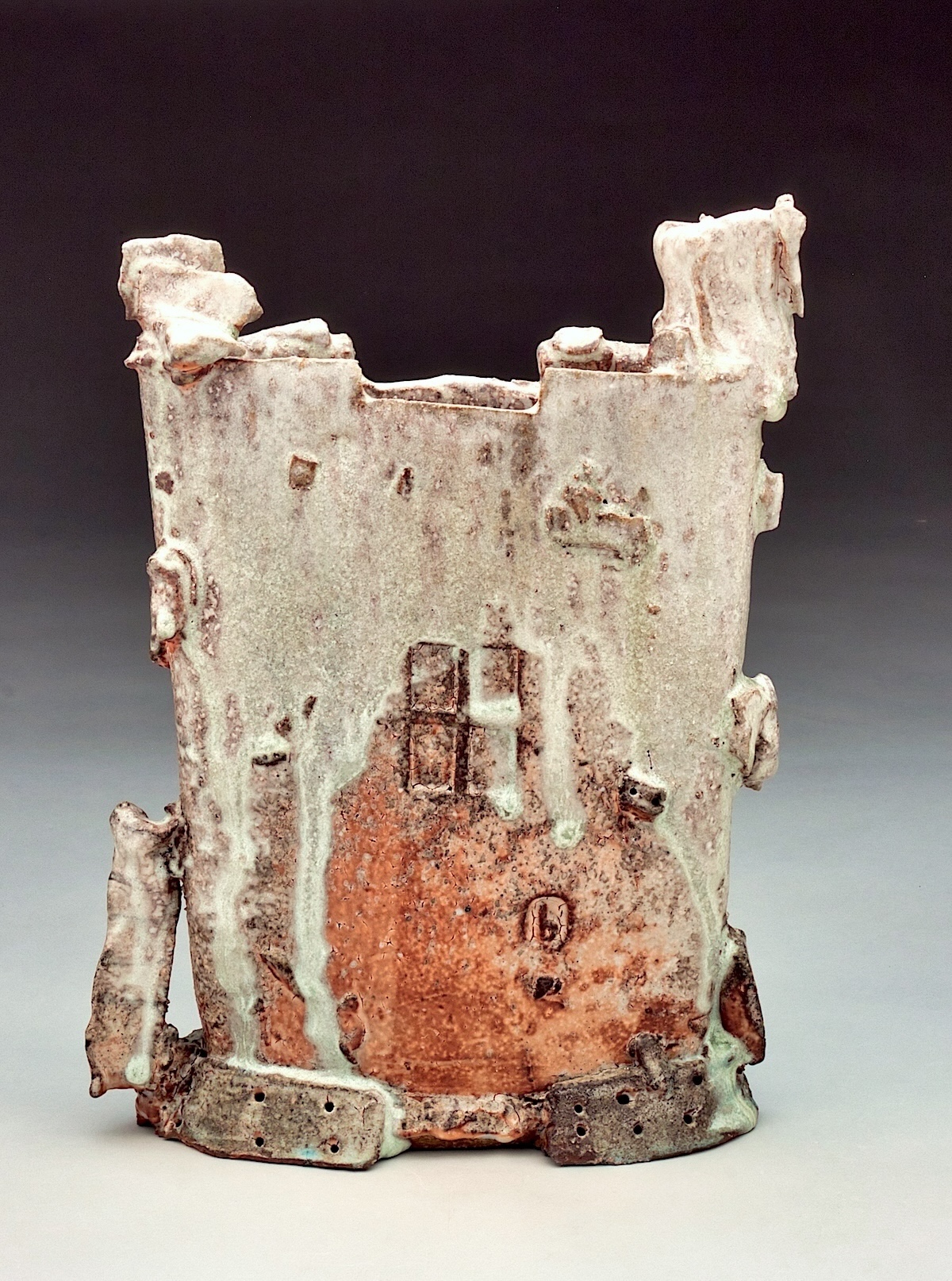
I don't know, grad school was kind of like surviving it in a way. I learned a lot about wood kilns in Iowa, and I learned how to run a large university ceramics program. It was a very good experience, but a lot of pressure. A lot of pressure. And I think I'm more of somebody who grows slowly.
Robert Bly, the writer, said in graduate writing programs, you should put graduate students in a cabin in the woods, have them write, and go see them about every six months. I'm more a believer in that process than the kind of incubator that graduate school can be here. It took about three years after graduate school to kind of reclaim myself and probably twenty years to absorb all that.
Hamish
Yeah, totally, I think I'm slow too, and I think the best ideas happen when I'm in the studio a lot. With grad school, there were quite a lot of other things to be done.
Bede
Exactly. Just being in the studio, just being the writer at your desk, just being the musician with your instrument. And listening to the sound you're making, listening to your own heart, and where you want to take that sound. That's a slow, slow, thoughtful process.
Hamish
How do you intentionally work through ideas in the studio over time?
 Bede
Bede
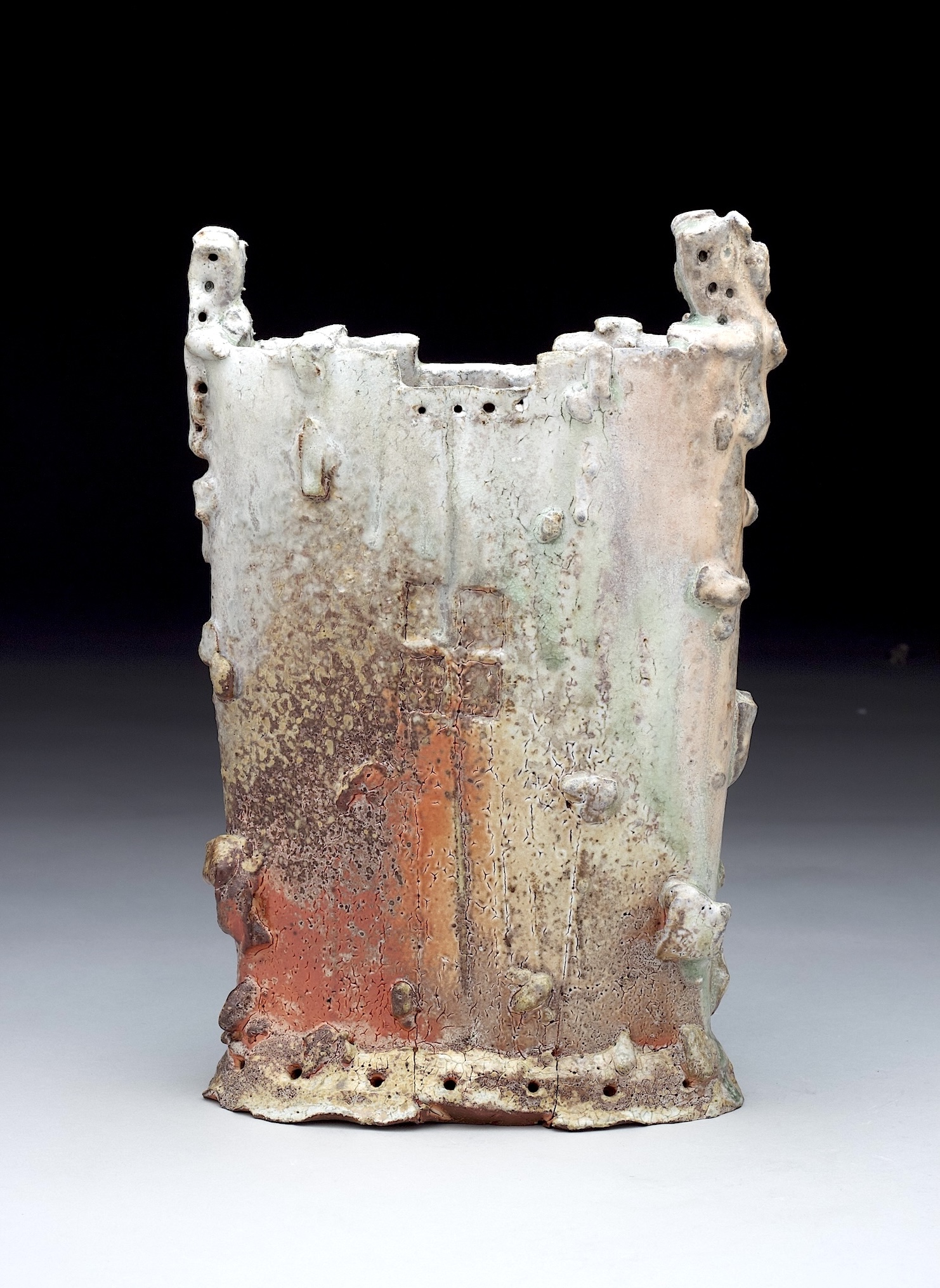
A new idea is often not very good, but I don't let that bother me. Typically, I'll keep a new form under plastic, in case somebody comes in, so I wouldn't be embarrassed. But I won't give up on it if I'm really interested in it, if I see something there. I always say Rudy Audio wasn't always Rudy Audio. Even you know, one of my favorite potters, Ron Myers. Ron Myers was not always Ron Myers.
There's this assumption that these people just came out of Zeus's head just full born, but you’ve got to learn that this is a process. You have to be okay with it and enjoy it, because then, when you resolve some of those issues, it is so rewarding.
Hamish
So, do you keep pieces around your studio that you think are getting somewhere? Any of other people's?
Bede
Yeah, not too many other people in the studio. That's a funny thing Ron Meyers said once, when somebody asked him, he said, “In the beginning, you refer to other people's pots a lot, and then later, in your career, you refer to your own pots.”
I'll always set aside a few that are examples of where I'm trying to go, and I can go back to them. I'm doing that now with some drawings on pots. If the drawing has a certain quality I really like, I'll put it up on a shelf. You just hope you don't get stuck and keep it fresh.
Hamish
Your decoration feels fresh. Ron talks about his “usual suspects” who show up again and again. Are each of your pots decorated differently?
Bede
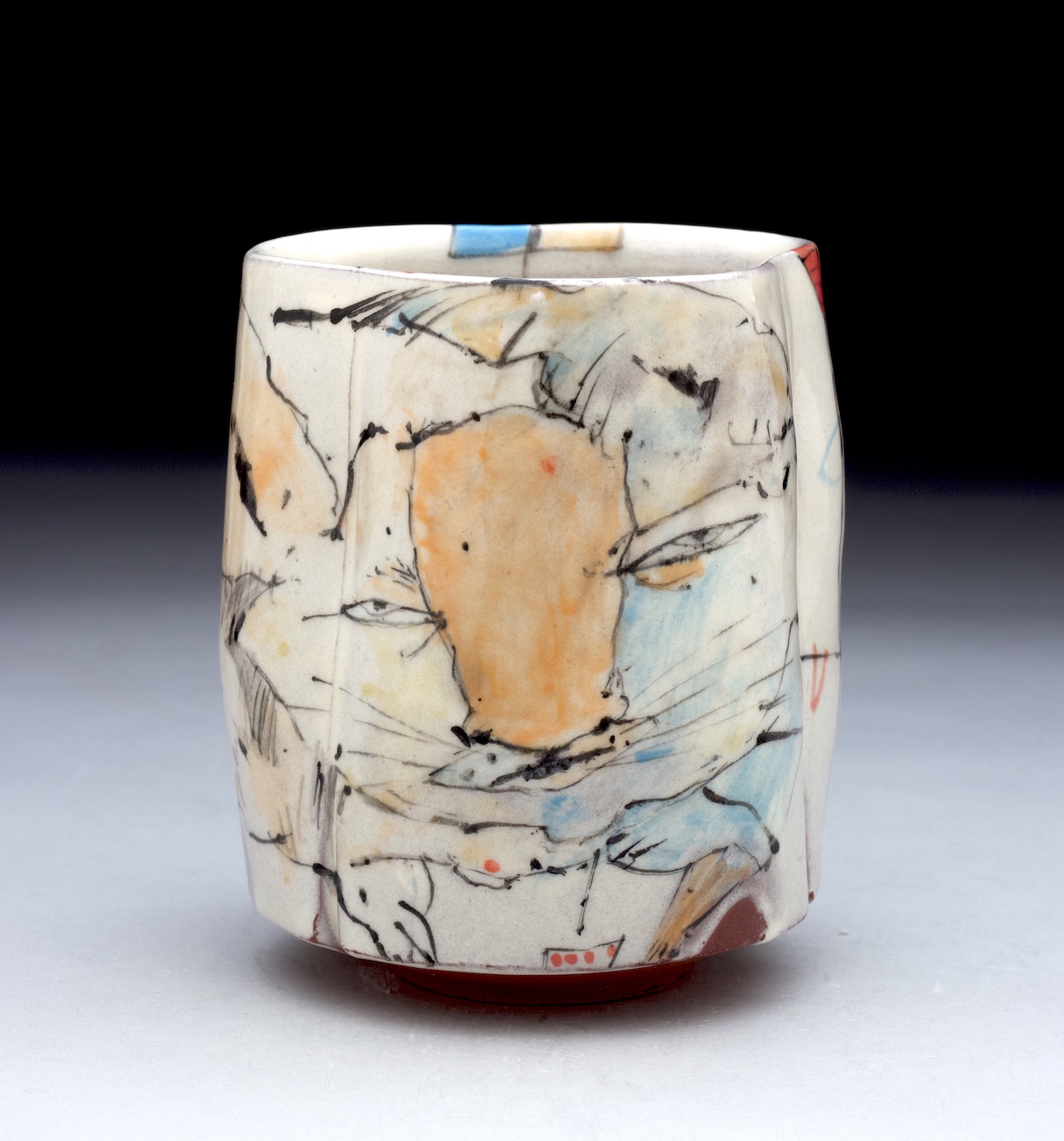
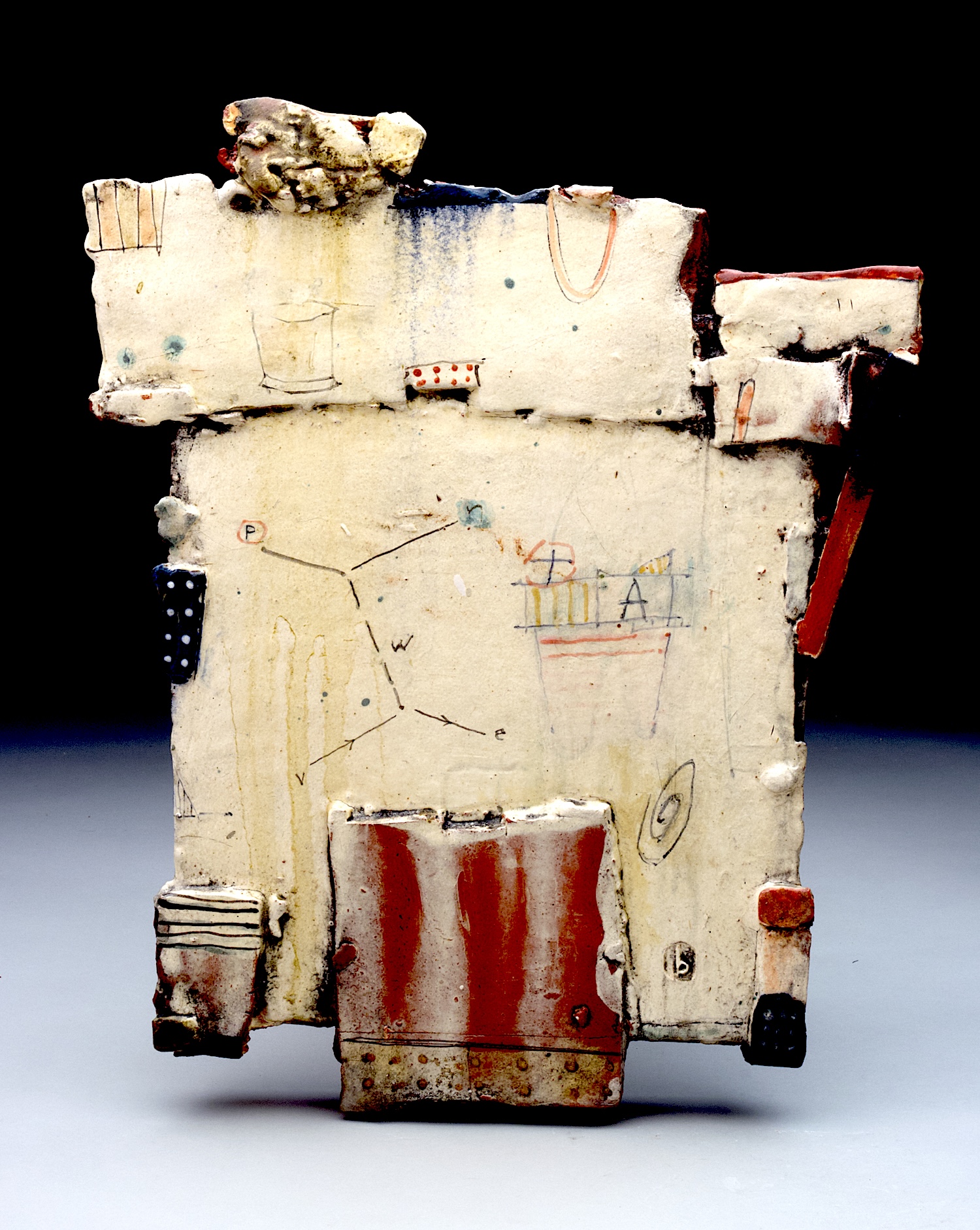
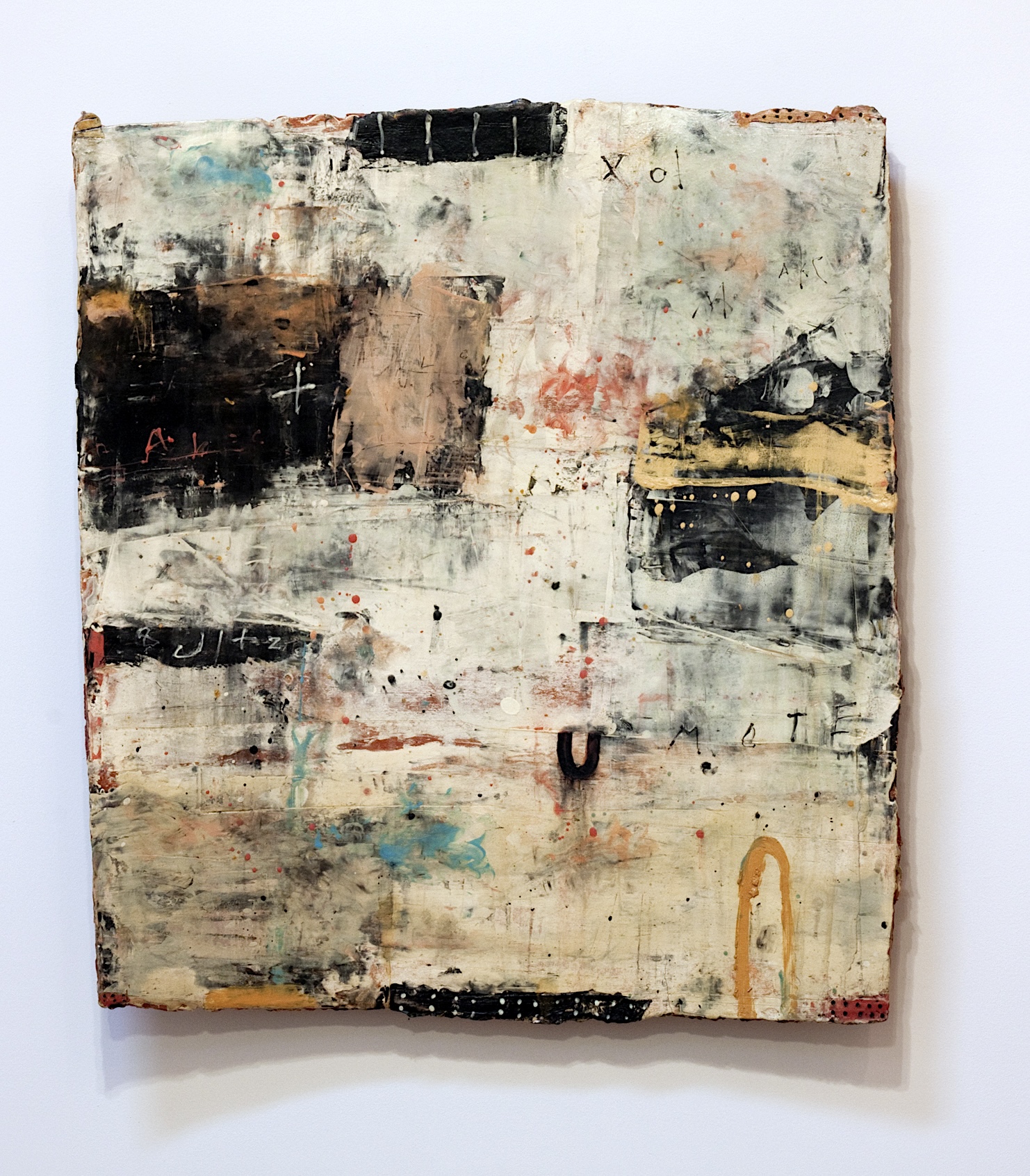
I have motifs and themes. I've been working with a lot of different imagery. I think my natural state of drawing is abstraction. Line and tone and color and shape, gesture, and rhythm. But I've found it really enjoyable to work with representational images too. I wouldn't say it's a strength, but I'm becoming better at it.
I'm just kind of trying to enjoy myself and see if I can make a bigger playground for myself.
There's something really compelling about a representational image. I once had a little argument with a painter colleague, and I was arguing that pots are the ultimate human icon. And he said, no, the human figure is the ultimate human icon. How compelling is a pot, though? Any human being can relate to those teapots behind you, but a picture of a face, or a figure? And so that was an argument that I lost. But of course, pots come out of the figure too.
You've probably read that interview Mark Shapiro did with Michael Simon?[1] Where he talks about when he started doing representational imagery?
Hamish
Oh yes, it is fabulous. It has been a while, though.
Bede
I think you could read it twice a year, every year. He talks about how a pot really should be enough, but you have to be initiated to fully understand and appreciate it. Because pots are a completely abstract language. I mean, in the same way, abstract art is more difficult to understand than figurative art. It's all feeling, you know. And Michael admits that he felt a little bit like he was taking a shortcut to get people to notice his pots, but that the pot should be enough. But boy, when he started putting imagery on it!
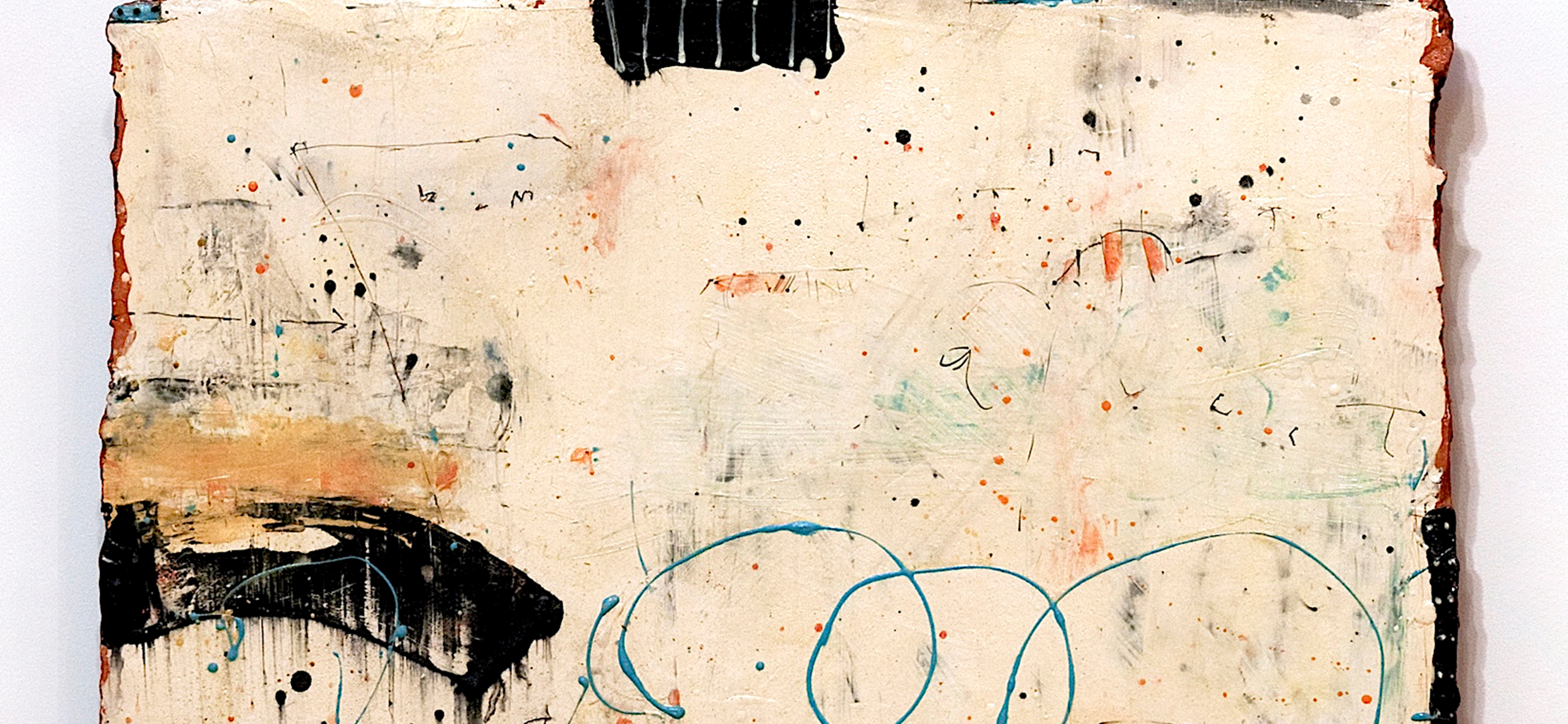
I've always just gone into the studio and kind of mucked around. And I think it was inevitable. In fact, the whole earthenware color-drawn pots started because I had a workshop coming up in Florida titled “The Painted Pot,” and I'd never done it before. It was about two months before the workshop, and I thought I’d better learn how to do this.
Hamish
Had you always done earthenware as well as the wood-fired work?
 Bede
Bede
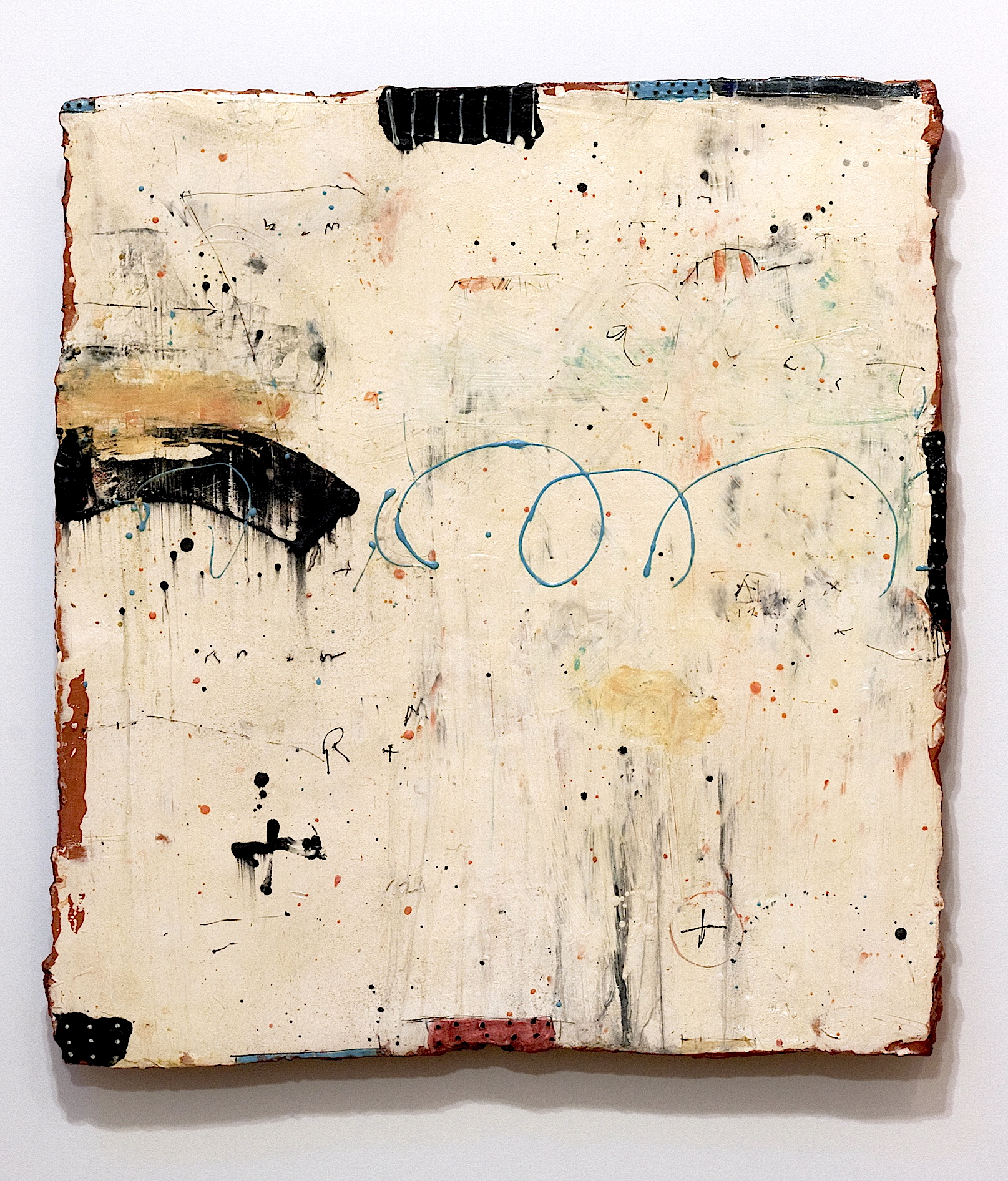
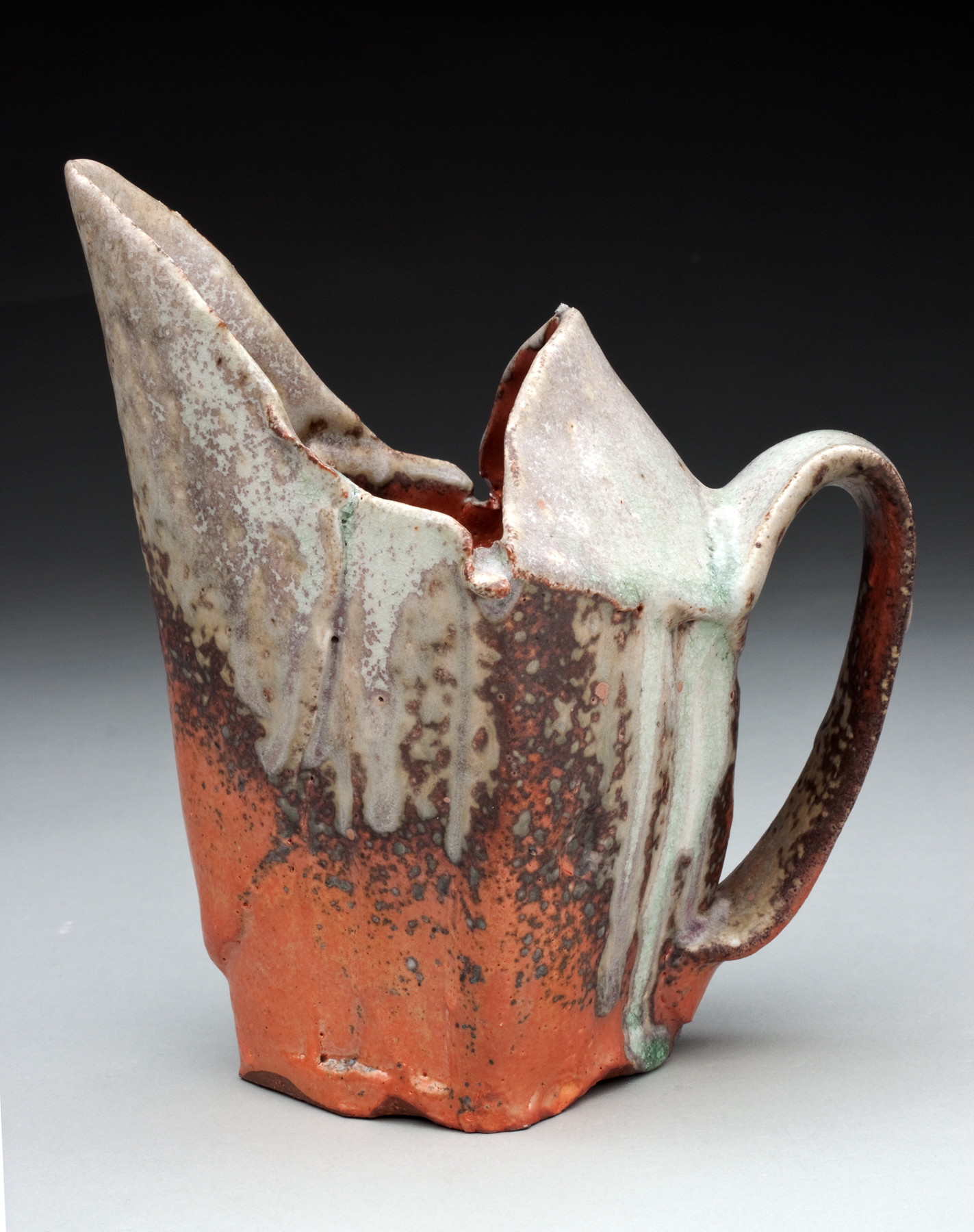
My earthenware was always art. It was always large wall pieces, thirty-six inches wide, fired on edge, or large sculptures that would be hard to do with stoneware. You have the ease of color, as well as the economy of lower firing cost. I have always loved red earthenware clay. I love wood-firing, I love shino, I love soda, but there's not much I like better than red clay and white slip – where that red meets the white.
Hamish
Yeah, so good. There's something about it being lower-fired and how it feels. It is softer. I love traditional English slipware too. That honey!
Bede
Ron Myers came when I was at Iowa to do a workshop, and I asked him what it was about earthenware, and he said, “I don't know, but it's something different.” I said, “I don't know what it is. I think it's the porosity or vulnerability, that softness.” And there’s a kind of peasant rusticness to it that those English slipware pots pick up on.
Hamish
Do you make it in a different way for your wood-firings?
Bede
I think so. I tend to respond quickly to the clay. Stoneware seems to start asking for different objects. It seems to want to become something different. I can't decide what I love more; I'm definitely not a porcelain person. I do like porcelain pots, but not as much as I like stoneware and earthenware. Knowing how they are going to be fired affects how I make them.
 Hamish
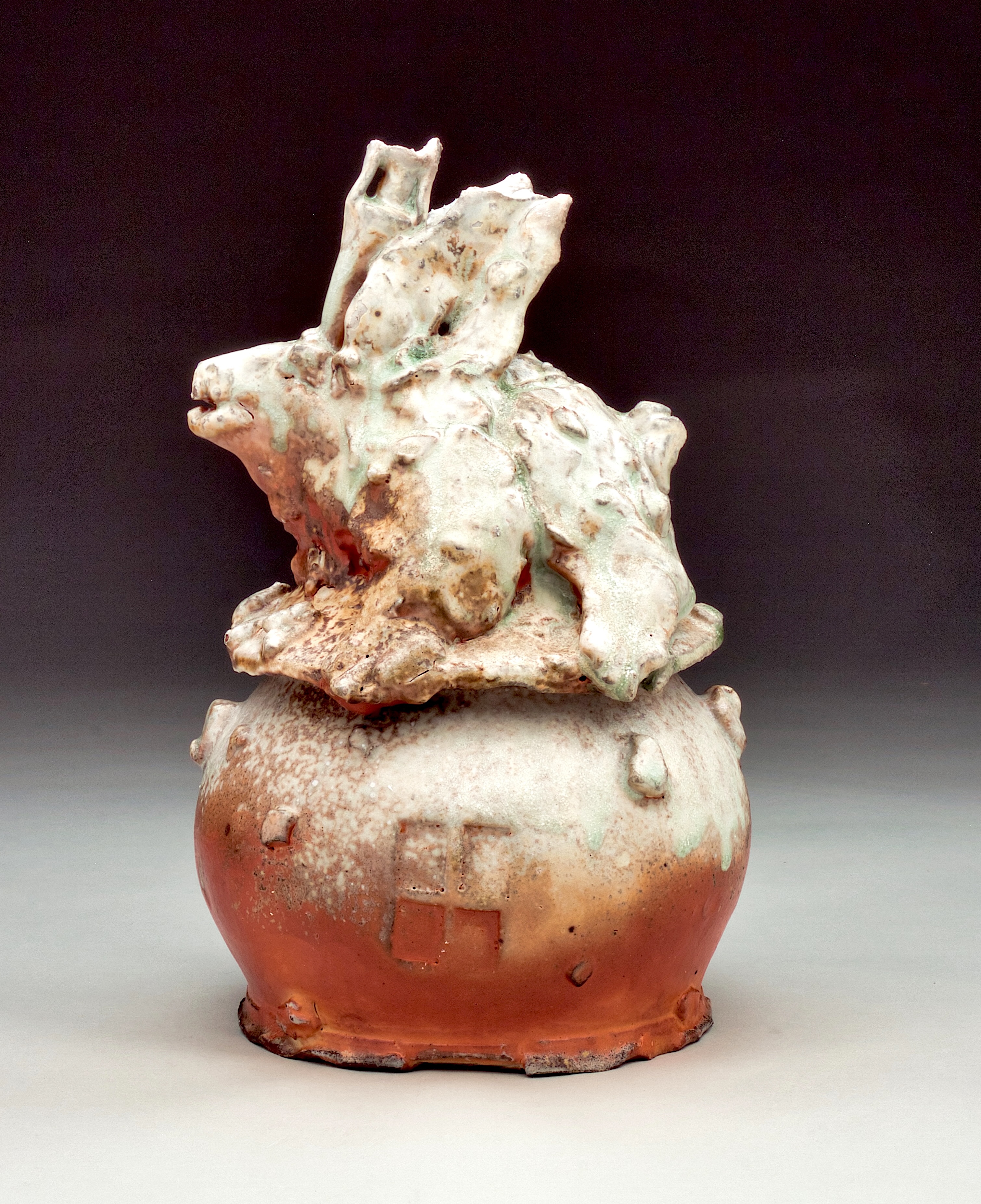
I really love the jars you make with these oversized knobs of exuberantly sculpted animals, such as bulls or rabbits.
Bede
Those are referencing historic pots; Greek lidded jars with horses on them. The number of horses on the jar represented how wealthy you were. The word equine comes from wealth, you know. If you had a horse, or more than one horse, you were a very wealthy person.
There are the Cypriotic burial urns. I don't know if you know these pots; they have little animals on them. And these charming Chinese tomb vessels had animals on them. So I've been doing variations on them. One of my undergraduate teachers, Bob Hodgel, was a figurative sculptor in clay. He made beautiful figures and animal sculptures in clay. I was working with Bob when I was, I don't know, twenty-four or so. I was doing figurative work with Bob in class, but also making pots and making big jars with figures on top.
Hamish
They're really fun. When you're sculpting something that's more expressive, how do you know when it's done? Or, how do you know your next move? What's guiding you?
Bede
It's almost like getting a stone out of your shoe. It’s basically a process of elimination. In the process of making any pot or any drawing on a pot, there are things that are bothering me, and I'm kind of harping at myself and the clay, and going, come on, you've been doing this for so long, you should be better. I'm getting these things out of the way. They're bothering me. It's kind of like the Princess and the Pea. You're training yourself to be really critical, to be bothered by things. Or maybe I was just that way already. But it's kind of like getting the stones out of your shoe. Finally, when nothing else bothers me, when there are no more stones, then you know it's done.
Hamish
That’s a wonderful description. Are you going in with a vision of what you want it to end up like?
 Bede
Bede
Yes, but only because I kind of have to. Maybe if I were a better person or artist, I wouldn't. But I think most of us need some parameters.
Making assemblage sculpture or installations would drive me absolutely bonkers. When I started working like that, everything looked like art to me, and I couldn't even think. I'm walking around, and I see a pile of bricks, and I respond to it and have a conversation with it. I can't take a step and not be in dialogue with something, because anything's possible. And it’s maddening, I can't manage it. I’ve always thought that was an advantage of being a potter, because say I'm going to make cups today, or pitchers, or teapots. Yet, you can do anything. There are still infinite possibilities within that range, but it gives you some place to settle your mind.
So yes, I do work like that. I try to put a frame around what I'm doing. If something new happens and it works, I try to be open to it, but a lot of times that comes from historic pieces. It comes from work other potters are doing, too. And then it gets filtered through your own pots, too, and in reference to your own pots.
Hamish
I wanted to ask about Chuck Hindes, too. I love his work. He taught you in Iowa?
Bede
Yes, Chuck Hindes and Bunny McBride were the instructors in Iowa. It was a perfect program for me. Bunny McBride was Alfred-trained, a very good technician and functional potter. Chuck was all about wood-firing and expressionism. That's where I learned wood-firing. At the time, I really liked the process of wood-firing, not that I don't now, but at 68 years old, it feels a lot different.
Hamish
It's a lot of work. Have you slowed down with wood-firing lately?
Bede
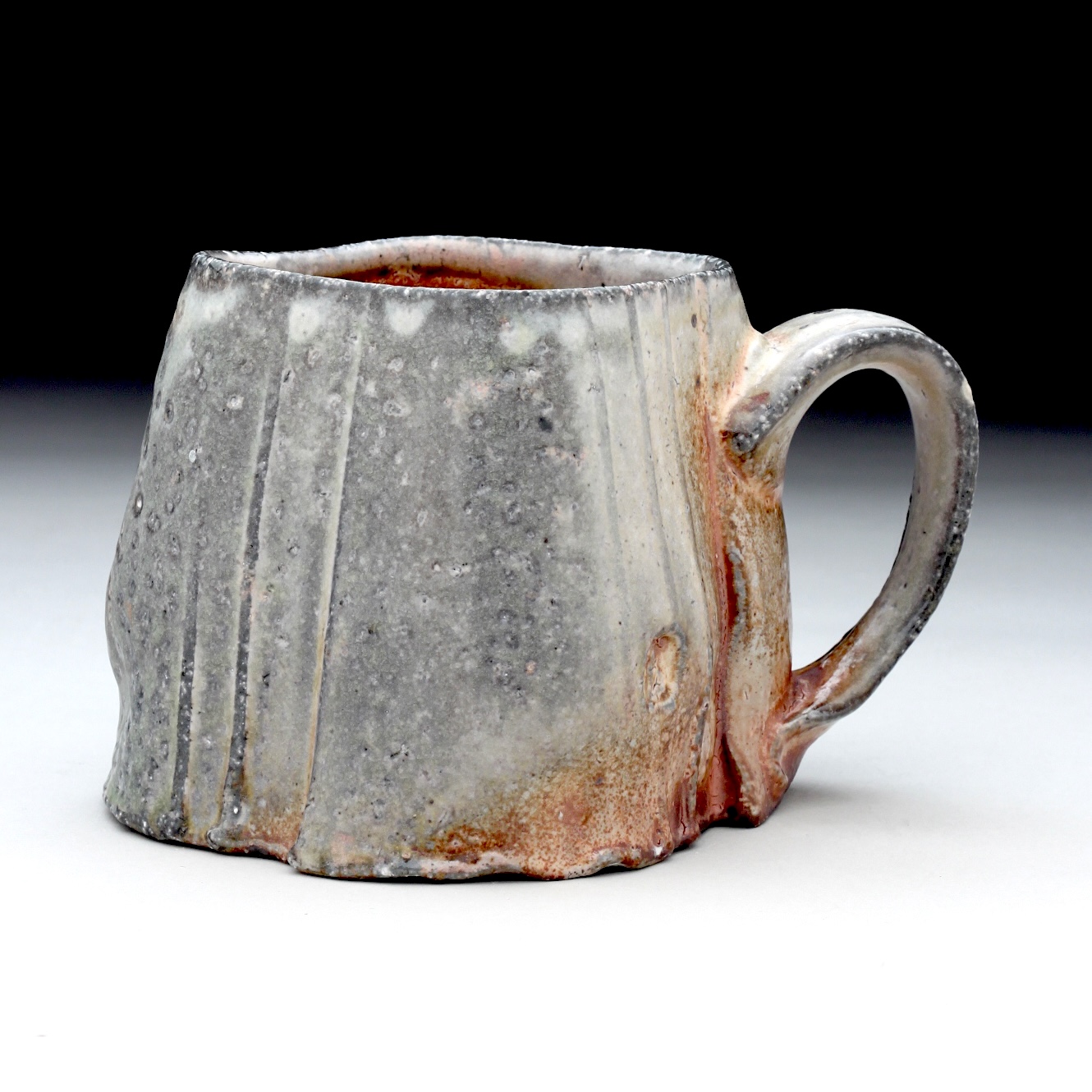
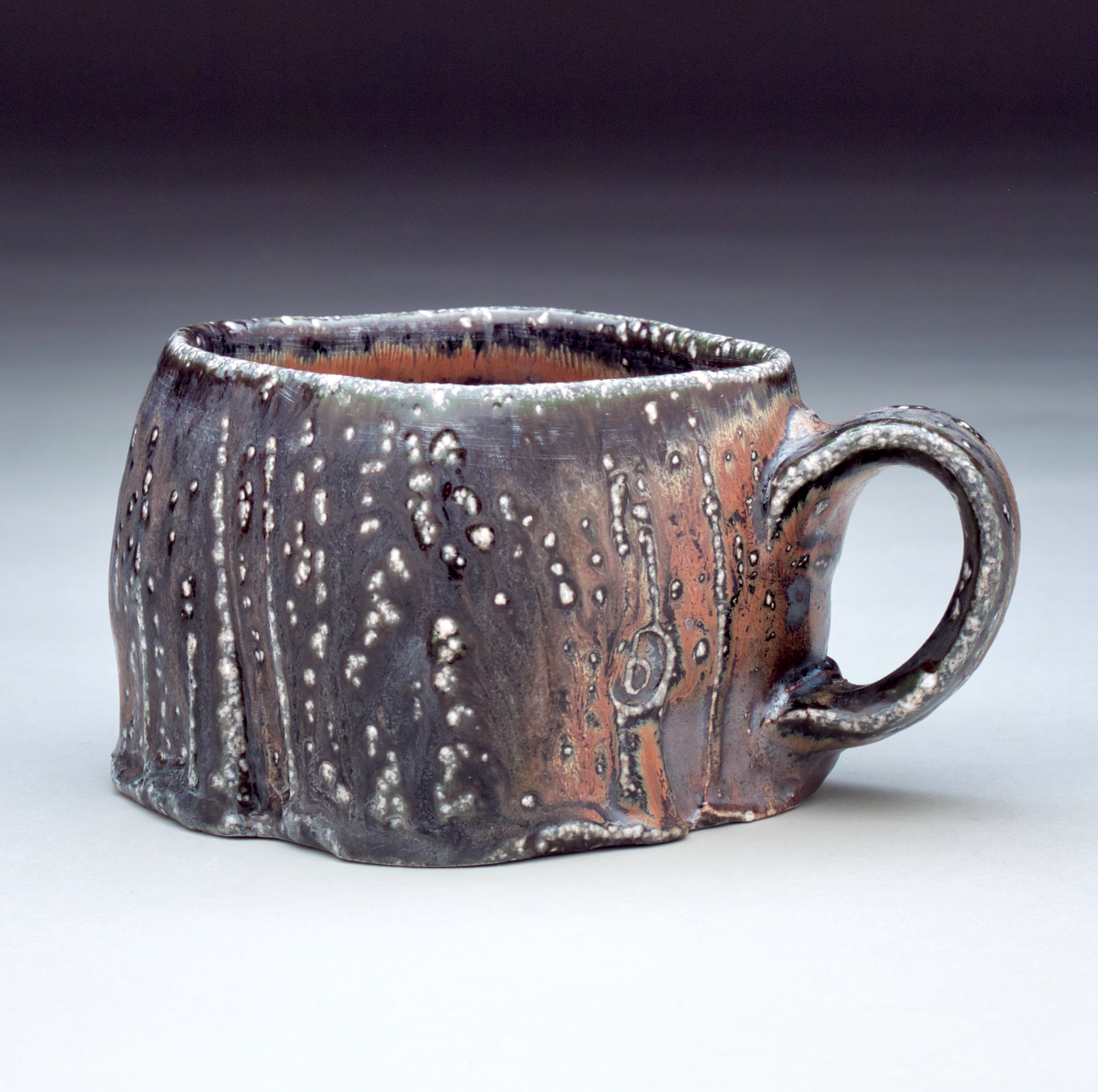
Well, I have a couple of wood kilns here. A small wood kiln that I fire more frequently, which has been here for maybe twenty years. I can fire it by myself. The anagama has been here for about four years. It holds hundreds or thousands of pots, and it takes such a crew to get it together. I'm sure I could put more firings together, but I just have not been sure how I want to do it. I may not be that kind of wood-firer at heart anyway, you know.
I do fire the small kiln a lot, and I fire it by myself. That's kind of to my liking. I do it in twelve to sixteen hours. I have burners on it and preheat it overnight. I'm not a dyed-in-the-wool, wood-fire potter. I know some people love the process, and I think there was a time I did, when I was younger. I enjoyed the community aspect of it, the teamwork. But I did that for years at the university, herding cats.
I think my interest in wood-firing really is just in the results. I think I'm kind of an oddity that way. You know, I've always said that if I could wave a wand over the pots and get them to look how I want them to look. I would do it. No question. It is a lot of work.
I remember when you were apprenticing to Mark, and I was saying Mark's body is in good shape for his age, and you said that's because the apprentices do the hard labor of it.
 .
. 
Hamish
That's the secret. Having help to do the wood prep, kiln shelf grinding, and all that.
Bede
Yeah, I still like doing that stuff, but it hurts more than it did. But yes, Chuck was very instrumental.
Hamish
It seems like he was a very quick, loose thrower?
Bede
I always used to kid Chuck that he couldn't throw, and he would laugh. Chuck could throw, but he wasn't a technical whiz-bang thrower. He was more of a hand builder. Chuck’s work was all about gesture. If you had asked him, he would have told you that it was all about gesture and rhythm. He had a certain rhythm to his work and a looseness. Expressionism in clay! I think that was coming out of Japan and Korea. Those Shigaraki pots, that’s where Western potters got it from. I mean, that's what Garth Clark says in his book “Ceramic Echoes.” He says those Asian pots referenced the clay, the material; they had a more honest or physical approach.
Garth Clark said that those things are what woke Western potters up. You know, right before that, clay could be either functional or it could be decorative figurines. Maybe Voulkos picked it up from Yanagi and Hamada, also from abstract expressionism. That same thing happened with African art to painters fifty years earlier, when modernism was born.
 Hamish
This makes me think of the Leach tradition and how it has been interpreted. The relationship between Bernard Leach and Shoji Hamada.
Bede
Yes, I think Leach made good pots, but his writing on pottery, on East-West philosophy and aesthetics, was so articulate. Hamada was a genius potter. The life in his pots! The sound of his pots! He really had it going on.
Hamish
I like this idea of thinking about the sound of pots, and it's intriguing to me that you have these two very different sides or sounds to your work. The wood-fired pots seem more formally expressive, perhaps, but with the earthenware ones, there's a lot coming through the decoration. Do you tame the earthenware forms to allow for that?
Bede
I think that's true. They are different for me, and I think they express my kind of restless personality.
My favorite analogy for what I am going for, for a good pot, is a sticky bun. You know what a sticky bun is? I don't know if they have them in England. It’s a really decadent, baked thing with syrup and pecans. They’re really sensual and gooey, a hunk of goodness that's going to put you in sugar shock.
Compare that to a piece of dry toast. I'm going for the sticky bun. But maybe there’s a donut with sprinkles, too. That would be the kind of pop art-oriented ceramics. You could have a tiramisu, which would be like a Hans Coper or Lucy Rie, kind of sophisticated. But I like that sticky bun; surfaces that have a kind of intensity of action, a complexity and depth. You can get to those surfaces with atmospheric firing, but also the painted surface. They are different, but they have that in common. I'm trying to create this, this kind of honey, sticky substance that traps the viewer, the user, in that sensual moment.
Hamish
That’s a brilliant analogy. I spoke to Linda Christianson recently, and she is going for much quieter pots. Not the sticky bun. Maybe more like that toast, but a really good piece of sourdough perhaps.
Bede
Not as dramatic. You know, I was raised Catholic. Maybe Linda was raised Lutheran, I don't know. I was raised Catholic, with the high mass, and was an altar boy. We weren't all hugging and singing Kumbaya with guitars in the church. It was a lot of reflecting and doing all these rituals. The drama of the high mass! But I think there are good pots of all types.
Hamish
Right, wow, I didn’t know that. Are you still involved with the church?
Bede
I'm not a practicing Catholic, but it was basically the most fundamental thing about my upbringing. My father had been a Benedictine and Trappist monk for five years before he got married, and then had seven kids in nine years. So he wasn't meant for the monkhood, obviously. He was also the editor for the Catholic Messenger. Priests and nuns were always over at the house. It was a very Irish Catholic upbringing. And no. I'm not a practicing Catholic now, but I treasure what I learned from it, and I probably have a lot of neurosis from what I've learned from it, too.
Hamish
It's interesting that you drew this religious drama into your aesthetic. Are there other things from your upbringing that fed into the pots?
Bede
Yeah, I think so. I think I have a sense that a pot, and Yanagi talked about this, is like a line of scripture, only in place of the words, there's proportion and tone, and rhythm. There is all this abstract language.
I had a graduate student once who was making all these things with breast-shaped lids. I asked, “Is your work sexual?” And he said, “Isn't all art sexual?”
He later asked me, “Is your work religious?” And I said, “Yeah, it's all religious, you know, it's bringing together the sensual and the spiritual.” I'd hoped we'd get to this a little bit. I think an artist like Van Morrison brings this together in his music. He brings together this sensual world and the spiritual world so powerfully. I don't think that's something I set out to do, but I recognize it when I see it, and I feel it.
Getting back to your question about what pots can convey, I think that's what I'm interested in. I've been told I shouldn't be a potter because function is not the most important thing to me. I've always argued that, really, what separates pots is more the aesthetics, their expression.
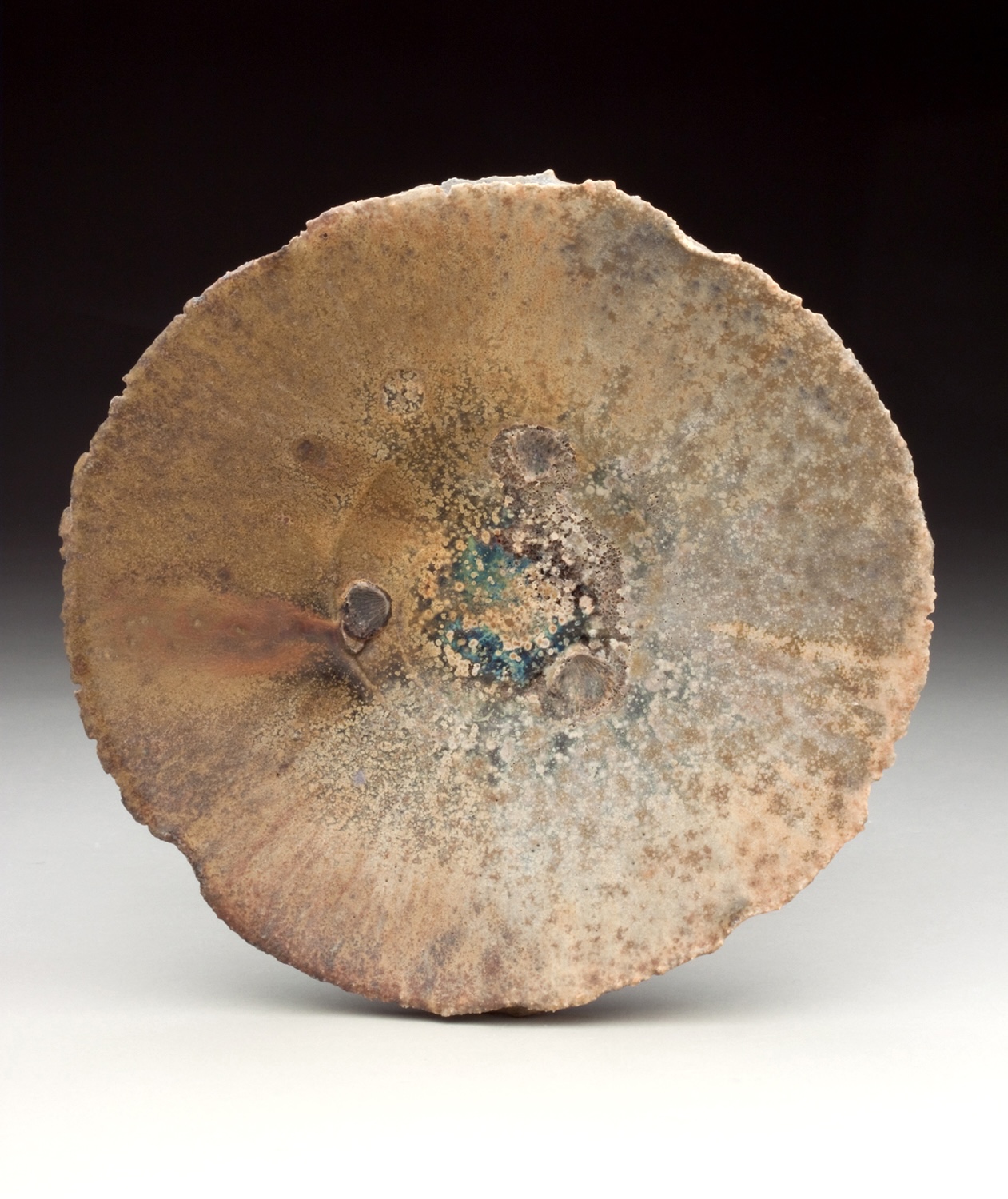
I've never had a problem feeding myself. My questions in life haven't been about how to feed myself. I could figure that out. My questions have been of a different nature. I think I've used pots to try to answer some of those questions. For me, the pots are the food. They are not there to deliver the food. No, they actually are the food.
I was doing a workshop, and this guy wouldn't let it go. He said, “You just said, you don't care about function. How can you teach it? You shouldn't be allowed to!” I usually can let it go, but I said, “Just try and stop me.” And then finally, I said, “Don't you get it? The pots are the food.”
Hamish
Do you think it's more the process of making or the fired objects that feed you?
Bede
I think it's the fired object for me. I grew up at a time when everybody was talking about process, even more than today. Reverence for process was the thing in the 60s, 70s, and '80s, but for me, it has always been the album. When you press the album, put the needle on, and the sound that comes out, that’s what it's about.
Hamish
So it really starts to sing for you when it comes out of the kiln?
Bede
Right. And if it sings, it's really pleasing. I had a bowl I made in graduate school. An ash-glazed bowl, stoneware. Chuck had liked it, and I gave it to him. I went over to his house a year later, and that bowl was sitting on a coffee table. I saw it and immediately went to it. It was really saying something to me. That’s what we're trying to do. It's the pot, you know, that's what matters.
 Hamish
What makes a pot sing?
Bede
One of the latest things going on in academia, before I retired, was that it was considered inappropriate to talk about qualities in work. It was thought that qualities are perceived subjectively, and they're transient, and you can't objectify them, and you can't prove them, so therefore you can't talk about them. That’s just bullshit. We're not trying to prove something here. We're trying to feel something and be changed by something, and be made more alive by something, and learn from something, and get some hope from something and some belief from something so that we can continue to work and aspire.
We have to learn to trust our instincts, to hone that ability, like a good cook has to be able to determine what a dish needs. How can they prove it? They have to know the taste. It's why I'm much more comfortable talking to musicians than academically trained artists right now, because musicians still obsess about sound. They live and die for sound. And for us, that's all these intangible nuances of form. And not just form as in the form of a pot, but form as in everything that goes to make up the work of art.
Hamish
I'm totally with you. So if someone encountered a piece of yours, what would you hope it would evoke?
Bede
I have different things that I go for, different bullseyes that I like. Sometimes it is a quiet subtlety. It depends on the pot and what I think the pot can offer. I think there are different levels.
Robert Bly talked about different types of poetry. And he talked about the highest form of poetry, which he also acknowledged he couldn't write. He said it was what he called leaping poetry, which had this wild, brilliant, kind of ecstatic force. It was so quick, it could make all these huge jumps and leaps of creativity and brilliance, magic, almost. But he also talked about the poetry of steady light. These would be more like Linda Christianson's pots. Pots of steady light. I think that's really beautiful too. It's more doable to try to make pots like that and raise two kids, because it doesn't take as much out of you.
Somebody like Voulkos was going for that leaping poetry, and it cost him. He paid a price for it. But I have something that's close to that. Maybe this goes back to that question of, when do you know it's done?
It's when the piece, when I encounter the piece, or when I look at it, and I take it in, it kind of pricks my consciousness, and it says, “Wait a minute, maybe there's more here than you ever imagined.” It's like this urgency. You're struck with this urgency of, wake up, there might be more here than you ever imagined. But you're going to have to be on your toes to catch it. I've made some pieces that kind of hit me that way, ranging from pots to drawings. It might only be fifteen percent of what I make, or ten percent. And there are other good things, but that’s special when I encounter one that is taking it to another level. That's a kind of target, that sense.
Hamish
Have you kept quite a few of those pieces?
Bede
A few, only a few. And I'm making some pieces now that, with luck, might have it. I've got a little earthenware kiln going in. I'll fire tomorrow. There's probably about forty or fifty small pots in it, and there will be a few in there. There's a kind of bentness to those pots, a strangeness. They're more complex, not singular. It's almost like six flavors that all come together to make this an aroma, and you just go, wow. Those pots go beyond for me. There is a hierarchy. It doesn't discount the pots of steady light, you know. But let's not think there's something beyond that.
Hamish
This makes me ask why a certain piece of music really sticks with you. There’s something about the way it's put together that's just more compelling than another piece by the same artist. Like “Kind of Blue” by Miles Davis, perhaps.
 Bede
Bede
Yeah, exactly, that is one of those albums. Something special is happening there. It doesn't mean that the other stuff is not good. I still enjoy lots of other things. I think that's what some of those wood-fired pots are about. You know, some of the things where I'm taking the most risks and trying to get that magic to happen. I love that question you asked me at the conference in North Carolina – “What is all this poking and prodding?” And that's what it is. I'm trying to get that to happen.
Hamish
Do you get that same feeling from some pots that other people have made?
Bede
Yes, oh, absolutely.
Hamish
Do you use mostly your pots or other people’s to use at home?
Bede
Mostly other people's. I made the plates we have. They're not particularly good. Lots of other people's cups, bowls, and clay pieces on the wall. I think that's how I became attuned to that sense of “Wait, there’s something more than you could ever have imagined,” and from hearing it in music, hearing it in poetry. From hearing and seeing it in other people's artwork and daring to think I could be that good, even though I wasn't sure I could, and I'm still not sure. But I think you have to have the kind of confidence as an artist to believe that you can make the magic, too. Even when I was not very good at all, I still had the belief that I could make it happen if I worked long and hard enough.
Hamish
Thank you so much. This has been wonderful. I feel very inspired and am excited to write this up for Studio Potter. My last question is a bit off-topic, but if you could only have one vegetable for the rest of your life, what would it be, and what is your favorite preparation of that vegetable?
Bede
The dish would probably be eggplant parmesan. I love eggplant parmesan, but eggplant wouldn’t be the vegetable unless you could arrange a steady diet of eggplant parmesan. That would be okay. For a single vegetable, it might be asparagus. Cauliflower or asparagus.
NOTES:
[1] Simon, Michael, and Susan Stokes Roberts. Michael Simon: Evolution. Minneapolis, Minn, Chapel Hill, N.C.: Northern Clay Center ; University of North Carolina Press distributor, 2011.