
Meaning, Memory, and Material Expansion
 Following the 2024 National Council on Education for the Ceramic Arts (NCECA) National Juried Student Exhibition receptions and awards, Justice Catron and I found ourselves discussing the thematic currents surrounding us. Nearby were several works by peers who were integrating non-ceramic materials into ceramic-based practices. We began sharing aspects of our own studio practices, both of which are rooted in clay, while engaging environmental perspectives and personal histories through incorporating materials beyond ceramics to articulate conceptual frameworks within our work. During this conversation, we decided that a group exhibition should grow from the combination of our discussion and the works that surrounded us.
These shared observations and conceptual intersections led us to propose an exhibition for the 2025 NCECA conference in Salt Lake City that highlighted materially-expansive, ceramic-oriented practices whose works incorporate non-ceramic materials to reveal and center narrative. Through their material choices, the artists speak to personal experiences, cultures, histories, identities, and environmental perspectives, expanding the possibilities of what ceramic practice can hold and communicate.
We began organizing the exhibition by compiling lists of themes that would unify a group of artists and artists who highlight this diverse way of working with ceramics. We wanted to focus on emerging and recently emerged voices within the field; approximately half of the participating artists participated in the 2024 NCECA, whether in the 2024 NCECA Juried Student Exhibition or other group exhibitions that were concurrent with the conference in Richmond. We wanted to create an exhibition that was as expansive as possible, demonstrating ways of pushing the needle within the ceramic field as artists who were making biographical work, historically engaged works, and concerning themselves with materially fluid practices, demonstrating the potential of what contemporary ceramic practices can speak to and look like. We are taking this opportunity to explore the exhibition and present recent works from participating artists, alongside their reflections on how and why non-ceramic materials became integral to their ceramic-oriented practices, and how those materials function conceptually within their work.
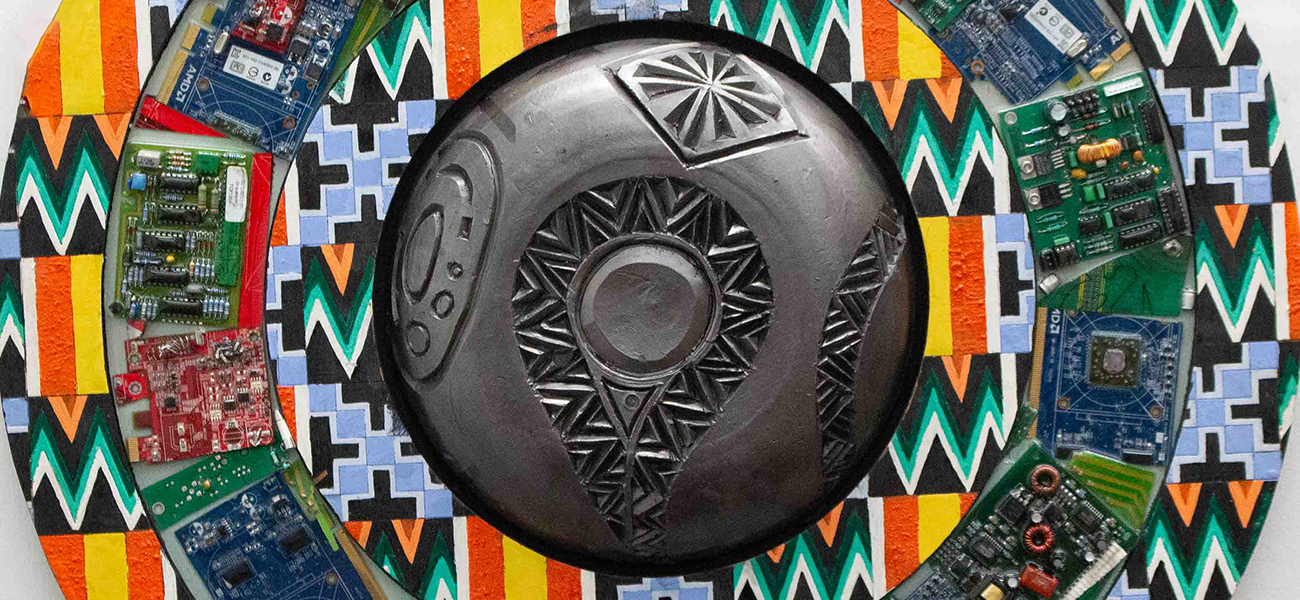
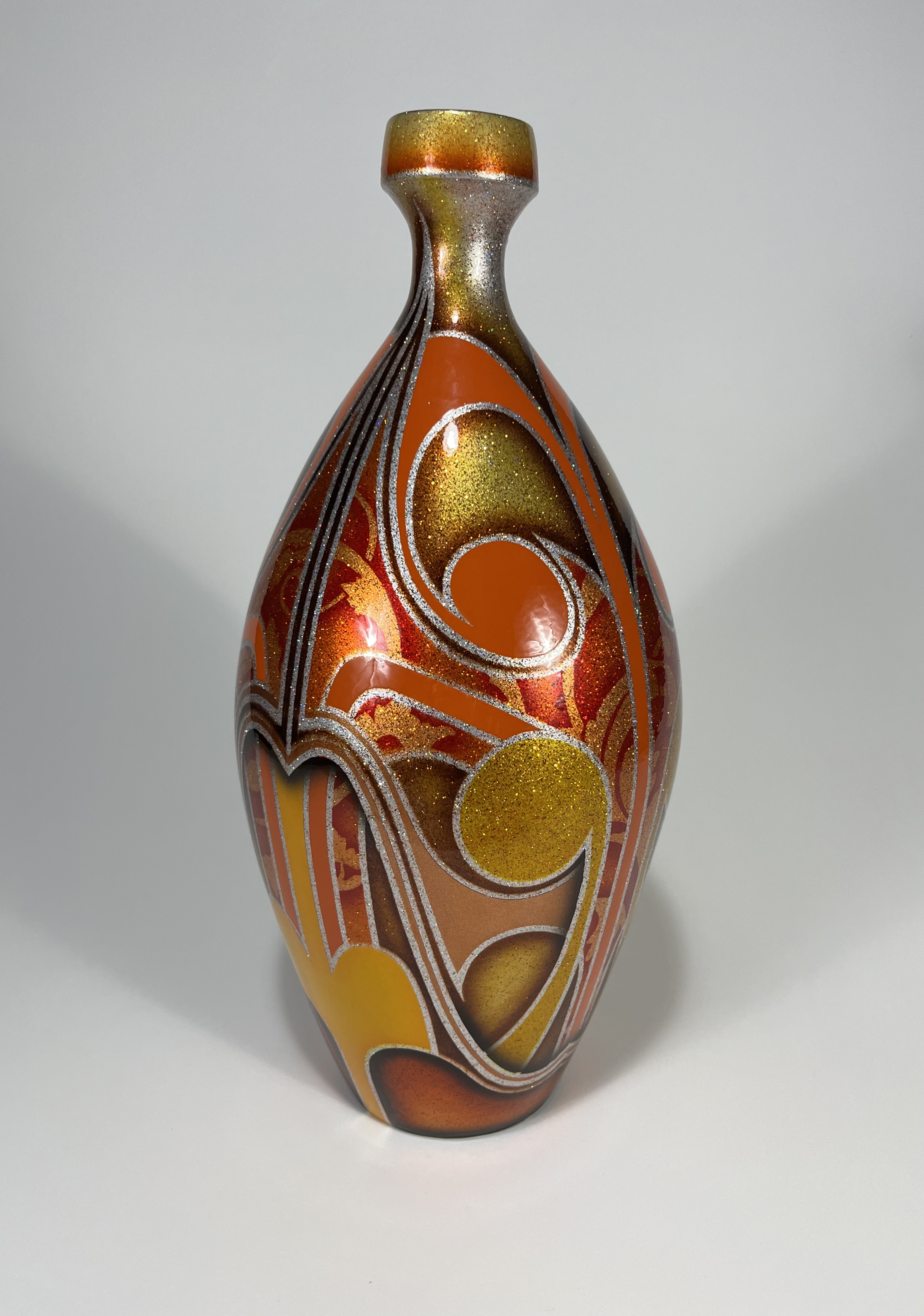
 The artists who were included in the group exhibition titled Intersections: Meaning through Materiality at A Gallery/Allen+Alan Fine Art are Sorrel Stone, Vincent “Sniper” Frimpong, Michael Takahata, Abbey Peters, Justice Catron, Tommy Lomeli, Angelique Scott, Eugene Ofori Agyei, Ling Chun, and David Morrison. They all maintain studio practices rooted in clay while extending beyond the singular material of clay, incorporating hair, found objects, textiles, paper, automotive paint, wood, plant matter, and other materials. Although no two artists approach material or process in the same way, they are bound together through clay as a foundational language. The exhibition centers on mixed-media ceramic practices in which material choice adds to the content and meaning of the works.
Centering emergent artists was essential, as they continue to push ceramics as a field, particularly those who actively engage with socio-political and environmental issues while building upon the legacies of artists before them. In the twenty-first century, we are shaped by the political, environmental, historical, social, and personal landscapes we inhabit. The artists represented in this exhibition are a direct response to the moment we are living in, using clay and material expansively to articulate the complexities and nuances of our contemporary experience.
Although we were the organizers and are the writers for this article, we felt that it was important to include perspectives from the participating artists. In order to get this information, we posed two questions to the group. Below are some of the responses we received that illuminate the different perspectives and arrivals for the individual artists' practices.
 Question #1: What prompted you to begin using multiple materials within your creative practice?
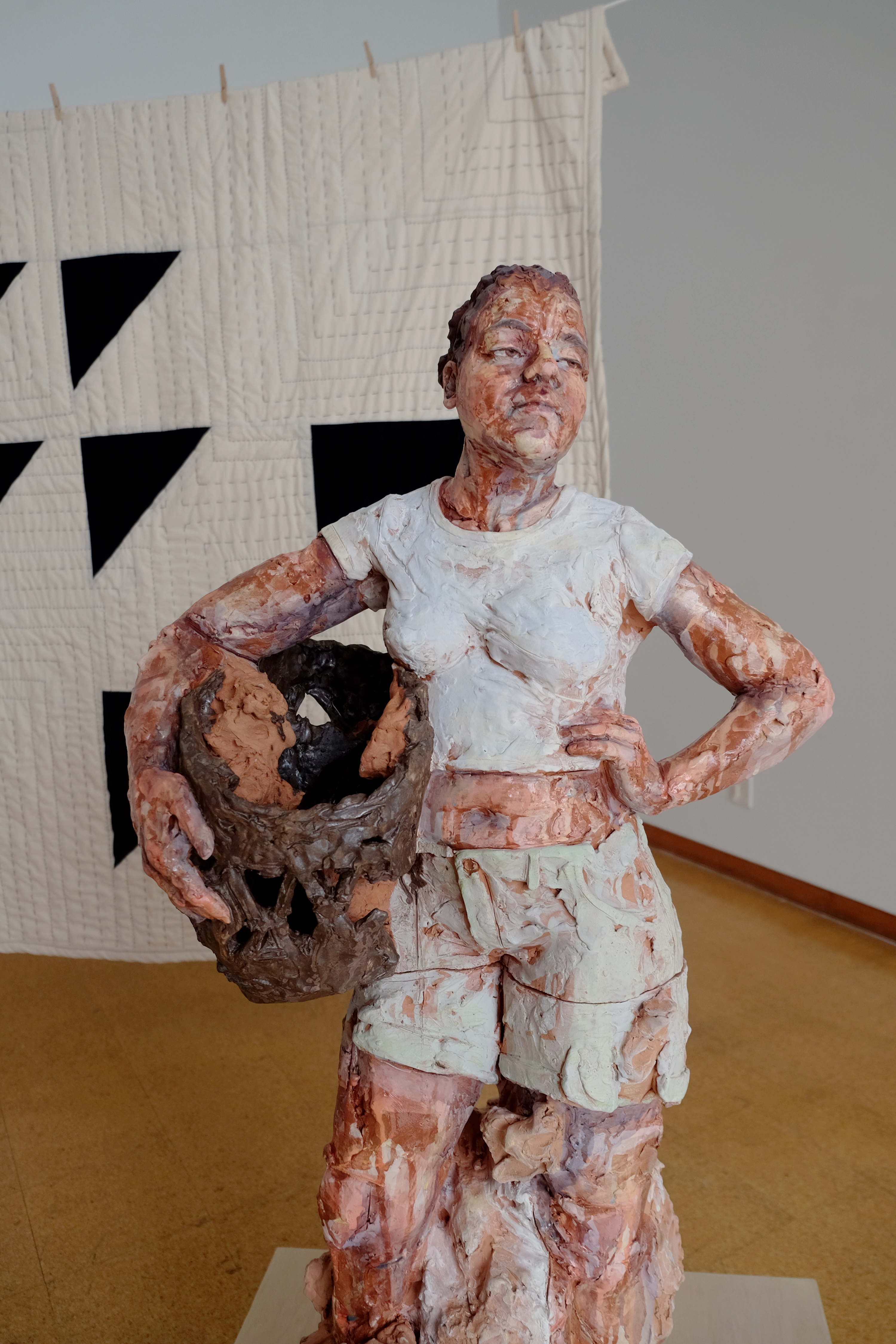
Sorrel Stone: “My story of material begins and continues through grandmothers’ legacies. On one side, I had a grandmother who was enamored with oil-painted portraiture. The faces and stories remained alive with us – we held our ancestors close, and they watched over us. On the other side, my grandmother was a woman who spoke of her resilience of identity through fibers and ceramics. A woman who sought divorce from domestic abuse in the 1960s, when she couldn’t have her own bank account, shared the legacy of her voice through patterns, pleats, and the mark of her hand in clay. Each of these women brought me into their studios and shared their materials so that I could fall in love with them as well. Today, my wife’s immigrant family, Indigenous to the Ecuadorian Amazon, brings the craft history of textiles to my work. This cohesion of voices comes alive in my figurative ceramic sculptures. They blend the power of portraiture with the liveliness that wet clay brings to the body. These sculptures are completed in installations, often assembled with quilted or woven textiles that carry the lineage of familial protection, care, and protest.”
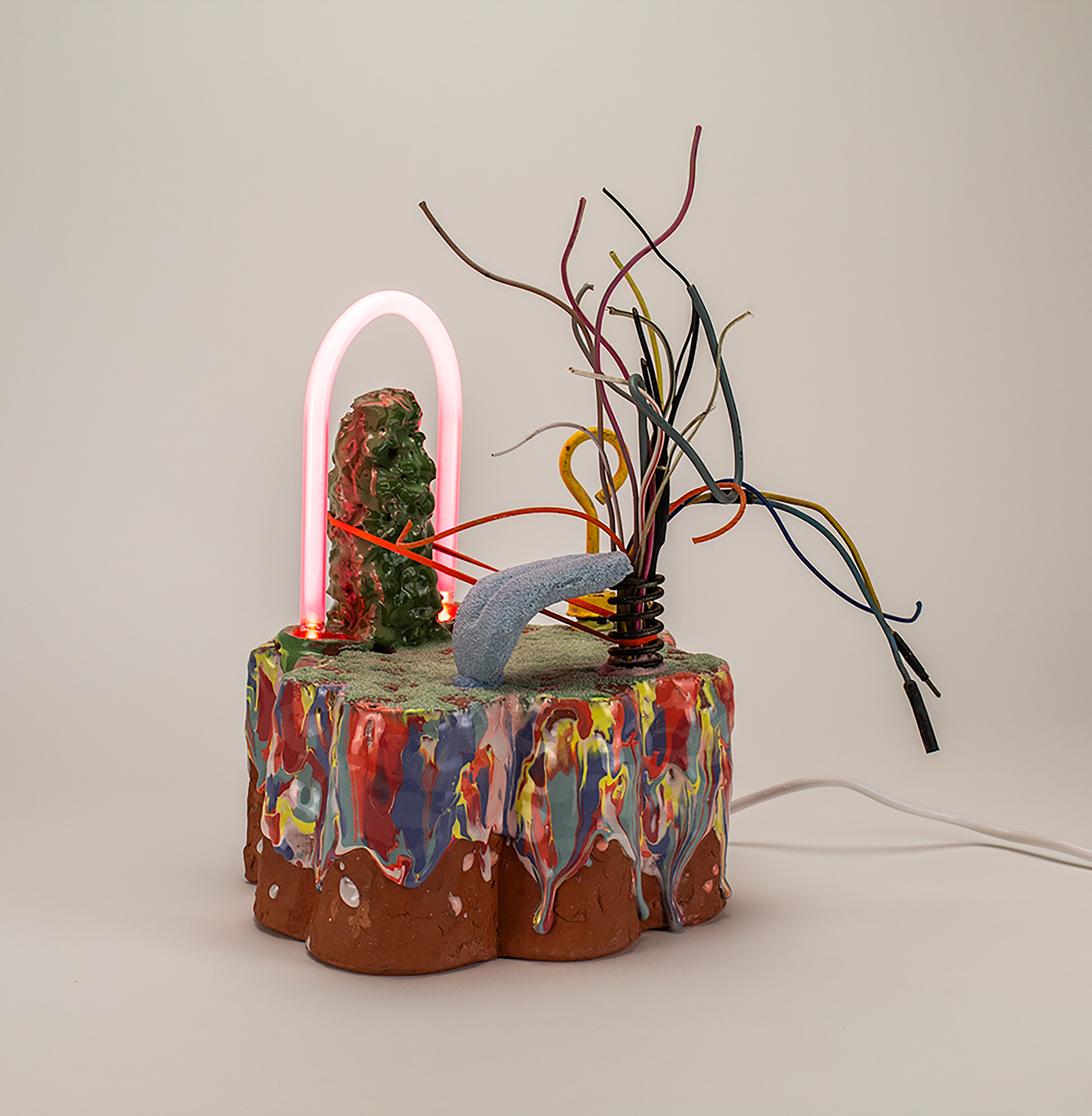
David Morrison: “I began moving beyond clay as the only material in my creative practice when I started frequenting the junkyard in Oklahoma City as a site of research and inquiry for my work during graduate school. Initially, the junkyard functioned as a place of observation, and an environment I was translating back into clay through form and surface. Over time, I began bringing small junk fragments back to my studio as sources of reference. As I spent more time living with these fragments I gathered from routine trips to LA Recycling and Pull-a-Part junkyards, I began amassing a library of objects gathered from the junkyards and my surrounding landscape. Through ongoing critique in graduate school at the University of Oklahoma, I began to question what might happen if the materials themselves were used to speak to the beauty, decay, and toxicity I was witnessing. The micro-landscapes I create are small, playful, yet charged, as they reframe junk as a point of curiosity and care. Through the tools of slow looking and imaginative engagement, these works propose an alternative relationship to discarded materials that encourages greater ecological awareness and an attentive, reciprocal connection to our shared environments and to one another.”
Vincent “Sniper” Frimpong: “To be honest, the materials have surrounded me for my entire life, and combining them – clay, fiber, metal, etc. – elevated my work. It allowed me to combine my heritage with contemporary items to inform what it means to be an African through craft and materiality. Being in conversation with each material allowed me to re-interpret clay as fluxus.”
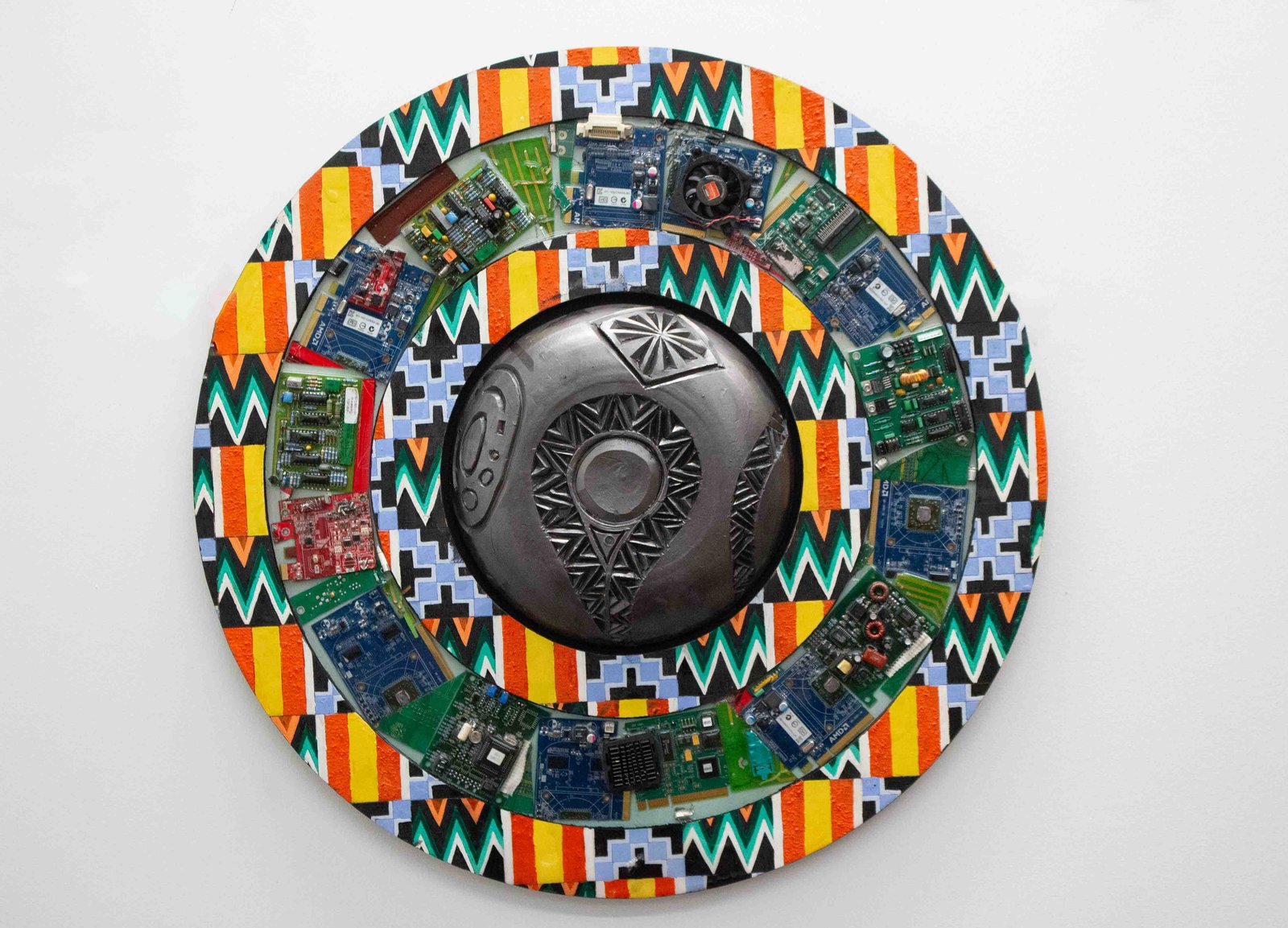
Justice Catron: “My interest and use of non-ceramic materials started from a point of necessity. I had ideas for installations that I could not manage within ceramic materials alone. I eventually found dirt becoming central to express my indigenous identity and connection to land. The earth I use has always come from Oklahoma, not because it is the land of my ancestors, but because it was where they were displaced to. By taking the same physical land away from its own homeland, I use that material to mirror the experience of the Native community at large. In many ways, I also have an aversion to the notions of trompe l’oeil; I am not seeking to create illusions of reality, I want to represent reality as itself. In that pursuit, I believe that nearly unchanged materials allow for them to come to the forefront, highlighting the histories and foundations that we stand upon.”
Question #2: How do the materials you use alongside ceramics contribute to creating meaning in your work?
Abbey Peters: “I’ve always been drawn to other materials for their depth of history and relation to craft traditions. I’m interested in how materials have been used for different purposes across time, and how people continue to engage with them today. Working with other materials allows me to draw from multiple traditions and to situate the work within the specific histories and contexts of each material or practice. In addition to clay, I use beeswax, wood, fiber, and collected organic materials for their material histories and the meanings they carry related to how we offer and receive care across time.”
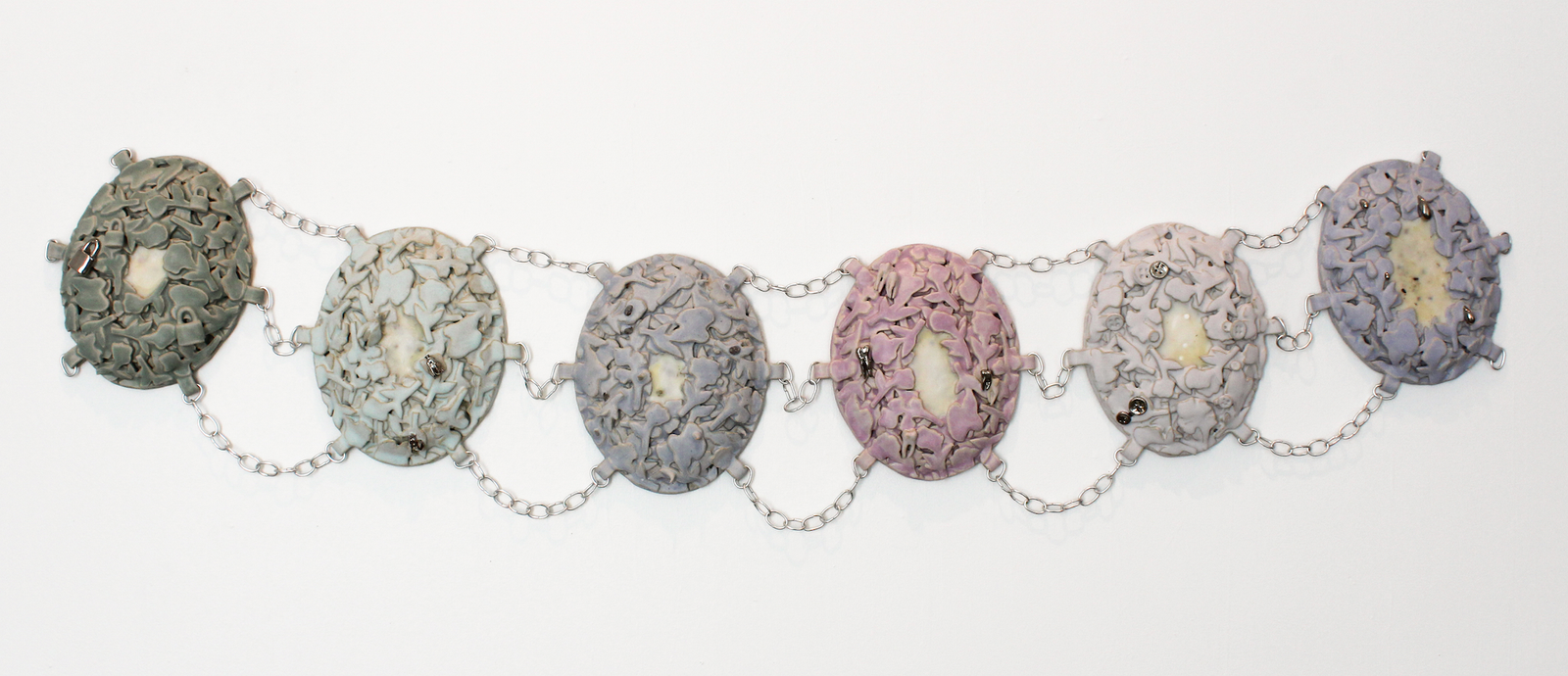
Michael Takahata: “The secondary materials I use usually reference a quality that clay can’t portray, and are chosen for their unique physical, cultural, personal, or conceptual nature. For example, carbonized wood to reference the tradition of yakisugi in Japan and savusauna’s in Finland. The use of this burned and sanded wood aided in the narrative of transitions in tandem with the ash-colored porcelain.”
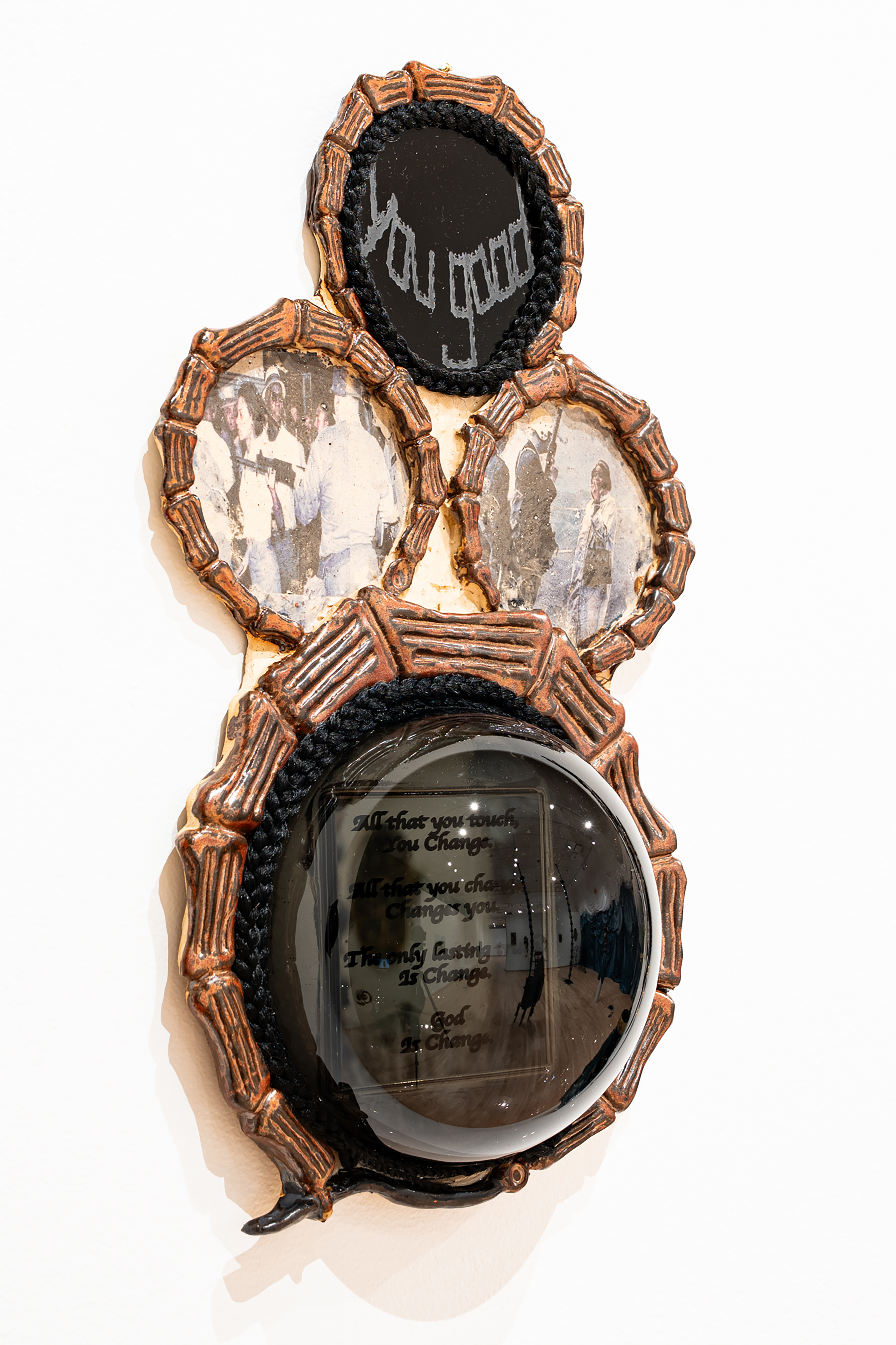
Angelique Scott: “I had the opportunity to work with black glass and thought about how Fred Wilson considers the material to symbolize the marginalized, often-invisible presence of Black people in Western history, and using its opacity to represent hidden narratives. I often incorporate braids, whether clay or hair, into the work to symbolize the Afrocentric body and the ritual of braiding messages. The ceramic bamboo hoop earring frame, the image transfers, the black braid, the black glass, the mirror, and the poem by Octavia Butler behind the glass all come together to cultivate a conversation around confrontation, resistance, and beauty”.
Together, these artists offer expansive perspectives formed through the intersections of material and narrative. Each practitioner approaches content with nuance and intentionality, building upon histories of craft while pushing the field of ceramics forward. Collectively, their work speaks to personal experience, identity, culture, history, and ongoing environmental crises through the deliberate use of materials. We are thrilled to share several of the participating artists’ perspectives and new works with this article, while being able to revisit our exhibition again through this article. As we look to the future, we think about ways of not only continuing to highlight but also connecting with other ceramic-oriented mixed media artists. We are currently working to expand the first iteration of this exhibition into a larger group, while also thinking about the possibilities of shared dialogue with one another in a residency setting. We are excited for the future and the potential of clay.