Hybridity Without Permission
International graduate artists hardly enter the studio with the luxury of artistic purity. Their practices are formed in motion across borders, languages, economies, and systems of knowledge in an environment that was never designed with them in mind. They arrive carrying indigenous and inherited ways of making, embodied memories, and cultural understandings shaped by place, family, labor, and survival. Once inside academic institutions, these forms of knowledge must be constantly translated, negotiated, defended, or critiqued within structures that privilege certain materials, theories, and definitions of authorship over others.
This condition is often described as hybridity, an idea of duality, and theories of living in-between. But for many international artists, hybridity is not a conceptual strategy or stylistic choice; it is a lived necessity. It emerges through everyday negotiations: in critiques where cultural references require explanation, in studios where access determines material possibilities, in classrooms where theory is encountered through a second or third language, and in social spaces where belonging is provisional. Institutions may celebrate difference, yet simultaneously regulate how that difference can appear, be legible, or be valued.
What results in this transition is not a loss of identity, but an intensified awareness of material, process, labor, and meaning. These international graduate artists learn to work attentively, often intuitively, sensing where tension exists and where they need to break down transitions. Their practices are shaped as much by resilience as by experimentation, by adaptation as much as by refusal.
Rather than simply adding, layering new narratives to contemporary studio practice, international artists actively reshape its contours. Through friction, improvisation, and reinvention, they challenge inherited assumptions about cultural traditions and originality, about craft and theory, about whose knowledge counts and how it circulates. Their work insists on occupying multiple worlds at once, not as a compromise, but as a position of strength. Hybridity, here, is not permission-seeking. It is a declaration, having accorded the needful cultural and contemporary recognitions.
The Necessity of Hybridity
Graduate study abroad demands constant recalibration. They have to navigate unfamiliar pedagogical cultures of critique and evaluation, new expectations around authorship and professionalism, and material systems shaped by institutional access and economic constraint. These pressures do not simply sit alongside studio practice; they influence it, shaping decisions, processes, and forms.
Hybridity becomes a way of thinking and working through these conditions. It allows artists to question the impact of material and overall meaning, to fold personal histories into academic discourse, and to hold contradiction without resolution. The space between what is remembered and what must be learned becomes generative. The practices that emerge are layered, deliberate, and responsive, reflecting lives lived across time zones, cultures, and social realities.
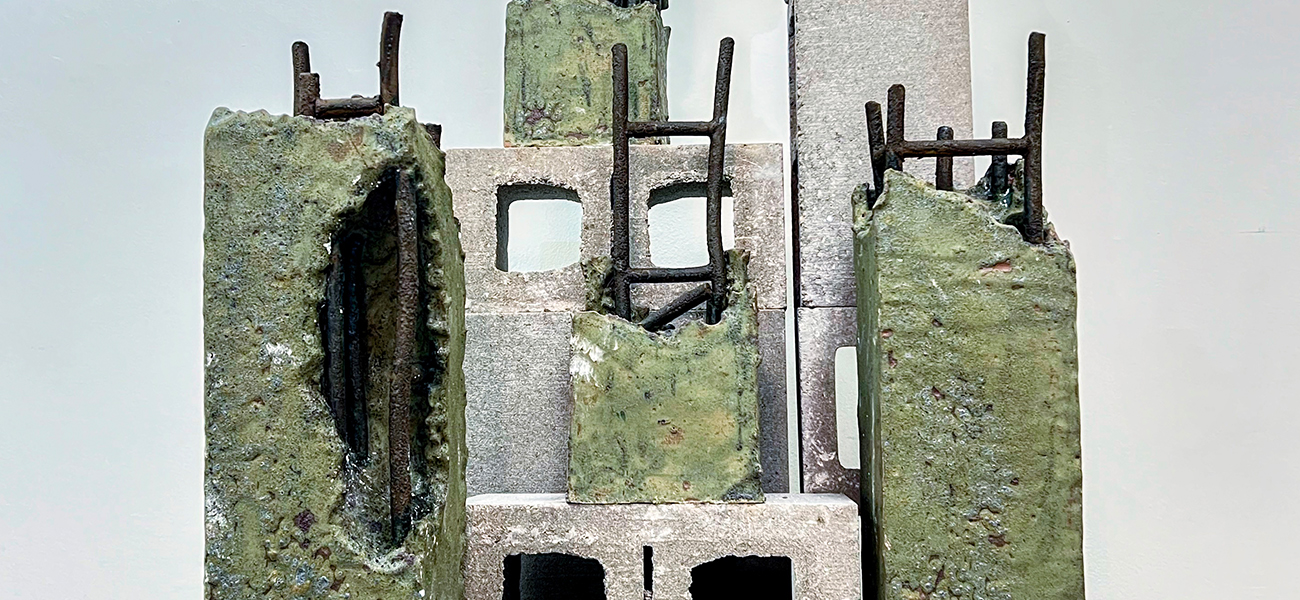
Ceramics, in particular, offers a powerful site for this constant and recurring negotiation. Clay carries deep cultural specificity while remaining open to transformation. It bears traces of touch, repetition, cultivation, and care. It records time and labor in ways that echo experiences of migration, displacement, and rebuilding. For many international students and artists, working with clay becomes a means of rebuilding, an anchorage of holding memory while adapting to new contexts, of asserting presence while remaining flexible.
They usually have to balance studio work with the emotional and physical labor of living abroad: navigating immigration systems, financial precarity, cultural isolation, and the quiet weight of distance from home. In doing so, they build practices that are not only materially inventive but socially and emotionally attuned. Their work reflects a continuous process of becoming, constantly reshaped by place, pressure, and possibility within an ever-evolving American social and cultural landscape.
Hybridity, then, is not an endpoint. It is a condition of survival, resilience, and imagination. And through it, international graduate artists continue to expand what contemporary studio practice can hold, and who it is for.
 Within postcolonial and material culture discourse, hybridity has been understood not as synthesis, but as a condition shaped by power, translation, and uneven access. Writers such as Homi K. Bhabha have described hybridity as a space of tension and negotiation rather than resolution, while scholarship in craft and ceramic studies – articulated by figures including Glenn Adamson and Tanya Harrod – has emphasized making as a form of knowledge produced through labor, repetition, and material engagement. Reading alongside these conversations, the practices discussed here situate ceramics as both a material and a conceptual site where contradiction, opacity, and cultural memory are not problems to be solved, but conditions to be worked within.
Inherited Knowledge, Activated Memory
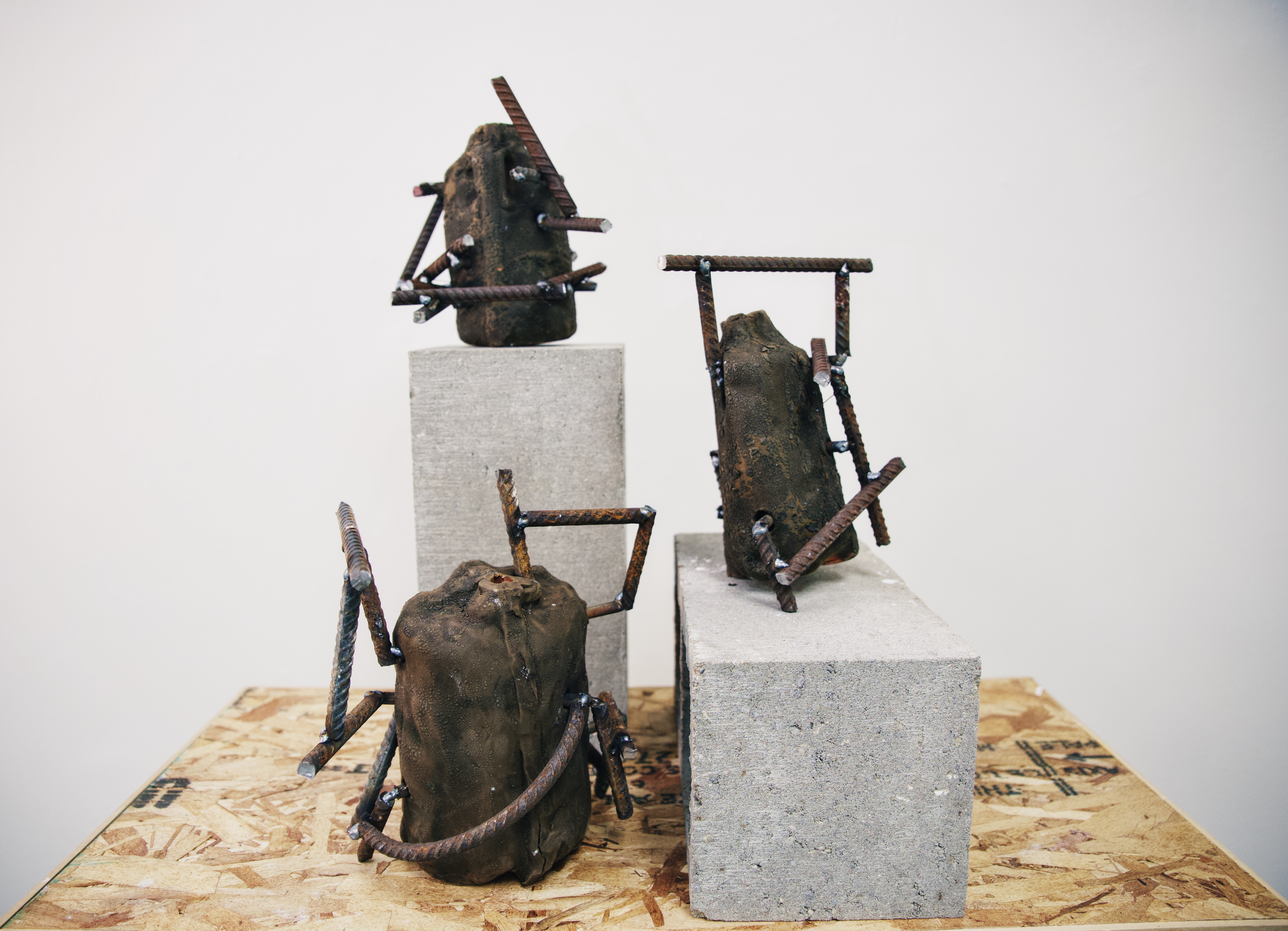
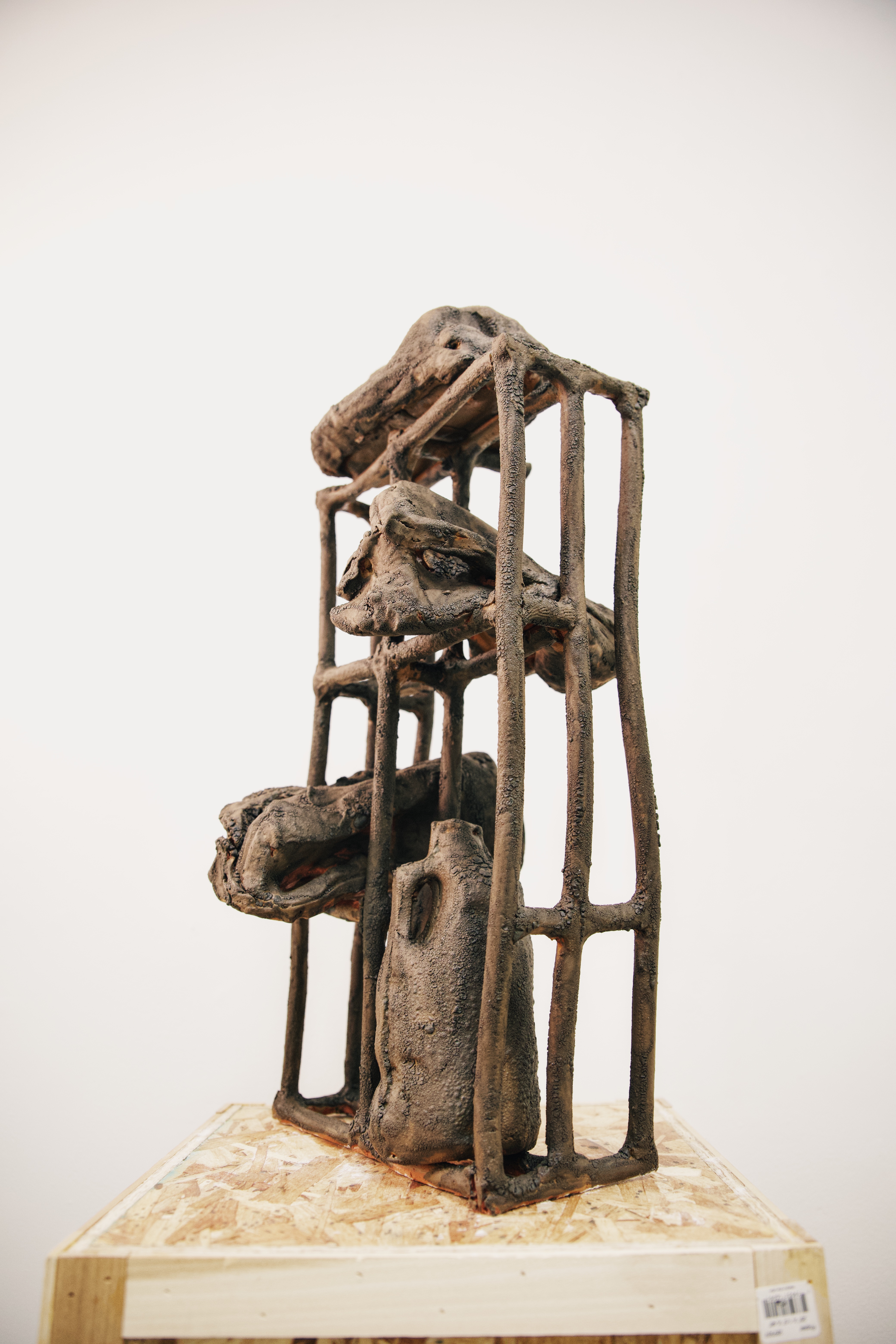
For both artists, pursuing graduate studio practices, living in Lincoln, Nebraska, and Detroit, Michigan, clay entered their lives long before it entered an academic studio. Making was learned through proximity, it was through watching elders work, through repetition, and through use. Clay was not framed as art; it was mainly called a woman’s work, and it was embedded in daily life, ritual, and survival. That memory and embodied knowledge did not disappear when they entered graduate programs in the United States, but it did become an unfamiliar terrain, where audience understanding conflicted with their traditional and cultural translations of both material use, form, and representation.
In institutional studios that privilege conceptual framing and individual authorship, what once lived comfortably in the body now requires explanation. Intuitive processes were asked to justify themselves. Cultural memory that was once carried through gesture and rhythm is now expected to translate into a language that bears a common comprehension to the wider audience.
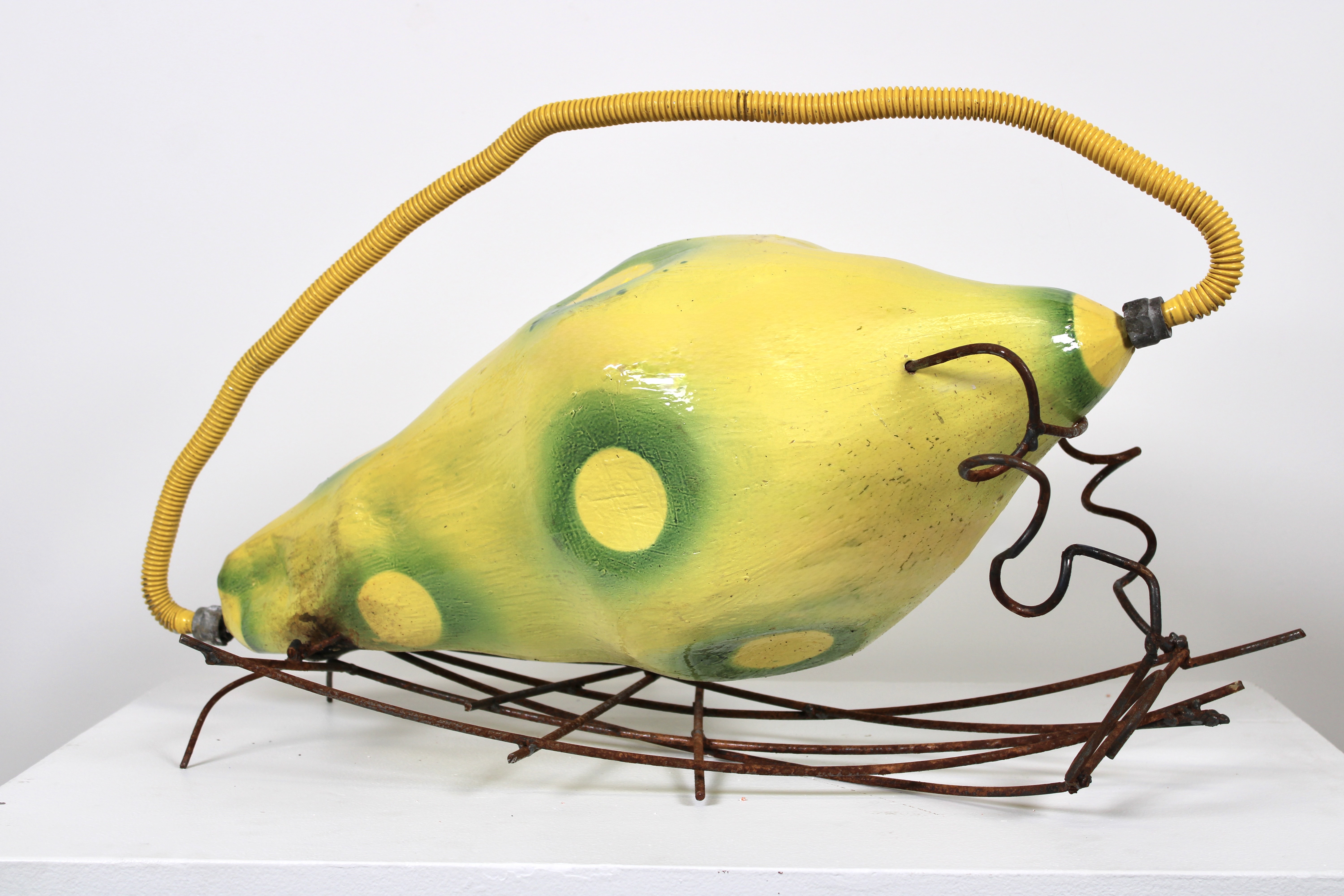
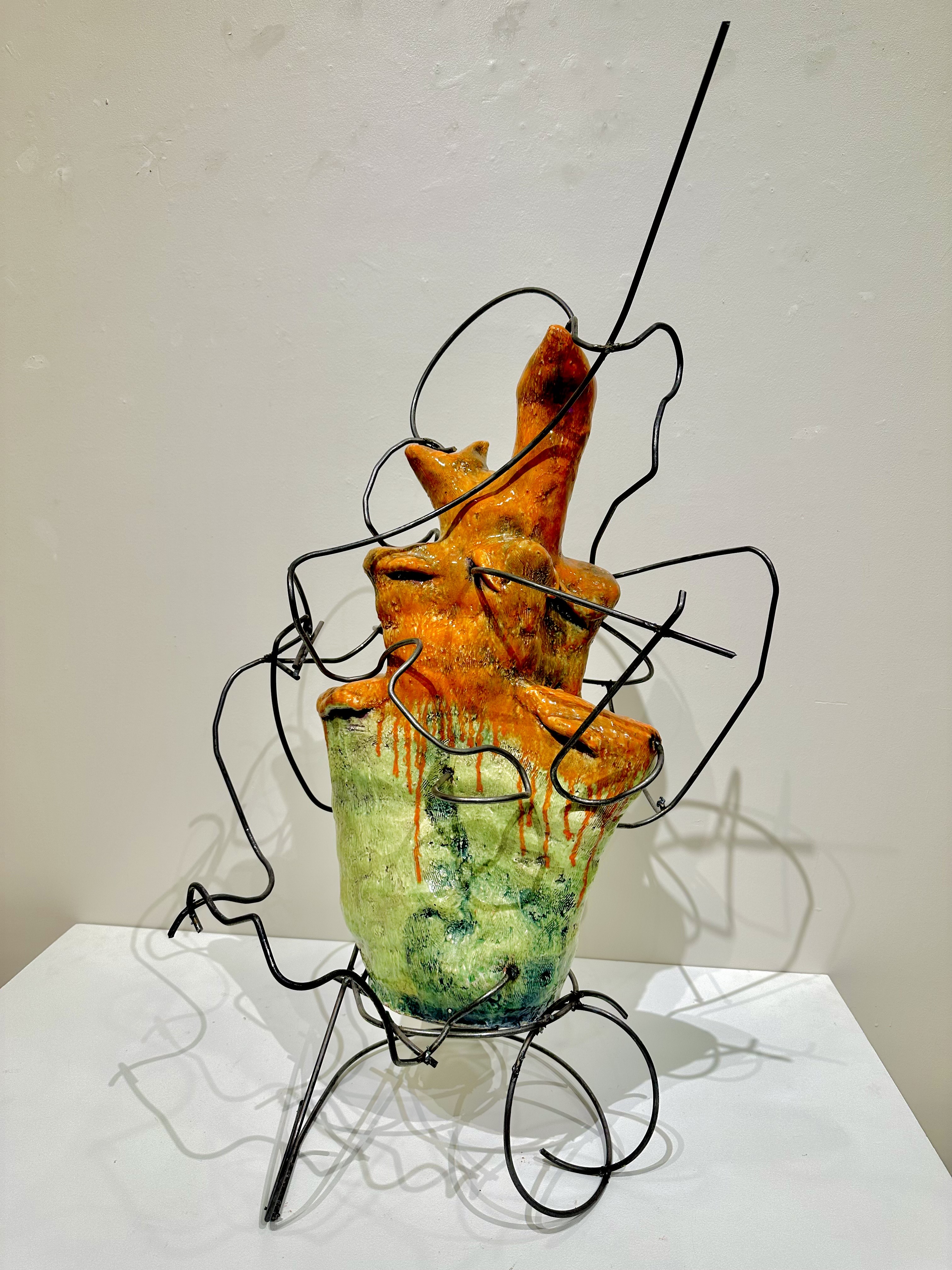
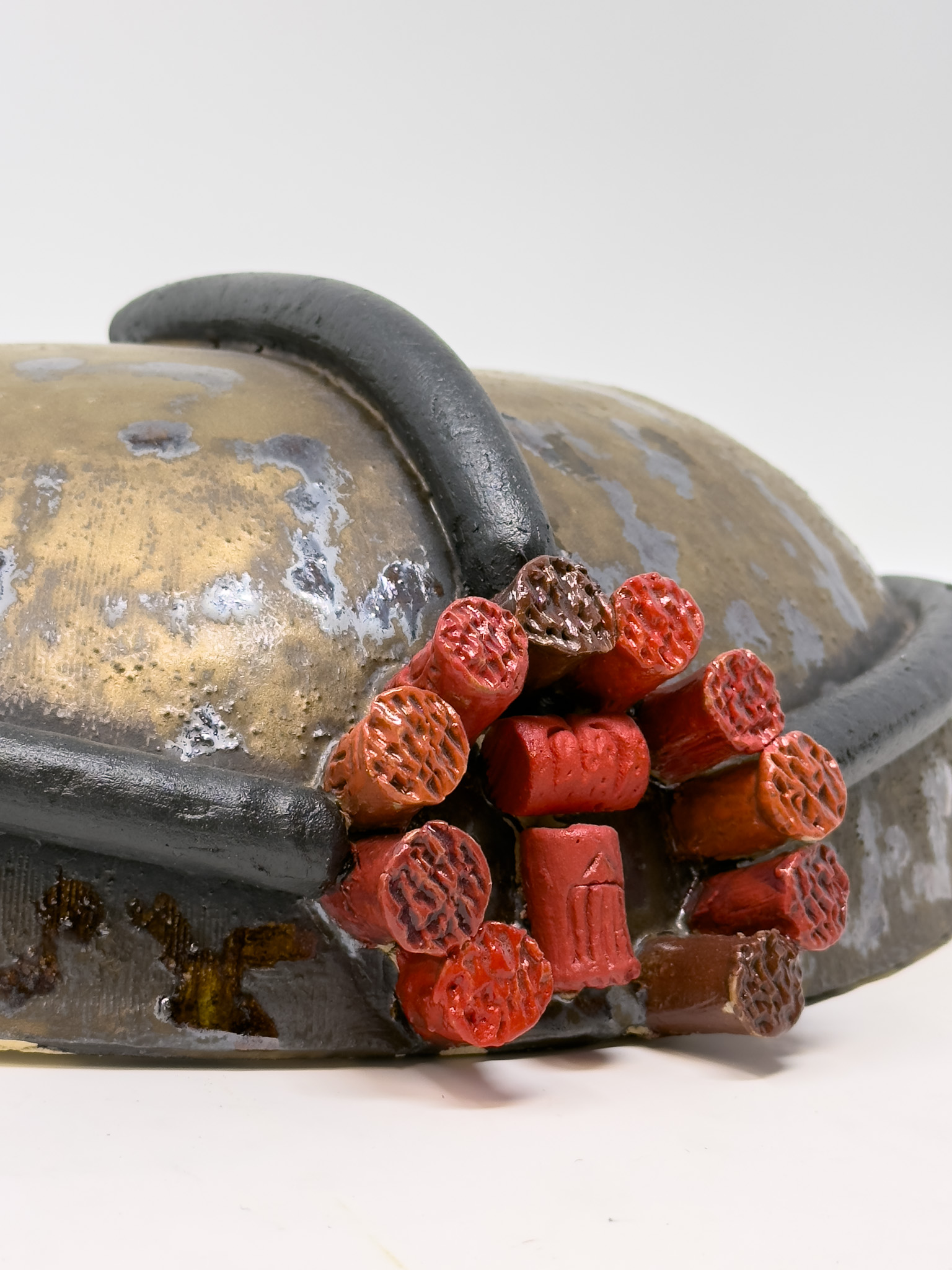
Their responses diverge in form but align in intention. Emmanuel "Kstony" Asamoah leans into visible construction and repair, pairing clay with metal and found materials to make tension explicit. Cracks and joins are left open, mirroring the experience of navigating between systems that do not seamlessly align. Rosemond Nyamewaa Van-Ess protects memory through surface, repetition, and touch, allowing knowledge to remain procedural, one that is associated with the unrecognized labor of women, rather than symbolic. What cannot be fully named is allowed to remain embodied. Where objects are repaired, reused, and carried forward rather than discarded.
Together, their practices insist that cultural inheritance does not need to be flattened into explanation to be legible. Hybridity here becomes a way of holding ancestral and cultural knowledge in motion that is present, adaptable, and resistant to erasure.
Opacity, Structure, and the Refusal to Resolve
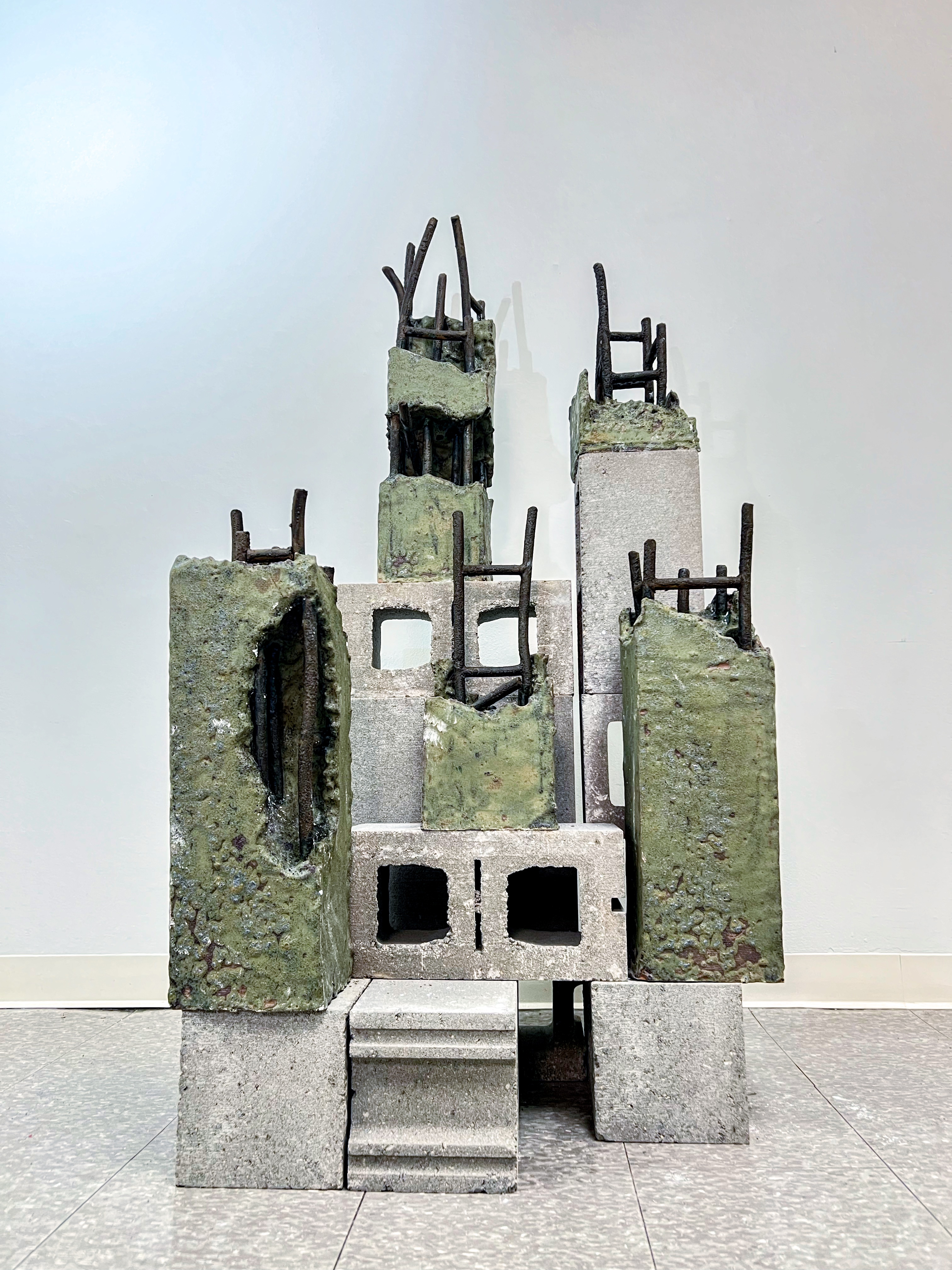
Hybridity emerges not through synthesis, but is fueled through restraint for Elham Sabri and Jocelyn Reid. Both work with materials already shaped by power. These materials are marked by domesticity, industry, containment, and control. Yet their practices resist the expectation that cultural differences must be fully visible or easily decoded.
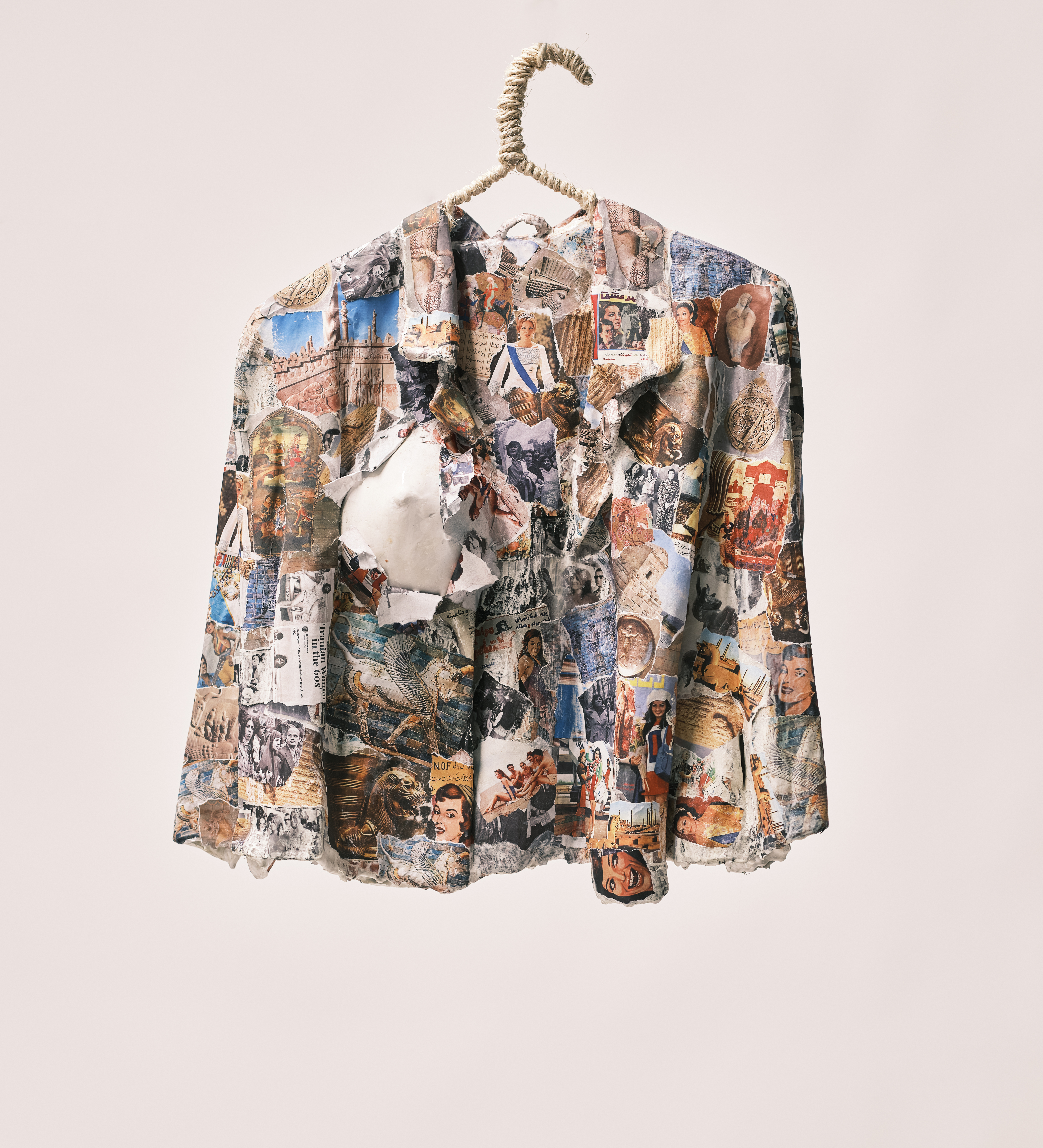 Shaped by the aftermath of Iran’s Islamic Revolution, addressing censorship, violence, and the emotional costs of displacement, Elham moves through her practice with measured restraints. Surfaces suggest more than they reveal. Silence becomes a material choice. In academic contexts that often equate transparency with authenticity, this refusal to overexplain operates as agency. In her studio and through her work, “homeland” is a conflicted space that is charged with longing, fear, pride, and grief. The work protects what cannot safely or productively be disclosed, asserting that complexity does not require access. Her practice underscores how hybridity can function as an act of survival and resistance, embedding political consciousness within material form.
Fragility becomes intentional, utility is destabilized. Rather than resolving contradictions between personal history and institutional frameworks, the work sustains them – allowing vulnerability and constraint to coexist.
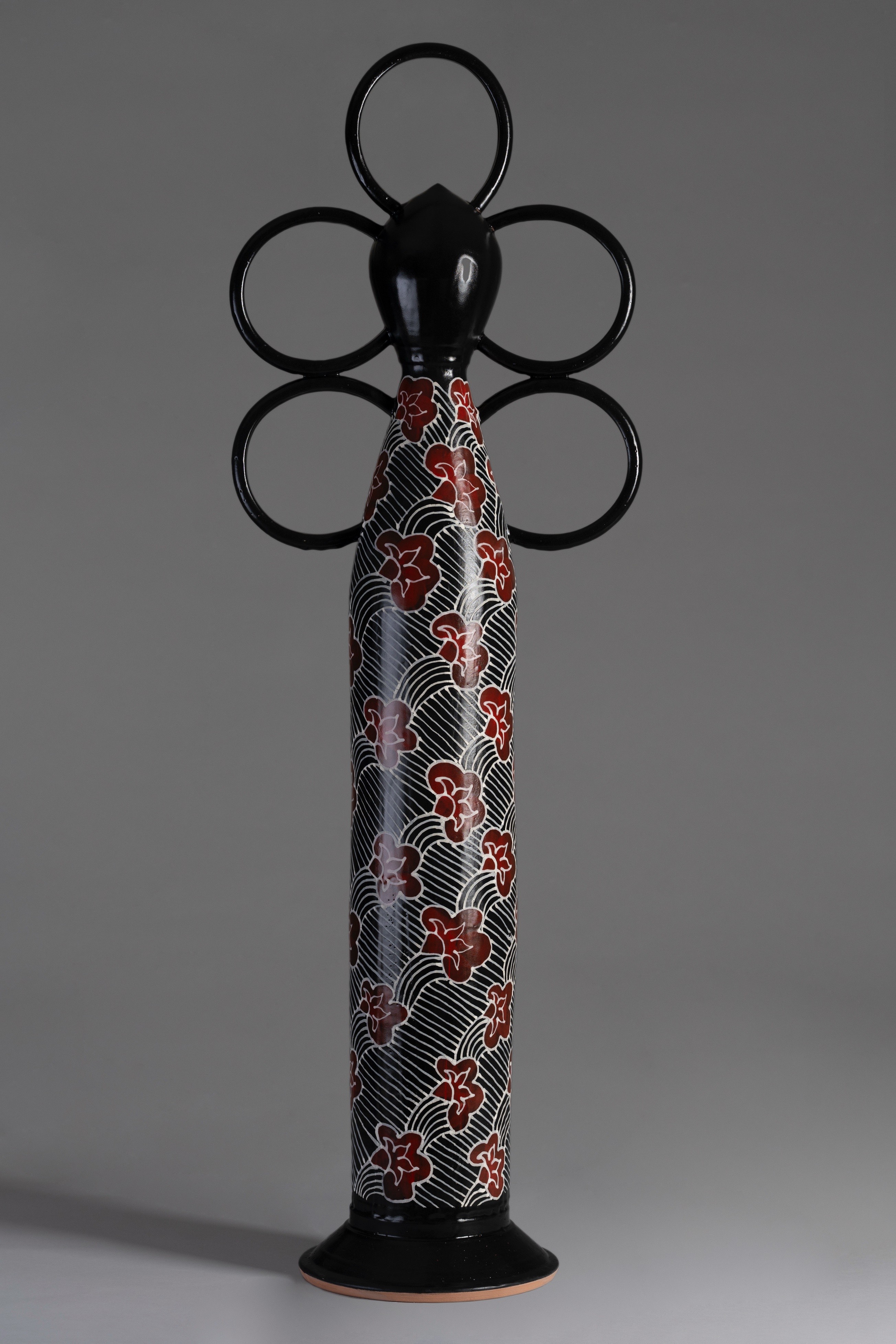
Alongside artists negotiating cultural displacement, other practices examine hybridity through inherited systems of value and domestic power. Jocelyn Reid’s sculptural work reimagines everyday objects – childhood possessions, household items, and familiar forms – rendering them in porcelain, metal, plaster, soap, and plastic. Through material translation and intentional distortion, Reid exposes how worth, desire, and social expectation are embedded in the mundane. Her dedication to casting and craft situates labor at the center of this inquiry, while porcelain’s dual history of preciousness and ubiquity mirrors the contradictions she explores around aspiration, gender, and class.
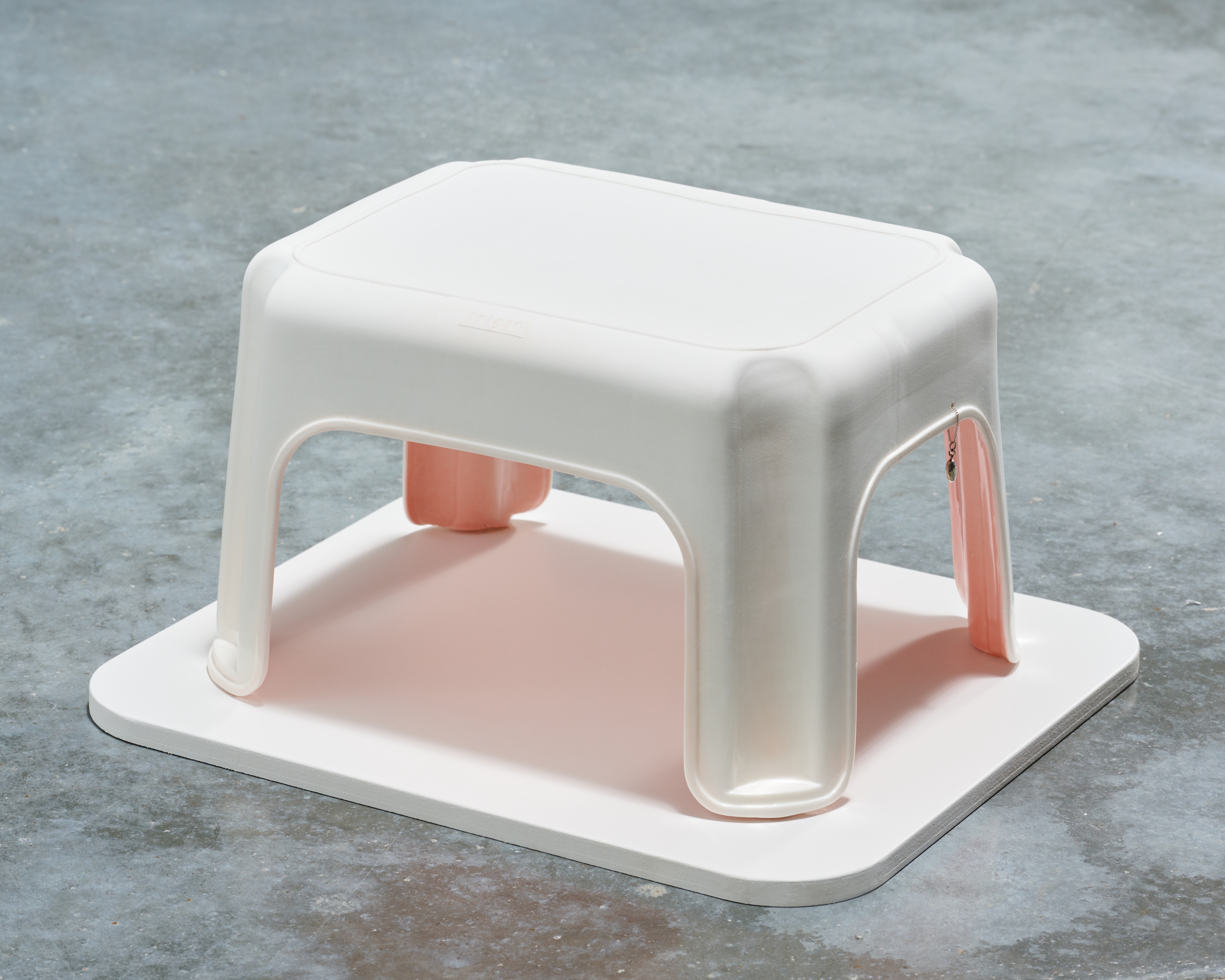
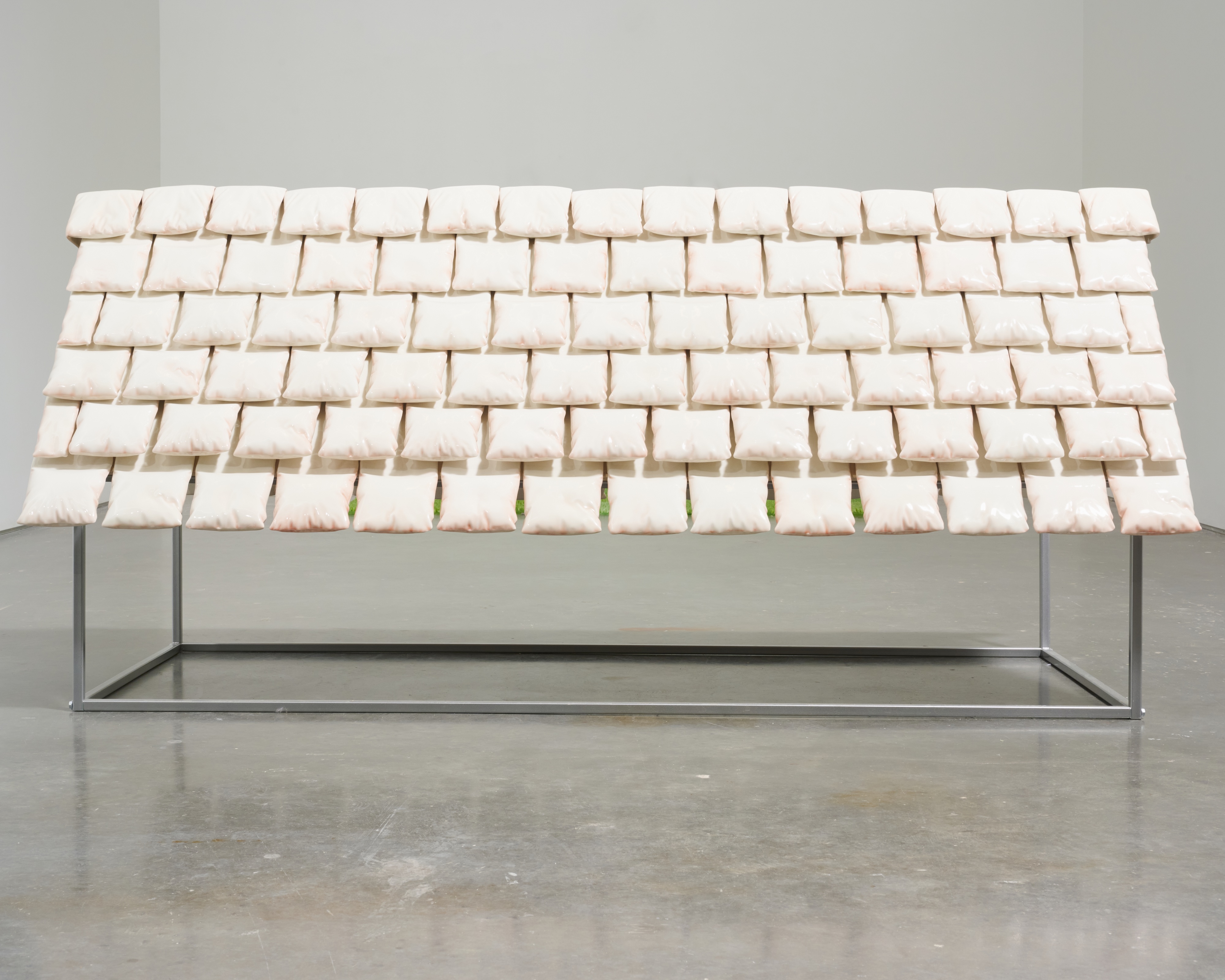
Together, their practices challenge the assumption that hybridity must result in clarity or resolution. Instead, they propose the studio as a site where tension is not a problem to be solved, but a condition to be lived with. For audiences outside their cultural diasporas, the work does not translate experience; it invites attunement.
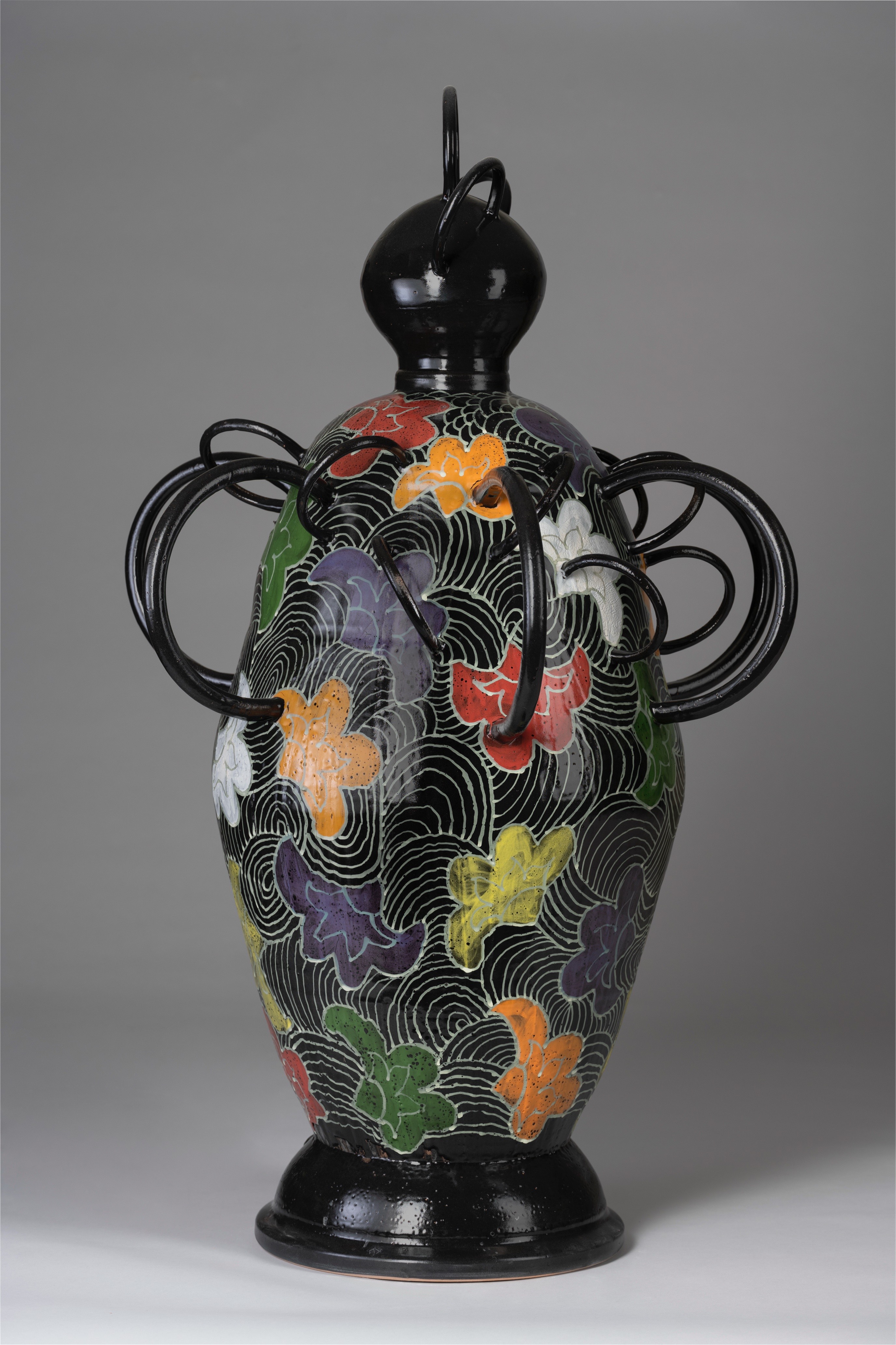 Cultural Labor, Repair, and Reclamation
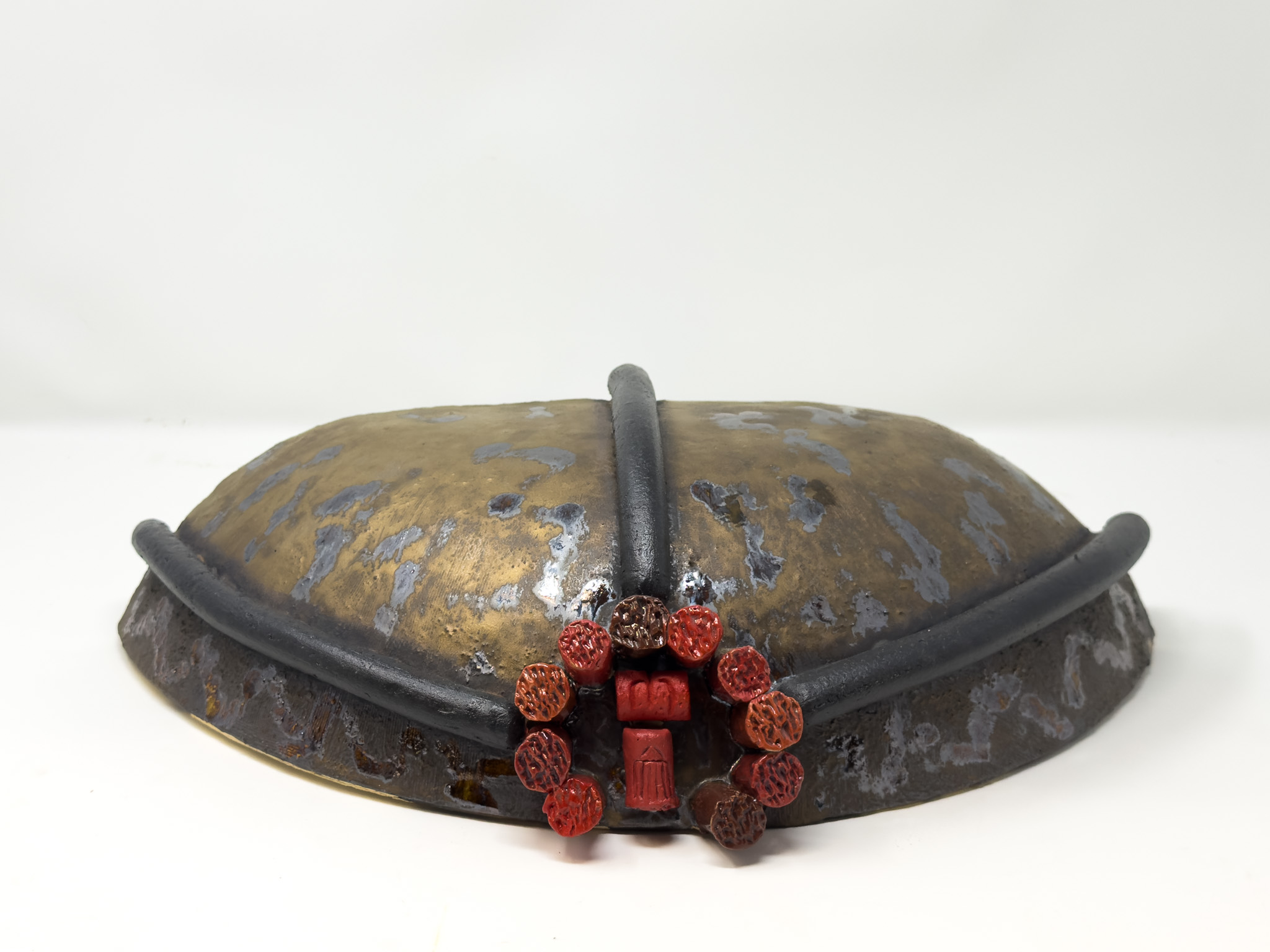
As immigrants from Nigeria, labor is not hidden, and time is not compressed. Marks of handling remain visible through a long history of rich traditional culture that has fixed stereotypical narratives and ideas shaped by colonial and Western influences, which record cultural effort rather than just contemporary efficiency. Both Emmanuel Okechukwu and Joy Okokon draw from cultural frameworks, making them inseparable from care. Heavily embedded in West African visual references, the intersectionality between the past, present, and future is interconnected, safeguarding these cherished traditions.
Entering graduate study abroad, this approach often runs counter to systems that prioritize speed, polish, and constant production. Yet neither artist abandons these values. Instead, they bring them into dialogue with contemporary ceramic discourse, insisting that cultural labor itself is a form of knowledge – one learned through repetition, endurance, and responsibility.
Repair becomes central. Worked surfaces are not erased; seams are emphasized. Brokenness is not failure, but evidence of use and endurance. Migration sharpens this understanding of that what is carried across borders is rarely whole, yet it remains valuable. In a studio translated language, both practices honor a personal and collective legacy that continues to bind communities together in a contemporary tone and narrative that is notably cultural.
Together, their work reframes tradition as something living. Cultural memory is not preserved intact, but held, mended, and made newly relevant. For viewers, the work offers a way to understand continuity without nostalgia and innovation without rupture.
 .
. 
Living in the In-Between
Across these practices, hybridity reveals itself as a shared condition rather than a stylistic outcome. These artists do not seek to blend cultures for novelty or approval. They work from within the friction, this is between inherited knowledge and institutional systems, between memory and adaptation, between home and elsewhere.
Their studios hold more than objects. They hold negotiations of language, labor, value, and belonging. In expanding contemporary studio practice, these artists do more than diversify its narratives; they alter its structures. They remind us that knowledge is carried through hands as much as through text, through repair as much as through invention.
International graduate artists do not ask permission to exist between worlds. They are already there. And from that in-between space, the studio continues to grow in a gradual, deeper, and more expansive way than before.
 What the In-Between Teaches Us
Hybridity, as it emerges through the practices of international graduate artists, is not a trend or a theoretical position. It is something lived, experienced daily, materially, and often quietly within their studio practice. It is shaped by movement across borders, by the labor of translation, and by the necessity of adaptation within systems that were not designed to sustain these ways of knowing. In the studio, hybridity shows up in how materials are chosen, how processes unfold, and how time is honored or resisted.
What these artists reveal is that the in-between is not a lack of clarity, but a site of intelligence. It is where inherited knowledge meets institutional structure, where memory pressures against expectation, and where making becomes a way to remain whole while constantly changing. Their practices do not seek resolution. Instead, they teach us how to work within tension and how to let contradiction, repair, opacity, and care coexist without chaos.
For ceramics and studio practice more broadly, this has important implications. It challenges narrow definitions of rigor, professionalism, and success. It asks us to reconsider how knowledge is produced in the studio and whose histories are embedded in our materials. It reminds us that clay carries more than form; it carries labor, memory, and time. And it asks educators, institutions, and peers to listen more closely to what is already present in the room.
International graduate artists are often positioned as contributors to diversity, as voices that “add” to the field. But their work demonstrates something more consequential: they reshape the field itself. Through their practices, contemporary studio culture becomes more elastic, more accountable, and more attentive to lived experience. They expand what the studio can hold and not by asking for space, but by occupying it fully.
To work in the in-between is not to be undecided. It is to be deeply aware. It is to know where one comes from while learning how to move forward without erasure. These artists remind us that hybridity does not weaken tradition, but rather keeps it alive. And in doing so, they point toward a future of studio practice that is not only more inclusive, but more honest, more resilient, and more human.